Zenzeleni: Rural South Africa’s DIY Telecom Revolution
Discover how a impoverished South African village built its own affordable wireless network, slashing costs by 20x and bridging the digital divide through community power.
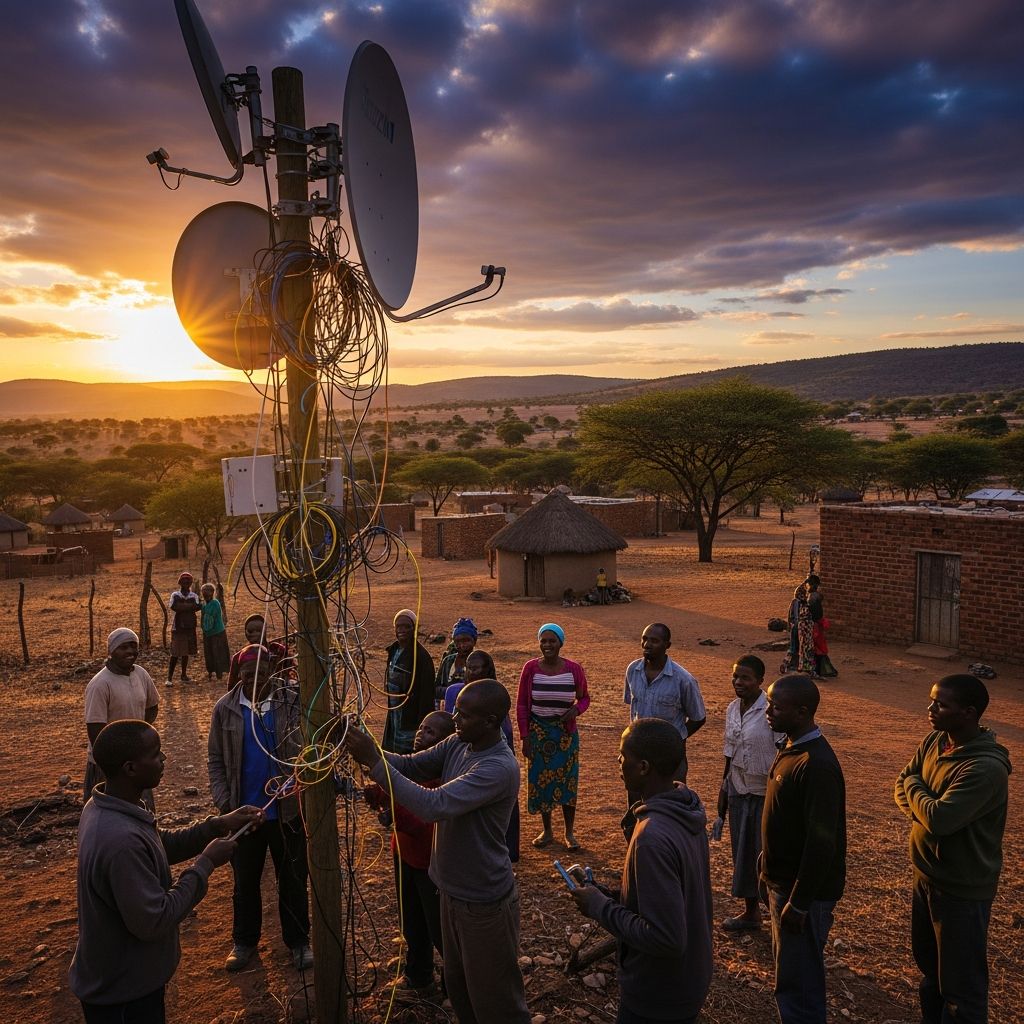
In the rolling hills of South Africa’s Eastern Cape, where poverty grips tight and commercial telecom giants rarely venture, a quiet revolution has been brewing since 2012. The Mankosi community, home to around 3,500 residents eking out a living on less than $2 a day, faced a harsh reality: they were spending nearly a quarter of their meager income on unreliable mobile services. Coverage was patchy, costs exorbitant, and true internet access a distant dream for most. But instead of waiting for external saviors, the villagers rolled up their sleeves and built Zenzeleni Networks—the country’s first rural cooperative-owned internet service provider (ISP).
This DIY telecom initiative didn’t just connect phones; it transformed lives, economies, and the very fabric of community governance. By harnessing solar power, wireless mesh technology, and Voice over IP (VoIP), Zenzeleni delivers calls at 20 cents per minute (versus R1.50+ from big operators) and data at fractions of market rates. Today, it serves over 13,000 people across multiple sites, including schools and businesses, proving that grassroots innovation can conquer the digital divide.
The Harsh Realities of Rural Connectivity in South Africa
South Africa’s urban centers boast world-class 4G and fiber, but rural areas like Mankosi lag decades behind. According to the Independent Communications Authority of South Africa (ICASA), only about 20-30% of rural households had reliable broadband access in the early 2010s. Commercial operators, focused on high-profit urban markets, charged premium rates for subpar service—leaving villagers trapped in a cycle of overpriced, underdelivered connectivity.
- Income Drain: Families allocated 22% of earnings to airtime and data, money that flowed out to distant corporations rather than staying local.
- Low Penetration: Less than 25% of Mankosi residents accessed the internet monthly, stifling education, business, and health information.
- Infrastructure Gaps: No fiber nearby, erratic cell towers, and high deployment costs deterred investment.
Enter Zenzeleni: a response born from necessity, academia, and communal resolve.
Birth of a Community Telecom Cooperative
The spark ignited through a partnership between the University of the Western Cape (UWC) researchers and Mankosi’s tribal authority. In 2012, a ten-member cooperative—selected for their community standing—was formed with local government blessings. This group wasn’t just advisors; they designed, funded, and deployed the network themselves.
Key milestones:
| Year | Milestone | Impact |
|---|---|---|
| 2012 | Launch of initial WiFi mesh with solar-powered stations | 12 stations covering 30 km²; voice services at 1/10th cost |
| 2014 | ICASA exemptions for ECS and ECNS | Legal ISP status; 100% Black-owned, 40% women-led |
| 2017 | Internet Society upgrades via Beyond the Net | Stable broadband; Mozilla Equal Rating semifinalist |
| 2023+ | Expansion to multiple villages; 13,000+ users | High-speed internet rivaling urban areas |
Zenzeleni Networks NPC, a non-profit facilitator, oversees operations, ensuring community needs drive decisions. The co-op sets rates, maintains infrastructure, and reinvests profits locally—creating a self-sustaining ecosystem.
Technical Ingenuity: Building a Resilient Wireless Network
At its core, Zenzeleni is a marvel of low-cost, high-impact engineering. Solar-powered WiFi routers mounted on homes form a mesh network, relaying signals peer-to-peer to minimize backhaul needs. Two dedicated wireless links connect to fiber Points of Presence (PoPs) in Mthatha, about 60km away.
- Voice Services: Analog phones plug into WiFi routers using VoIP, enabling free intra-community calls and dirt-cheap outbound rates.
- Data Delivery: Affordable broadband for schools, clinics, and entrepreneurs; speeds comparable to urban 4G.
- Power Innovation: Solar panels charge community phones, generating revenue while providing a vital service in off-grid areas.
- Billing System: Custom isiXhosa interface managed by locals, ensuring accessibility.
This setup cuts costs by 20-40x. A gigabyte of data might cost R200 commercially but just R5-10 via Zenzeleni. Reliability soars too—no more dropped calls during peak hours.
Empowering Women and Local Economies
Zenzeleni’s 40% women-owned structure isn’t tokenism; it’s transformative. Female members lead on billing, maintenance, and expansion, fostering skills in tech and business. Revenue from phone charging and services circulates locally, funding education and startups.
“Our cooperative board sets priorities and rates. Money that once left the village now builds our future.” – Community Leader (paraphrased from project reports)
Institutions benefit immensely: schools access online learning, clinics share patient data, and small businesses reach markets via e-commerce.
Legal and Regulatory Wins: ICASA’s Role
Gaining ICASA exemptions was pivotal. These allow Zenzeleni to operate as a licensed ECS/ECNS provider without full telco burdens, tailored for community networks. This regulatory nod has inspired replicas across Africa.
Challenges Overcome and Lessons Learned
No revolution is smooth. Early hurdles included vandalism, technical glitches, and digital literacy gaps. Solutions?
- Training Programs: UWC-led workshops built local expertise.
- Community Buy-In: Transparent governance and profit-sharing quelled skepticism.
- Scalability Tweaks: Upgrades with Internet Society funding added redundancy and speed.
Today, Zenzeleni exemplifies the Community Network Charter, emphasizing ownership, openness, and sustainability.
Global Replicability: A Model for the World
Zenzeleni’s blueprint—co-op ownership, mesh tech, solar power—has spread to other Eastern Cape villages. Recognized by ITU, APC, and Mozilla, it’s a beacon for the Global South. In regions where 2.6 billion lack internet (ITU, 2023), such models promise equity.
Future Horizons: 5G, AI, and Beyond
With urban-grade speeds already, Zenzeleni eyes TV white space spectrum, 5G small cells, and AI-driven network management. Partnerships with World Bank and USAID could accelerate growth, potentially serving 100,000+ by 2030.
Frequently Asked Questions (FAQs)
What makes Zenzeleni different from commercial ISPs?
It’s community-owned, profits stay local, and services are 20x cheaper with better rural coverage.
How does the network stay powered in remote areas?
Solar panels on stations ensure 24/7 operation, even off-grid.
Can other communities replicate this?
Yes—open-source designs and ICASA exemptions make it straightforward.
What’s the cost savings for users?
Voice: 20c/min vs. R1.50+; Data: 20-40x lower per GB.
Is Zenzeleni profitable?
Yes, as social enterprise—sustainable and reinvesting in growth.
References
- Do it yourself – Zenzeleni Networks – Details — ITU. 2015-12-01. https://www.itu.int/net4/wsis/archive/stocktaking/Project/Details?projectId=1513962812
- Zenzeleni — Association for Progressive Communications (APC). 2023. https://www.apc.org/en/users/zenzeleni
- Electronic Communications Act — Independent Communications Authority of South Africa (ICASA). 2024-01-15. https://www.icasa.org.za/pages/electronic-communications-act
- Measuring digital development: Facts and figures 2023 — ITU. 2023-12-07. https://www.itu.int/en/ITU-D/Statistics/Pages/publications/mis2023.aspx
- Zenzeleni Networks Mankosi — Zenzeleni Official Site. 2025-03-01. https://zenzeleni.net
Similar Articles







Read full bio of Sneha Tete