Zamboni Doodle Over IPv6
Discover how Google's interactive Zamboni tribute ran flawlessly on IPv6, highlighting the protocol's readiness for fun and games in 2013.
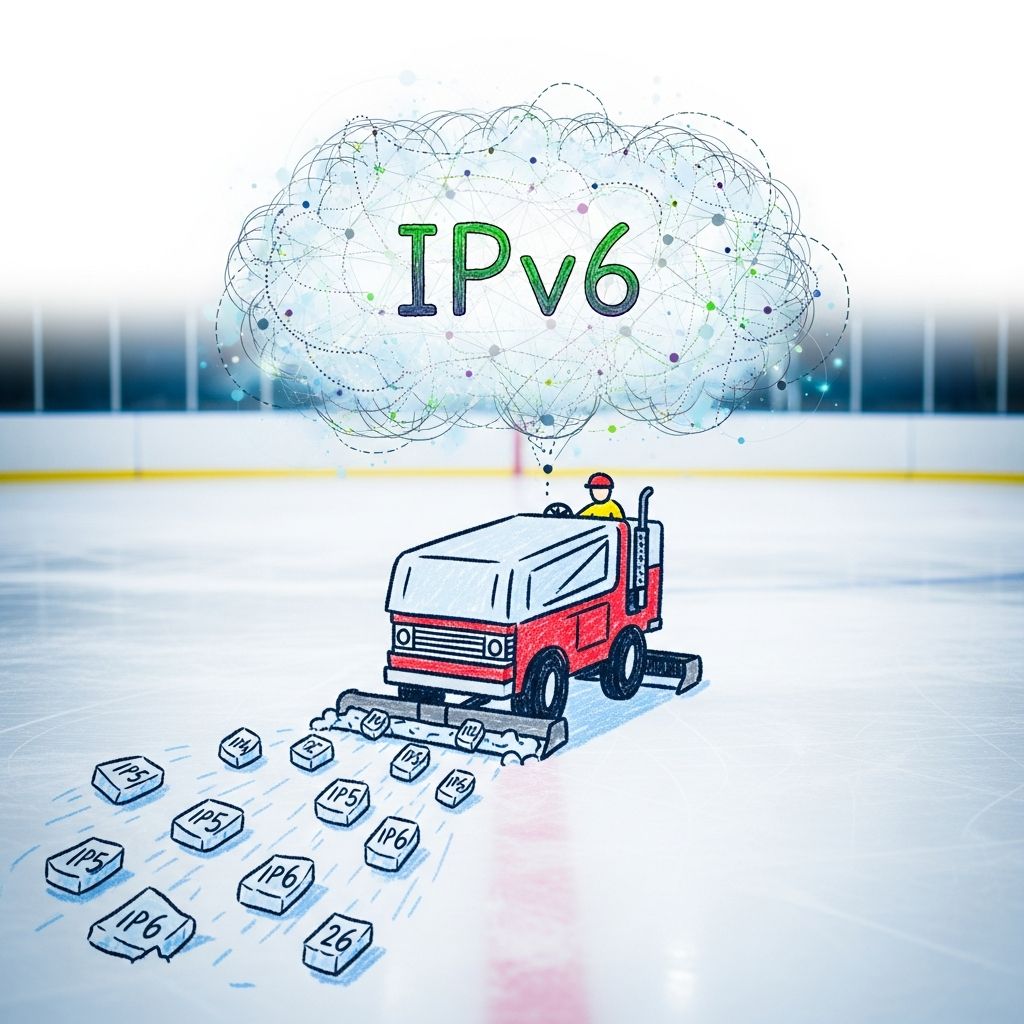
In the early days of interactive web entertainment, a simple yet captivating Google Doodle celebrating Frank Zamboni’s birthday became a surprising showcase for cutting-edge internet technology. Released on January 16, 2013, this playable game challenged users to maneuver a Zamboni ice resurfacer across virtual rinks, dodging obstacles and collecting fuel. What made it particularly noteworthy for tech enthusiasts was its flawless performance over IPv6—the next-generation Internet Protocol designed to replace the exhausted IPv4 addressing system.
This event wasn’t just about fun; it underscored the practical readiness of IPv6 for real-world applications, including dynamic browser-based games. As developers and users alike marveled at the smooth gameplay without connectivity hiccups, it highlighted Google’s long-standing commitment to dual-stack networking, supporting both IPv4 and IPv6 simultaneously.
The Rise of Interactive Google Doodles
Google Doodles have evolved from static illustrations to fully interactive experiences, transforming homepage visits into mini-adventures. The Zamboni Doodle marked a milestone as one of the first fully playable games integrated directly into the search engine’s front page. Players used arrow keys to guide the machine, smoothing out skate marks while avoiding banana peels and maintaining fuel levels across progressively challenging levels.
From Olympic-sized rinks to cluttered local ponds, each stage ramped up the difficulty, testing precision and timing. This interactivity demanded low-latency connections and reliable data transmission—qualities that IPv6 was proving capable of delivering even in 2013.
Understanding IPv6 and Its Advantages
IPv6, standardized by the Internet Engineering Task Force (IETF), addresses the core limitation of IPv4: its 32-bit address space, which provides roughly 4.3 billion unique addresses. With the explosion of internet-connected devices, IPv4 exhaustion became imminent, prompting the global push toward IPv6’s 128-bit addresses, enabling approximately 340 undecillion possibilities.
- Expanded Address Space: Virtually unlimited addresses for IoT devices, smartphones, and servers.
- Improved Efficiency: Simplified header structure reduces processing overhead.
- Built-in Security: Mandatory support for IPsec enhances data protection.
- Better Multicast: Efficient one-to-many communication for streaming and gaming.
By 2013, major players like Google had enabled IPv6 on their services, ensuring users with compatible networks could access content without translation layers that often introduce latency.
Google’s IPv6 Journey: A Timeline
Google pioneered IPv6 support in search as early as 2008, expanding to YouTube, Gmail, and other services by 2011. The World IPv6 Launch in 2012 committed industry giants to permanent IPv6 enablement. The Zamboni Doodle exemplified this maturity.
| Year | Milestone | Impact |
|---|---|---|
| 2008 | IPv6 Search Launch | Early dual-stack testing |
| 2011 | World IPv6 Day | 24-hour global trial |
| 2012 | World IPv6 Launch | Permanent adoption |
| 2013 | Zamboni Doodle | Interactive gaming over IPv6 |
This progression showed IPv6 transitioning from experimental to essential.
Technical Deep Dive: How the Doodle Leveraged IPv6
Accessing the Doodle at google.com/logos/2013/zamboni.html via IPv6 revealed no dual-stack quirks. The game, built with HTML5 Canvas and JavaScript, loaded assets swiftly. Developers inspecting network traffic noted AAAA DNS records resolving directly to IPv6 endpoints, bypassing NAT64 complications.
Key technical elements included:
- DNS Resolution: Happy Eyeballs algorithm prioritized fastest connection.
- Resource Loading: Images, scripts, and audio fetched over IPv6 seamlessly.
- Real-Time Input: Keyboard events transmitted with minimal jitter.
For web developers, this validated IPv6 for canvas-based animations and event-driven games, foreshadowing modern web apps.
Developer Perspectives on IPv6 Gaming
Web professionals in 2013 often debated IPv6 readiness for gaming. The Zamboni Doodle provided empirical evidence: no packet loss, stable framerates, and cross-browser compatibility on IPv6-only networks. This encouraged experimentation with WebSockets and WebRTC over IPv6, technologies now ubiquitous in multiplayer gaming.
Challenges like incomplete tunneling support persisted, but Google’s infrastructure mitigated them effectively.
Global IPv6 Adoption in 2013 and Beyond
By early 2013, IPv6 traffic hovered around 1-2% globally, with spikes during events like the Doodle. Regions like the US and Europe led, while Asia rapidly caught up. Today, adoption exceeds 40% worldwide, driven by mobile networks and 5G.
The Doodle’s success contributed to awareness, proving fun content could drive protocol testing.
Playing the Zamboni Game Today
Though the live Doodle has archived, enthusiasts access it via direct URL. On modern IPv6 networks, it performs identically, a testament to timeless web standards. Tips for optimal play:
- Master turns on straightaways.
- Collect fuel early.
- Avoid peel clusters.
Implications for Modern Web Development
The 2013 experiment informs today’s IPv6-only strategies. With Android and iOS defaulting to IPv6, developers must prioritize AAAA records and test dual-stack. Cloud providers like AWS and Google Cloud offer native IPv6, enabling scalable gaming platforms.
Future WebGPU and immersive experiences will rely on IPv6’s efficiency.
FAQs
What is the Zamboni Doodle?
A 2013 Google interactive game honoring Frank Zamboni, involving ice resurfacing challenges.
Did the game support IPv6 in 2013?
Yes, it loaded and ran perfectly over IPv6, showcasing Google’s dual-stack capabilities.
Why is IPv6 important for gaming?
It provides abundant addresses, low latency, and efficient multicast for multiplayer scenarios.
Can I still play the Zamboni game?
Yes, via the archived URL: https://www.google.com/logos/2013/zamboni.html.
How has IPv6 adoption changed since 2013?
From <5% to over 40% globally, with full support in major services.
Conclusion
The Zamboni Doodle over IPv6 was more than a playful tribute; it was a milestone in internet evolution. By delivering uninterrupted joy via the new protocol, it accelerated confidence in IPv6, paving the way for today’s connected world. As we push toward IPv6 ubiquity, such moments remind us that innovation thrives on seamless, future-proof infrastructure.
References
- World IPv6 Day: firing up the engines on the new Internet protocol — Google Blog. 2011-01-20. https://googleblog.blogspot.com/2011/01/world-ipv6-day-firing-up-engines-on-new.html
- Frank Zamboni’s 112th Birthday Doodle — Google. 2013-01-16. https://www.google.com/logos/2013/zamboni.html
- IPv6 Address Allocation and Assignment Policies (RIPE-738) — RIPE NCC. 2023-11-01. https://www.ripe.net/publications/docs/ripe-738
- IPv6 Deployment Status — Google IPv6 Statistics. Accessed 2026. https://www.google.com/intl/en/ipv6/statistics.html
Similar Articles







Read full bio of medha deb