Zamboni Doodle on IPv6
Discover how Google's classic Zamboni game ran flawlessly over IPv6, highlighting seamless internet evolution and gaming joy.
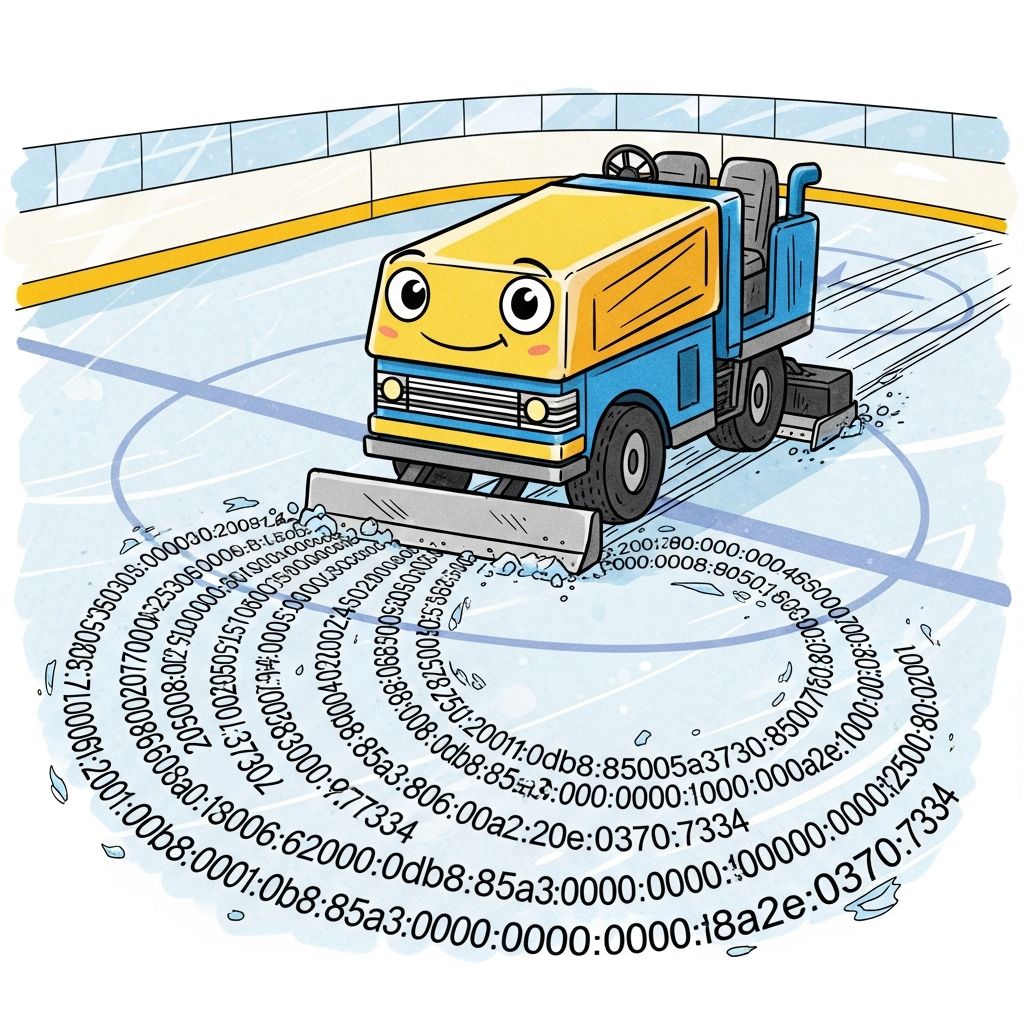
Zamboni Doodle on IPv6: A Fun Dive into Internet Evolution
In the early 2010s, Google delighted users with interactive Doodles, turning holidays and anniversaries into playful browser experiences. One standout was the 2013 tribute to Frank Zamboni’s birthday, featuring a fully playable ice-resurfacing game. What made this particular moment memorable for tech enthusiasts was successfully enjoying it over IPv6—the next-generation internet protocol. This event wasn’t just about gaming; it showcased the growing maturity of IPv6 infrastructure, proving that fun online content could thrive beyond the old IPv4 limits.
The Charm of Google’s Interactive Doodles
Google Doodles have evolved from simple logo tweaks to immersive games. The Zamboni Doodle honored Frank Zamboni, inventor of the modern ice resurfacer, on his 112th birthday. Players controlled the machine with arrow keys, navigating rinks littered with skate marks, obstacles like banana peels, and fuel cans. Levels escalated from kids’ playful scratches to professional hockey rinks, blending nostalgia with skill-based challenges.
These Doodles engage millions, fostering creativity while educating about historical figures. The Zamboni game stood out for its physics simulation—spinning on peels, fuel management, and smooth resurfacing mechanics—making it a precursor to today’s browser-based esports.
- Arrow key controls for precise movement
- Progressive difficulty with themed arenas
- Collectibles for extended playtime
- Humorous obstacles mimicking real rink hazards
Understanding IPv6: Beyond IPv4 Constraints
IPv4, with its 4.3 billion address limit, fueled the internet boom but hit exhaustion by the 2010s. IPv6, offering 340 undecillion addresses, solves this with 128-bit headers, improved routing, and no need for NAT complexities.
By 2013, adoption was accelerating. Google, a pioneer, enabled IPv6 for search in 2008 and expanded to YouTube, Gmail. This Doodle’s IPv6 compatibility highlighted dual-stack readiness—devices handling both protocols seamlessly.
| Feature | IPv4 | IPv6 |
|---|---|---|
| Address Space | 32-bit (4.3B) | 128-bit (3.4×10^38) |
| Header Size | 20 bytes min | 40 bytes fixed |
| Security | Optional IPsec | Mandatory IPsec |
| Mobility | Limited | Built-in |
This table underscores why IPv6 powers IoT, 5G, and cloud gaming today.
Accessing the Zamboni Game via IPv6
Picture loading google.com on an IPv6-only connection in 2013. The Doodle appeared instantly, game mechanics responsive without lag. Developers marveled at JavaScript, Canvas, and animations rendering flawlessly over the new protocol. No address translation hiccups; pure end-to-end connectivity.
This success validated Google’s dual-stack strategy. Users in IPv6-enabled regions like parts of Europe and the US experienced it first-hand, proving content delivery networks (CDNs) were adapting.
Technical Deep Dive: How It All Worked
The game relied on HTML5 Canvas for graphics, JavaScript for logic. IPv6 ensured low-latency packet delivery. Key elements:
- DNS Resolution: AAAA records directed to IPv6 endpoints.
- Connection Handshake: TCP over IPv6 established sessions swiftly.
- Asset Loading: Images, sounds fetched via IPv6 without fallback delays.
- Real-time Input: Keyboard events processed with minimal jitter.
Behind the scenes, Google’s anycast networks balanced loads across global data centers, IPv6 included. This setup foreshadowed IPv6’s role in live streaming and multiplayer games.
IPv6 Adoption Milestones Around 2013
World IPv6 Launch in 2012 committed major players to permanent support. By 2013, Google’s IPv6 traffic hit 3-4%, per their stats. ISPs like Comcast rolled out native IPv6, enabling experiences like this Doodle.
Challenges persisted—legacy hardware, enterprise hesitancy—but events like this built momentum. Today, IPv6 exceeds 40% globally, essential for Netflix, Zoom, and Fortnite.
Why This Moment Mattered for Web Developers
For coders, the Zamboni Doodle was a litmus test. It encouraged IPv6 testing in dev environments. Tools like Hurricane Electric’s tunnel broker simplified access. Lessons learned:
- Prioritize dual-stack DNS
- Test Canvas on IPv6
- Monitor for MTU issues
- Embrace stateless autoconfiguration
This pushed frameworks toward protocol-agnostic designs, benefiting progressive web apps (PWAs).
Modern Implications for Browser Gaming
Fast-forward to 2026: IPv6 dominates. Games like Google’s Dino Runner or Doodles Champion Island leverage it natively. Cloud gaming via GeForce Now, Xbox Cloud requires IPv6 for scale.
Benefits include:
- Direct peer-to-peer for lower latency
- Simplified global addressing
- Future-proofing for metaverse/VR
Recreating the Experience Today
The original Doodle is archived, but you can replay via Google’s cache. Test on IPv6:
- Enable IPv6 on your network (e.g., Windows: netsh interface ipv6 install)
- Use sites like test-ipv6.com to verify
- Load the game—feel the difference!
Challenges Overcome in Early IPv6 Gaming
Early hurdles included fragmented support, tunneling overhead. Google mitigated via happy eyeballs—preferring IPv6 if responsive. The Doodle’s success showed mobile IPv6 viability too, as Android embraced it early.
Future of IPv6 in Entertainment
With 6G looming, IPv6 enables massive device connectivity. Expect hyper-realistic browser games, AR Doodles. Standards like WebTransport enhance UDP over IPv6 for multiplayer.
FAQs
- What is the Zamboni Doodle?
- A 2013 Google game celebrating Frank Zamboni, where you drive an ice resurfacer.
- Did it support IPv6 in 2013?
- Yes, fully playable over IPv6 thanks to Google’s infrastructure.
- Why switch to IPv6?
- Exhaustion of IPv4 addresses; IPv6 offers vast space and better efficiency.
- Can I play it now?
- Yes, via archived links; works on modern IPv6 networks.
- What’s IPv6 adoption like today?
- Over 40% worldwide, powering streaming and gaming.
References
- World IPv6 Launch — Internet Society. 2012-06-06. https://www.internetsociety.org/deploy360/world-ipv6/
- IPv6 Adoption Statistics — Google. 2024-01-01. https://www.google.com/intl/en/ipv6/statistics.html
- IPv6 Address Allocation — Internet Assigned Numbers Authority (IANA). 2023-05-15. https://www.iana.org/assignments/ipv6-address-space/ipv6-address-space.xhtml
- World IPv6 Day — Google Official Blog. 2011-06-08. https://googleblog.blogspot.com/2011/01/world-ipv6-day-firing-up-engines-on-new.html
- IPv6 RFC 8200 — Internet Engineering Task Force (IETF). 2017-07-01. https://datatracker.ietf.org/doc/html/rfc8200
Similar Articles






Read full bio of medha deb