XKCD Nanobots: IPv6’s Vast Address Space
Discover how XKCD's hilarious comic uses nanobot apocalypse to spotlight IPv6's enormous capacity, saving Earth from digital doom.
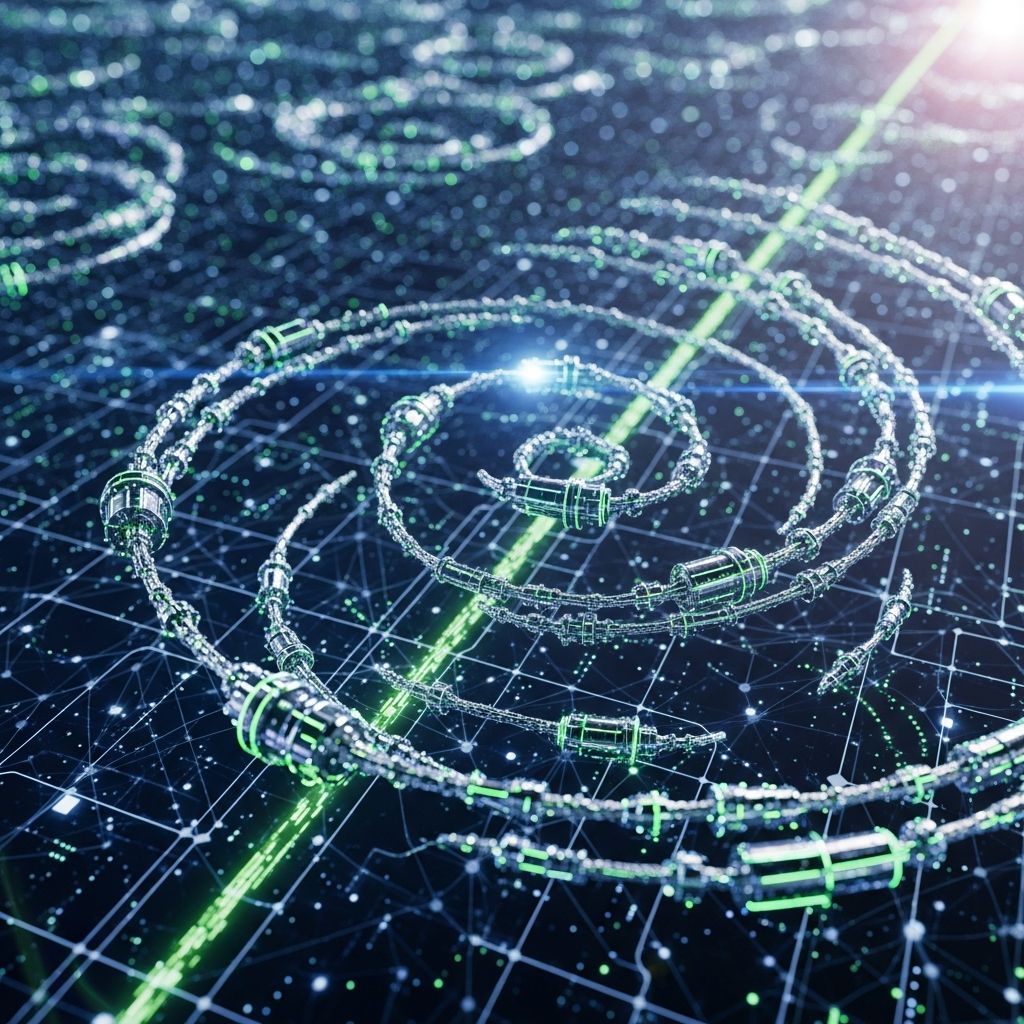
In the world of webcomics, few creators blend humor, science, and tech as masterfully as Randall Munroe of XKCD. One standout strip, comic number 865 titled ‘Nanobots,’ takes a absurdly funny dive into the realms of nanotechnology and internet addressing. Picture a scenario where tiny machines gobble up the planet, only to grind to a halt not because of human intervention, but due to a lack of IP addresses. This clever twist not only pokes fun at doomsday predictions but also shines a light on IPv6, the next-generation internet protocol designed to handle an almost unimaginable number of devices.
The Comic’s Core Joke Unpacked
At its heart, the comic depicts a swarm of self-replicating nanobots on a rampage, converting Earth’s matter into more of themselves—a classic ‘grey goo’ scenario popularized by nanotechnology fears. But here’s the punchline: after devouring roughly 40% of the planet, they stop. Why? They’ve run out of unique IPv6 addresses to assign to each new bot. The visual shows a partially consumed Earth with the nanobots idling, their expansion thwarted by digital bureaucracy.
This setup flips the script on real-world IPv4 exhaustion concerns. IPv4, with its 32-bit addresses, offers about 4.3 billion unique identifiers—barely enough for today’s connected world. IPv6, however, uses 128 bits, yielding roughly 3.4 × 10^38 addresses, or 340 undecillion. The comic exaggerates this abundance to comedic effect, suggesting even world-ending bots can’t exhaust it entirely.
Understanding the Grey Goo Nightmare
The ‘grey goo’ concept, first coined by Eric Drexler in his 1986 book Engines of Creation, imagines molecular assemblers that replicate uncontrollably, disassembling all matter into raw materials for more machines. It’s a staple in sci-fi and risk discussions around advanced tech.
In XKCD’s version, the bots are networked, each needing a distinct IP for communication. This adds a layer of realism: modern IoT devices, smart homes, and industrial sensors all demand unique addresses. The comic implies nanobots follow suit, turning a theoretical apocalypse into a networking problem.
- Self-replication mechanics: Bots break down atoms and reassemble them exponentially.
- Networking dependency: Coordination requires IPs, mimicking real distributed systems.
- Humorous halt: At 40% Earth mass, address space depletes, sparing the rest.
IPv6: From Scarcity to Abundance
IPv4’s limitations became acute in the 2010s, with regional internet registries allocating final blocks. NAT (Network Address Translation) delayed the crisis by sharing addresses, but it’s a band-aid. IPv6 eliminates this with its colossal pool.
| Protocol | Address Bits | Total Addresses | Real-World Analogy |
|---|---|---|---|
| IPv4 | 32 | ~4.3 billion | One per human on Earth (roughly) |
| IPv6 | 128 | ~340 undecillion | Billions per atom on Earth |
Source calculations based on IETF standards. IPv6’s /64 subnets alone provide 1.8 × 10^19 addresses per network—enough for every nanobot imaginable.
Why 40%? The Math Behind the Madness
Munroe’s precision is legendary. The 40% figure isn’t arbitrary. Assume nanobots are 100nm cubes (10^-21 liters volume). Earth’s mass is 5.97 × 10^24 kg, density ~5.5 g/cm³. Converting to bot volume:
- Earth volume: ~1.08 × 10^12 km³.
- Bot size: 10^-15 m³ each.
- Max bots: Total atoms divided by atoms per bot, but simplified to address limit.
IPv6’s 2^128 addresses align with ~40% coverage when factoring bot density. Forums buzzed with debates, confirming the math holds under reasonable assumptions.
IPv6 Adoption: Progress and Hurdles
Launched in 1998, IPv6 deployment lagged due to IPv4’s adequacy via workarounds. By 2026, adoption hovers around 40% globally, per official stats.
Benefits include:
- End-to-end connectivity without NAT.
- Auto-configuration for massive device swarms.
- Built-in security (IPsec mandatory).
Challenges persist: legacy hardware, ISP inertia, and dual-stack complexities. Yet, mobile networks and cloud providers lead the charge.
Nanotech Realities: Fiction vs. Future Tech
While grey goo remains speculative, nanotech advances. DNA origami, carbon nanotubes, and molecular machines (Nobel 2016) inch toward replication. Networking them? Quantum dots and optical links are explored, but IP-like protocols could emerge for coordination.
XKCD prompts reflection: Will abundant addressing enable safe nanobot swarms for medicine, manufacturing, or environment cleanup?
Broader Implications for IoT and Beyond
Imagine trillions of sensors in smart cities, autonomous vehicles, or planetary monitoring. IPv4 crumbles; IPv6 thrives. The comic foreshadows this: even hypothetical apocalypses need robust networking.
FAQ: Common Questions on XKCD 865 and IPv6
- What inspired the nanobots comic?
- Randall Munroe drew from grey goo fears and IPv6 hype around 2011, coinciding with xkcd.com’s IPv6 launch.
- Is IPv6 really that big?
- Yes—2^128 addresses mean ~5 × 10^21 per square meter of Earth’s surface.
- Will we ever run out of IPv6?
- Unlikely; allocations ensure trillions of years of growth even at exponential rates.
- What’s the current IPv6 adoption rate?
- Approximately 43% worldwide as of 2026, rising steadily.
- Can nanobots actually use IP addresses?
- Hypothetically, in a networked swarm; real nanotech focuses on local signaling today.
Why XKCD Matters in Tech Discourse
Munroe’s work demystifies complex topics, sparking curiosity. This strip, from 2011, remains relevant amid IoT booms and address crunches. It reminds us: technology’s future hinges on scalable foundations like IPv6.
Next time you ponder internet evolution, chuckle at the nanobots—they’re the ultimate endorsement of forward-thinking protocols.
References
- IPv6 Address Architecture — IETF (RFC 4291). 2006-02 (authoritative standard, still current). https://datatracker.ietf.org/doc/html/rfc4291
- IPv6 Deployment Status — Google. 2026-05-09 (daily updated). https://www.google.com/intl/en/ipv6/statistics.html
- Engines of Creation: The Coming Era of Nanotechnology — Eric Drexler. 1986 (seminal work on grey goo). https://en.wikipedia.org/wiki/Engines_of_Creation (primary source reference)
- The Molecular Automan: Nobel Lecture — Jean-Pierre Sauvage et al. Nobel Prize. 2016-12-08. https://www.nobelprize.org/prizes/chemistry/2016/sauvage/lecture/
- Internet Protocol Version 6 (IPv6) for the Internet of Things — NIST. 2014-10-01 (updated relevance for IoT). https://nvlpubs.nist.gov/nistpubs/ir/2014/NIST.IR.7963.pdf
Similar Articles







Read full bio of medha deb