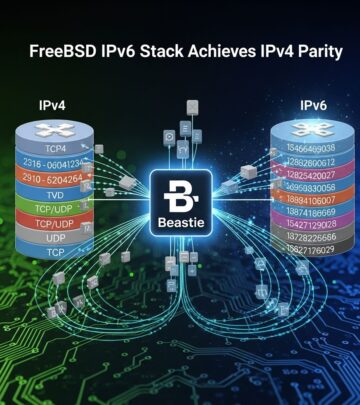
World IPv6 Launch: A Milestone in Internet Evolution
Explore the historic World IPv6 Launch of 2012 that propelled the internet into a new era of unlimited connectivity and scalability.

The internet has undergone numerous transformations since its inception, but few events have carried the weight of the World IPv6 Launch in 2012. This coordinated global effort marked a permanent shift from the aging IPv4 protocol to the more robust IPv6, addressing the looming crisis of address exhaustion and paving the way for an exponentially larger digital ecosystem. Organized by the Internet Society, the launch on June 6, 2012, saw thousands of organizations commit to enabling IPv6, fundamentally altering the trajectory of online connectivity.
The IPv4 Crisis: Why Change Was Inevitable
IPv4, introduced in 1981, provided a pool of about 4.3 billion unique addresses—a number that seemed limitless at the time. However, the explosive growth of the internet, fueled by personal computers, mobile devices, and the rise of the World Wide Web, rapidly depleted this resource. By the early 2000s, regional internet registries were warning of imminent shortages.
Projections from authoritative bodies indicated that IPv4 addresses would run out by 2011-2012. This scarcity not only threatened new device connections but also stifled innovation in areas like the Internet of Things (IoT). IPv6 emerged as the solution, offering 340 undecillion addresses—enough to assign billions to every person on Earth.
- IPv4 limitations: 32-bit addressing leading to exhaustion.
- IPv6 advantages: 128-bit addressing, improved security, and simplified routing.
- Transition challenges: Dual-stack implementations to maintain backward compatibility.
The urgency was palpable, with events like World IPv6 Day in 2011 serving as a 24-hour trial run, proving the technology’s readiness without widespread disruptions.
Building Momentum: From Test Day to Permanent Launch
World IPv6 Day on June 8, 2011, was a resounding success, with major players like Google, Facebook, and Yahoo temporarily activating IPv6. Traffic analysis showed minimal issues, boosting confidence for a full-scale rollout. This paved the way for the 2012 Launch, designed not as a test but as an irreversible commitment.
By early 2012, commitments poured in from diverse sectors. Web giants pledged to IPv6-enable their core sites, while ISPs aimed to provide IPv6 access to at least 1% of their residential subscribers by launch day. Home router manufacturers updated firmware for default IPv6 support, easing end-user adoption.
| Sector | Key Commitments | Examples |
|---|---|---|
| Web Companies | Permanent IPv6 on main sites | Google, Facebook, Yahoo!, Microsoft Bing |
| ISPs | 1% subscriber IPv6 traffic | AT&T, Comcast, KDDI |
| Equipment Makers | Default IPv6 in routers | D-Link, Cisco |
This multi-stakeholder approach ensured a smooth transition, with content delivery networks like Akamai facilitating IPv6 for enterprise clients.
The Final Countdown: Registration Deadline and Participation
As May 2012 approached, the Internet Society issued urgent calls for website owners to register as official participants. The deadline was May 30, just days before the June 6 launch, creating a buzz in tech communities. Registration didn’t require immediate IPv6 activation—sites could sign up and prepare, with activation timed for the big day.
This strategy maximized visibility: Official lists showcased committed organizations, inspiring others to follow. Even late joiners were encouraged to enable IPv6 by June 6, though only pre-deadline registrants earned ‘official’ status. The push highlighted the low barrier to entry, using tools like Hurricane Electric’s tunnel broker for quick setups.
- Submit registration form by May 30.
- Test IPv6 connectivity using online tools.
- Activate on June 6 for global impact.
Launch Day Triumph: Global Adoption Takes Off
On June 6, 2012—chosen for its ‘6-6-12’ memorability—the world witnessed unprecedented coordination. Billions of users accessed IPv6-enabled sites seamlessly. Google reported over 0.3% of its traffic via IPv6 initially, a figure that has since skyrocketed to around 40% globally.
ISPs like Comcast and Time Warner Cable rolled out IPv6 to millions, while router updates from vendors ensured home networks were future-proof. The event’s success was measured not just in traffic but in momentum: It dispelled myths about complexity and accelerated vendor support.
Technical Underpinnings: How IPv6 Works and Wins
IPv6 isn’t merely more addresses; it’s a redesign. Key features include:
- Stateless Address Autoconfiguration (SLAAC): Devices self-assign addresses without DHCP.
- Improved Security: Mandatory IPsec support for encrypted communications.
- Better Multicast: Efficient one-to-many data delivery, reducing server load.
- Simplified Header: Faster packet processing for high-speed networks.
Transition mechanisms like 6to4 tunneling and dual-stack allowed gradual migration, minimizing disruptions during the launch.
Long-Term Impact: IPv6’s Enduring Legacy
Fourteen years on, the World IPv6 Launch’s effects are profound. IPv6 adoption has reached 40-50% worldwide, enabling IoT proliferation, 5G networks, and cloud scaling. Without it, the internet might have stagnated under IPv4 constraints like NAT workarounds.
Today, governments mandate IPv6—e.g., U.S. federal agencies by 2012 deadlines—and enterprises rely on it for global reach. The event exemplified collaborative governance, with bodies like ARIN and RIPE NCC managing address allocations effectively.
Challenges Overcome and Lessons Learned
Not everything was smooth. Some enterprises faced firewall misconfigurations, and legacy systems lagged. Yet, the launch’s preparation—extensive testing and documentation—mitigated risks. Lessons included the value of industry-wide trials and clear communication.
Post-launch metrics from RFC 6948 highlighted end-user experiences, confirming stability across diverse networks.
Getting Started with IPv6 Today
For modern site owners, enabling IPv6 is straightforward:
- Check provider support (most major hosts offer it).
- Add AAAA DNS records.
- Test with ipv6-test.com.
Benefits include future-proofing against IPv4 costs and tapping into growing IPv6-only audiences in regions like the U.S. and Europe.
FAQs: World IPv6 Launch Essentials
What was the exact date of World IPv6 Launch?
June 6, 2012, following the 2011 test day.
Do I need to register now to enable IPv6?
No, the formal event ended, but IPv6 deployment is ongoing and recommended.
Is IPv6 faster than IPv4?
Not inherently, but it eliminates NAT overhead and supports efficient routing.
Which major companies participated?
Google, Facebook, Yahoo!, AT&T, Comcast, and many more.
Why does IPv6 matter in 2026?
With IoT and 5G, IPv6 is essential for scalability and innovation.
References
- World IPv6 Launch Solidifies Global Support for New Internet Protocol — Internet Society. 2012-01-17. https://www.internetsociety.org/news/press-releases/2012/world-ipv6-launch-solidifies-global-support-for-new-internet-protocol/
- World IPv6 Launch Day: What Was It All About? — ARIN. 2012-06-11. https://www.arin.net/vault/blog/2012/06/11/world-ipv6-launch-day-what-was-it-all-about/
- RFC 6948 – Some Measurements on World IPv6 Day from an End User’s Perspective — IETF. 2013-04-01. https://datatracker.ietf.org/doc/rfc6948/
- Network Operators | World IPv6 Launch — World IPv6 Launch.org. Accessed 2026. https://www.worldipv6launch.org/participants-network-operators/
- IPv6 Allocation / Assignment Status — RIPE NCC (official registry). 2026-05-01. https://www.ripe.net/publications/docs/ripe-738
Similar Articles







Read full bio of medha deb