World IPv6 Launch Begins
Marking the permanent shift to IPv6 on June 6, 2012, as global leaders commit to the future of internet connectivity.
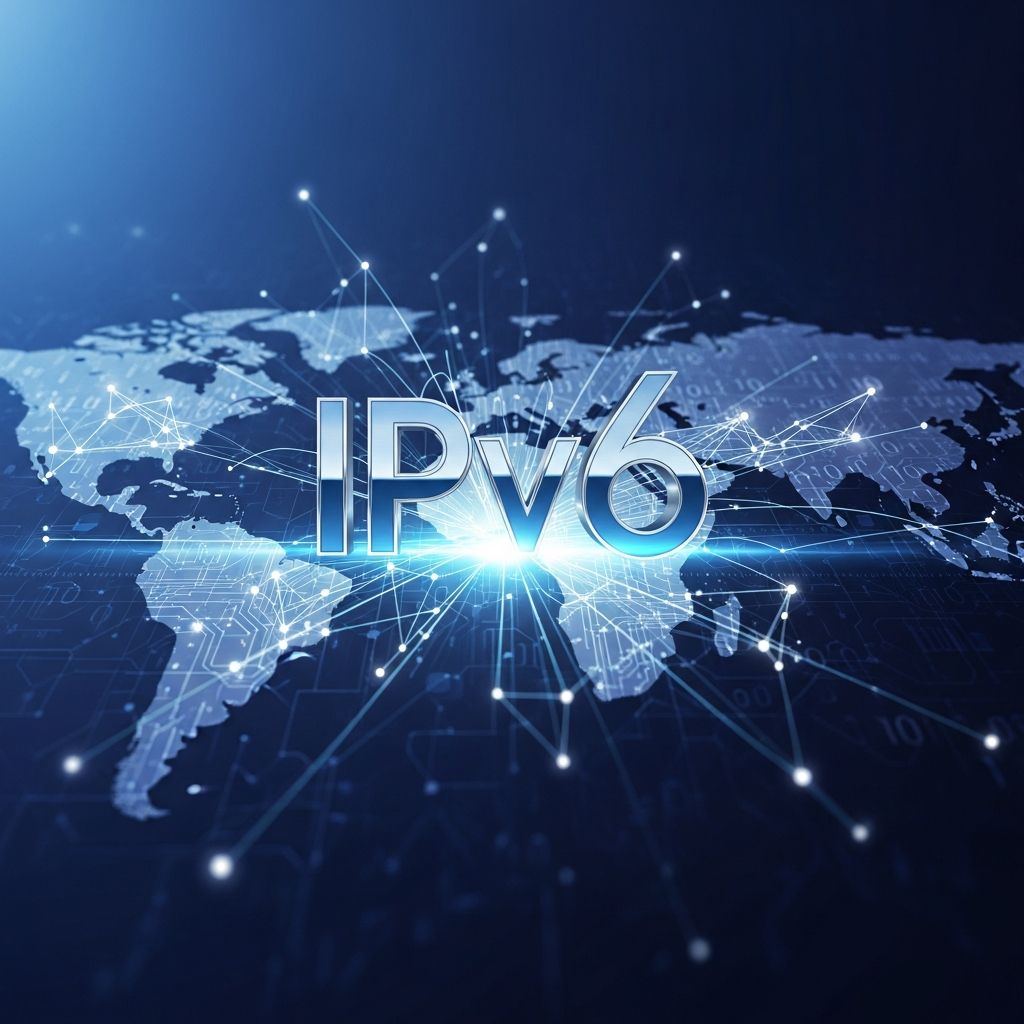
The internet has always been a dynamic ecosystem, constantly evolving to meet the demands of billions of users and devices. On June 6, 2012, a pivotal moment arrived with the World IPv6 Launch, an industry-wide initiative that marked the permanent adoption of the next-generation Internet Protocol version 6 (IPv6). This event was not just a technical upgrade; it was a strategic response to the impending exhaustion of IPv4 addresses, ensuring the internet’s continued growth and innovation.
The IPv4 Crisis and the Need for Change
IPv4, the fourth iteration of the Internet Protocol introduced in the 1980s, provided approximately 4.3 billion unique addresses. While sufficient for the early days of the web, the explosive growth of personal computers, smartphones, and connected devices quickly depleted this pool. By the early 2010s, regional internet registries were running out of fresh IPv4 allocations, forcing network operators to resort to complex workarounds like Network Address Translation (NAT).
NAT allowed multiple devices to share a single public IPv4 address, but it introduced complications such as increased latency, security vulnerabilities, and barriers to peer-to-peer applications. Video streaming, online gaming, and the burgeoning Internet of Things (IoT) demanded direct, end-to-end connectivity that IPv4 struggled to deliver efficiently.
IPv6 emerged as the solution, offering a staggering 340 undecillion addresses (2^128), virtually eliminating address scarcity. Beyond capacity, IPv6 promised simplified packet headers for faster routing, built-in security features like IPsec, and better support for mobile networks. The transition, however, required coordinated effort across the global internet ecosystem.
Building Momentum: From Test Day to Permanent Rollout
The path to World IPv6 Launch was paved by prior events. In 2011, World IPv6 Day served as a 24-hour global test where major websites and providers enabled IPv6 alongside IPv4 in a ‘dual-stack’ configuration. This trial demonstrated seamless operation, with no widespread disruptions reported. Traffic measurements showed IPv6 handling up to 1% of global internet traffic during the event, proving readiness.
Emboldened by this success, the Internet Society coordinated the 2012 Launch, escalating from a one-day experiment to a permanent commitment. Participants agreed to keep IPv6 enabled indefinitely, accelerating adoption and building ecosystem confidence. This shift was crucial because intermittent support could confuse users and developers, hindering long-term progress.
Key Players and Their Commitments
The initiative garnered unprecedented support from industry leaders. Major Internet Service Providers (ISPs) like Comcast, Time Warner Cable, and AT&T pledged to activate IPv6 for their customer bases. Content Delivery Networks (CDNs) such as Akamai and Limelight Networks ensured efficient global distribution over the new protocol.
Tech giants played starring roles: Google made Search, YouTube, and Gmail available over IPv6 to all networks; Facebook enabled its platform; Microsoft supported Xbox Live and other services. Home router manufacturers, including Cisco and D-Link, committed to shipping IPv6-capable firmware.
- ISPs: Comcast, Bharti Airtel, Verizon
- Websites & Services: Google, Facebook, Yahoo!, Microsoft
- CDNs: Akamai, Level 3
- Hardware: Cisco, Juniper Networks
This broad coalition represented a significant portion of global internet traffic, creating a tipping point for adoption.
How the Launch Unfolded
At 00:01 GMT on June 6, 2012, participating organizations flipped the switch. Users connecting via IPv6-enabled networks experienced no interruption, thanks to dual-stack implementations that prioritized IPv6 when available but fell back to IPv4 seamlessly. Monitoring tools tracked adoption in real-time, revealing rapid uptake in regions like the US and Europe.
Post-launch data from the World IPv6 Launch site showed participating networks surpassing the 1% IPv6 traffic threshold within months. By December 2012, over 65 networks exceeded this benchmark, with Google reporting steady growth in IPv6 queries.
Technical Advantages Driving Adoption
IPv6’s design addressed IPv4’s shortcomings head-on. Here’s a comparison:
| Feature | IPv4 | IPv6 |
|---|---|---|
| Address Space | ~4.3 billion | 340 undecillion |
| Header Size | 20-60 bytes (variable) | 40 bytes (fixed) |
| Security | Optional IPsec | Mandatory IPsec support |
| Autoconfiguration | DHCP required | Stateless autoconfig |
| Mobility Support | Limited | Built-in Mobile IPv6 |
These improvements translate to lower operational costs, enhanced performance, and future-proofing for 5G, IoT, and beyond.
Challenges and Transition Strategies
Despite the smooth rollout, hurdles remained. Legacy IPv4-only devices required tunneling mechanisms like 6to4 or Teredo for IPv6 access. Enterprises faced internal network overhauls, while some regions lagged due to regulatory delays.
Dual-stack deployment emerged as the gold standard, running both protocols in parallel until IPv6 dominated. Tools like Happy Eyeballs ensured applications selected the fastest available protocol, minimizing user-perceived delays.
Long-Term Impact on the Internet Ecosystem
Over a decade later, IPv6 adoption stands at around 40% globally, with peaks over 80% in the US and parts of Europe. This growth has enabled innovations like widespread IoT deployment and efficient cloud computing. Without the 2012 Launch, the internet might have stagnated under IPv4 constraints.
The event underscored the power of industry collaboration, influencing subsequent initiatives like World IPv6 Day anniversaries and ongoing measurement dashboards.
Getting Involved: Tips for Users and Businesses
Individuals can check IPv6 support via sites like test-ipv6.com. Businesses should audit networks, update firmware, and train staff. Governments play a role by mandating IPv6 in public services.
Frequently Asked Questions
Is IPv6 faster than IPv4?
Potentially yes, due to optimized headers and no NAT overhead, though real-world gains depend on network conditions.
Will IPv4 disappear soon?
Not immediately; dual-stack will persist, but IPv6 will dominate as devices phase out IPv4-only support.
Do I need new hardware for IPv6?
Most modern devices support it natively; check router settings and update firmware if needed.
What if my ISP doesn’t support IPv6?
Tunneling services like Hurricane Electric provide free IPv6 access over IPv4 connections.
How do I measure IPv6 adoption?
Use tools from APNIC, Google, or Facebook’s dashboards for real-time global stats.
Conclusion: A Foundation for Tomorrow’s Internet
The World IPv6 Launch was a watershed moment, transforming a looming crisis into an opportunity for expansion. By uniting ISPs, tech firms, and manufacturers, it ensured the internet remains open, scalable, and innovative. As we connect more devices than ever, IPv6 stands as the bedrock of this connected world, with the 2012 event forever etched in digital history.
References
- World IPv6 Launch on June 6, 2012, To Bring Permanent IPv6 Deployment — Internet Society, Dan York. 2012-01-06. https://www.internetsociety.org/blog/2012/01/world-ipv6-launch-on-june-6-2012-to-bring-permanent-ipv6-deployment/
- IPv6: countdown to launch — Google Blog. 2012-01-25. https://googleblog.blogspot.com/2012/01/ipv6-countdown-to-launch.html
- World IPv6 Launch Day: What Was It All About? — ARIN. 2012-06-11. https://www.arin.net/vault/blog/2012/06/11/world-ipv6-launch-day-what-was-it-all-about/
- World IPv6 Launch: Keeping the Internet growing — Google Blog. 2012-06-06. https://blog.google/company-news/inside-google/company-announcements/world-ipv6-launch-keeping-internet/
- IPv6 Address Space Overview — Internet Assigned Numbers Authority (IANA), official standards body. Ongoing (authoritative spec from 1998 RFC 2460). https://www.iana.org/assignments/ipv6-parameters/ipv6-parameters.xhtml
Similar Articles






Read full bio of medha deb