Women Harnessing Digital Connectivity for Global Impact
Discover how women are leveraging internet tools to bridge gaps, lead innovations, and drive transformative change worldwide.
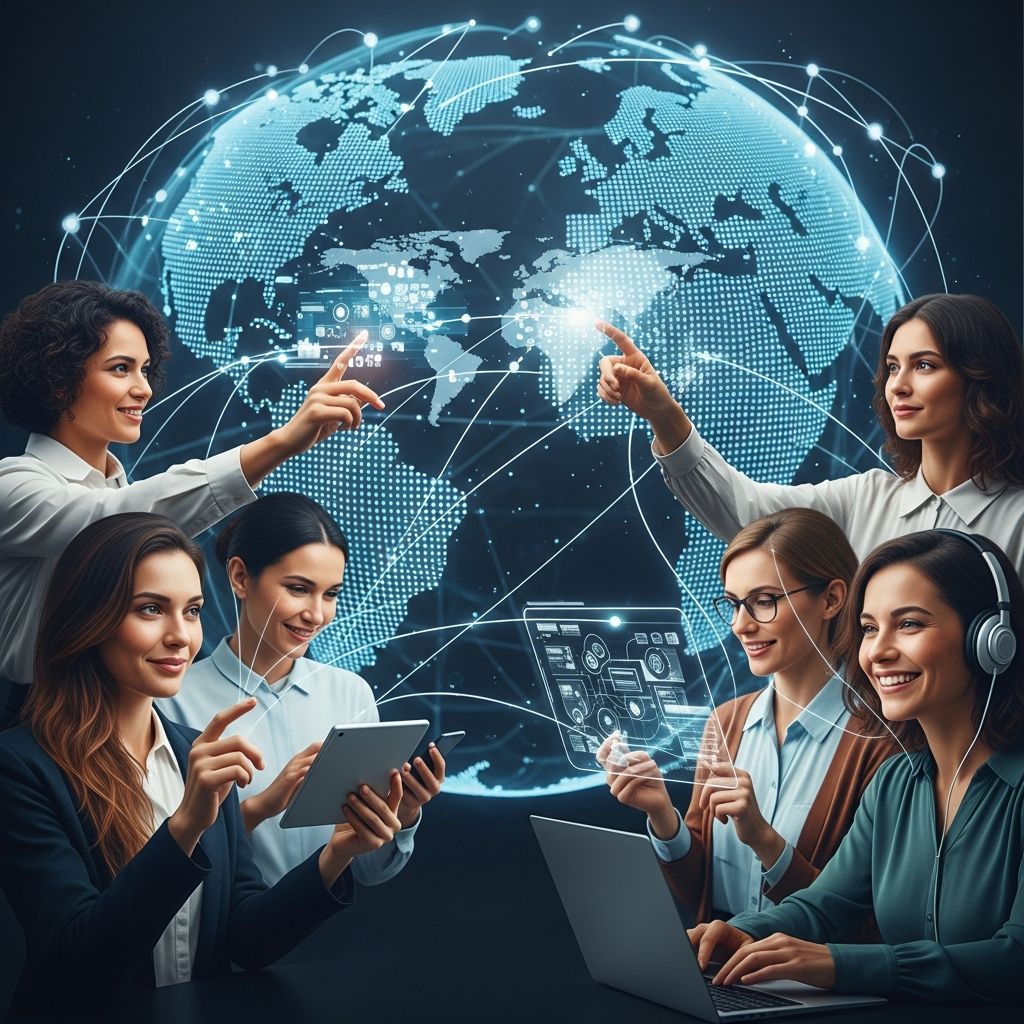
In an era defined by rapid technological evolution, women stand at the forefront of harnessing digital tools to reshape societies. The internet, once a nascent network, has evolved into a powerful platform that amplifies voices, democratizes knowledge, and opens doors previously bolted shut. Women’s engagement with these tools is not just participation—it’s leadership that propels equitable development. This piece delves into how digital connectivity empowers women, the persistent barriers they overcome, and the collective actions needed to amplify their influence.
The Digital Revolution: Women’s Entry Point to Empowerment
The advent of widespread internet access has fundamentally altered opportunities for women globally. Connectivity provides unprecedented access to education, markets, and networks, enabling women to bypass traditional constraints. For instance, online platforms allow rural women to learn skills via free courses, entrepreneurs to sell products internationally, and activists to mobilize communities.
Statistics underscore this shift. According to the International Telecommunication Union (ITU), while global internet penetration reached 67% in 2024, women in low-income countries are 17% less likely to use the internet than men.1 Yet, where access exists, women are driving usage rates in e-commerce and social media, sectors that fuel economic growth.
- Educational Access: Platforms like Khan Academy and Coursera have enrolled millions of women in STEM fields.
- Economic Opportunities: Women-led startups on Etsy and Shopify generate billions in revenue annually.
- Social Mobilization: Hashtag campaigns like #MeToo demonstrate women’s prowess in digital advocacy.
These examples illustrate that digital tools are not merely utilities but catalysts for personal and communal advancement.
Breaking Barriers: Addressing the Gender Digital Divide
Despite progress, the gender digital divide remains a stark reality. In developing regions, factors like affordability, literacy, and cultural norms limit women’s online presence. A World Bank report highlights that closing this gap could boost GDP by 1.5% in emerging economies.2
Key challenges include:
| Barrier | Impact on Women | Solutions |
|---|---|---|
| Affordability | High data costs deter usage | Subsidized plans and community Wi-Fi |
| Digital Literacy | Lack of training excludes participation | Targeted workshops and apps |
| Cultural Restrictions | Mobility limits device access | Policy advocacy for inclusion |
| Infrastructure Gaps | Rural areas underserved | Satellite and mobile tech expansion |
Organizations are countering these issues through initiatives like UNESCO’s digital literacy programs, which have trained over 500,000 women since 2020.3
Women Leaders Pioneering Internet Governance
Women’s influence extends to shaping internet policies. Figures like those in the Internet Society’s networks are advocating for open, secure, and inclusive digital spaces. Their efforts ensure that governance reflects diverse needs, from data privacy to content moderation.
Prominent examples include women leading regional forums on cybersecurity and those developing standards for ethical AI. By participating in bodies like ICANN and IETF, they influence protocols that affect billions.
- Policy Advocacy: Pushing for gender-sensitive regulations.
- Innovation Hubs: Founding tech incubators for female founders.
- Mentorship Networks: Connecting generations of women in tech.
These leaders exemplify how targeted involvement yields systemic change.
Real-World Transformations: Stories of Digital Triumph
Across continents, women are turning connectivity into tangible outcomes. In sub-Saharan Africa, apps developed by women farmers provide real-time crop prices, increasing incomes by 20-30%. In Asia, virtual health consultations via telemedicine have empowered women in conservative areas to access reproductive care discreetly.
Consider the case of community networks in Latin America, where women-managed Wi-Fi hotspots serve thousands, fostering local economies. A PMC scoping review confirms ICTs enhance women’s capacities in health, education, and violence prevention.4
“Technology equips women with resources to challenge inequalities, from economic independence to social justice.”
These narratives highlight the multiplier effect of digital empowerment.
Building Supportive Ecosystems: Communities and Collaborations
Grassroots groups play a crucial role. Networks akin to special interest collectives unite women to share expertise, fund projects, and lobby governments. Such ecosystems reduce isolation and amplify impact.
Collaborations with tech giants yield tools like voice-assisted devices tailored for low-literacy users. Public-private partnerships are essential, as seen in ITU’s “Generation Connect” initiative, aiming for youth and women inclusion by 2030.
Future Horizons: Envisioning an Inclusive Digital World
Looking ahead, emerging technologies like 5G, AI, and blockchain hold promise if designed inclusively. Women must lead in Web3 development to prevent biases in decentralized systems. Projections suggest that equitable digital participation could add $13 trillion to global GDP by 2025, per McKinsey, with women at the core.5
Priorities include:
- Investing in female STEM education.
- Promoting diverse hiring in Big Tech.
- Scaling community-driven access models.
FAQs: Empowering Women in the Digital Era
What is the gender digital divide?
The gap in internet access and usage between men and women, widest in low-income regions.
How does the internet empower women economically?
Through e-commerce, freelancing platforms, and skill-building resources that enable income generation.
Which organizations support women’s digital inclusion?
Internet Society, ITU, World Bank, and UNESCO lead global efforts.
Can digital tools combat gender-based violence?
Yes, via apps for reporting, support networks, and awareness campaigns.
What role do women play in internet governance?
They advocate for equitable policies in forums like ICANN and regional summits.
In conclusion, women’s strategic use of digital connectivity is redefining possibilities. By dismantling barriers and fostering leadership, we pave the way for a balanced digital future. Collective commitment—from individuals joining networks to policymakers prioritizing inclusion—will unlock this potential fully.
References
- Measuring digital development: Facts and figures 2024 — International Telecommunication Union (ITU). 2024-10-15. https://www.itu.int/itu-d/reports/statistics/2024/10/15/ff24/
- Women, Business and the Law 2024 — World Bank. 2024-03-26. https://wbl.worldbank.org/
- Digital skills for life and work — UNESCO. 2023-11-20. https://www.unesco.org/en/digital-skills
- Technology as the key to women’s empowerment: a scoping review — PMC/NCBI. 2021-02-22. https://pmc.ncbi.nlm.nih.gov/articles/PMC7903800/
- The power of parity: Advancing women’s equality in the workplace — McKinsey & Company. 2015-09 (updated insights referenced in 2023 reports). https://www.mckinsey.com/featured-insights/employment-and-growth/how-advancing-womens-equality-can-add-12-trillion-to-global-growth
Similar Articles






Read full bio of medha deb