WiFi Revolutionizes Vineyard Management
Discover how wireless networks and smart sensors are transforming grape cultivation, boosting yields and sustainability in modern vineyards.
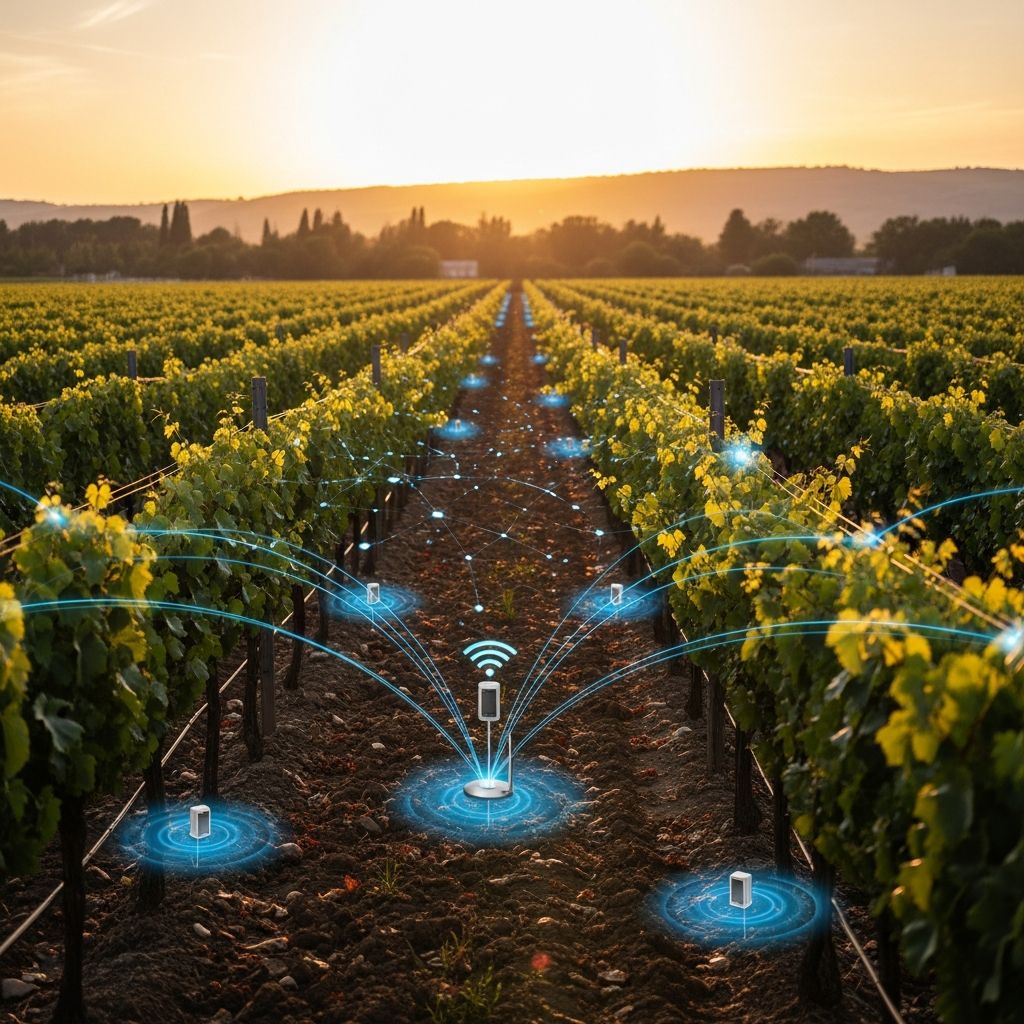
In the rolling hills of wine regions worldwide, a quiet revolution is underway. Traditional grape farming, reliant on manual observation and guesswork, is giving way to data-driven precision enabled by wireless networks. WiFi and Internet of Things (IoT) devices are empowering growers to monitor vineyards in real-time, optimizing every aspect from water usage to pest control. This fusion of connectivity and agriculture promises higher yields, superior grape quality, and environmentally friendly practices.
The Dawn of Connected Vineyards
Viticulture has always been at the mercy of nature’s whims—droughts, frosts, and pests can devastate crops overnight. Enter wireless sensor networks: small, robust devices scattered across fields that measure key environmental factors. These nodes, often powered by batteries or solar energy, track soil moisture, temperature, humidity, light levels, and even chemical traces in the earth.
Companies like Grape Networks, established in Northern California since 2002, pioneered this approach with their Climate Genie system. Deployed across hundreds of acres, these networks use mesh topologies where data hops from node to node via low-power radios, eventually reaching a central gateway. From there, directional WiFi antennas relay information miles away to internet-connected towers, making vineyard data accessible via smartphones or web dashboards anywhere with connectivity.
- Sensor Variety: Customizable for specific needs, including humidity probes, soil moisture detectors, and even motion sensors for security.
- Coverage Scale: A single network can span 100 acres with nodes spaced 10-300 meters apart, ideal for California’s expansive 50-100 acre vineyards.
- Cost Efficiency: Initial setup at about $150 per acre (minimum 100 acres), followed by $75/acre annual subscriptions.
This setup allows farmers to make informed decisions swiftly, turning vast orchards into responsive, intelligent ecosystems.
Precision Irrigation: Saving Water, Maximizing Growth
Water management is critical in grape production, where over- or under-irrigation can ruin vintages. Broadband-connected controllers like Hunter’s Hydrawise exemplify this shift. California grower Craig Thompson integrated such a system for his olive and grape fields, linking it to flow meters and weather data.
One early morning alert revealed abnormally low water pressure, tracing back to a loose drip line. Without this insight, the season’s crop could have suffered. Modern systems automate adjustments based on real-time soil data, ensuring vines receive exactly what they need.
| Parameter | Traditional Method | WiFi-Enabled System |
|---|---|---|
| Water Usage | Fixed schedules, 20-30% waste | Dynamic, up to 50% savings |
| Detection Time | Days or weeks | Minutes via alerts |
| Growth Impact | Variable yields | Consistent 20%+ yield boost |
Research from IoT-based studies confirms these gains. An experiment comparing manual to automatic irrigation on grapevines showed automated systems yielding 5.2 cm height growth versus 3 cm over 21 days, with 99% sensor accuracy over 30 days.1
Combating Diseases and Pests Proactively
Grape diseases like mildew thrive in specific conditions—high humidity paired with warmth. WiFi networks predict outbreaks by analyzing micro-climates. Instead of blanket weekly sprays, growers target only affected zones, slashing chemical use by up to 50% while preserving beneficial insects.
Advanced setups incorporate NPK sensors for nutrient monitoring and hybrid classifiers for early disease detection. Climatic data feeds machine learning models that alert farmers via SMS or apps, recommending precise fungicide applications. A PMC study highlights how such networks monitor entire vineyards, boosting production and grape quality by preempting threats.2
- Humidity and temperature thresholds flag mildew risk.
- Soil chemistry sensors detect metal imbalances early.
- Integrated cameras enable remote visual inspections, with AI poised for future disease identification.
Environmental and Economic Wins
Beyond yields, these technologies promote sustainability. Reduced pesticide runoff protects waterways, while optimized inputs cut fertilizer and labor costs. Grape Networks’ clients, including E&J Gallo and Beringer, report greener operations with lower pollution footprints.
Economically, ROI is compelling: savings on water (up to 30%), chemicals (40%), and labor compound quickly. Weather stations further aid by guiding harvest timing and labor allocation, countering ‘Mother Nature’s curveballs’ as noted in wine industry reports.3
Overcoming Connectivity Hurdles in Rural Areas
Reliable internet remains a challenge in remote vineyards. Savvy farmers like Thompson employ redundancy: LTE mobile, DSL, and local wireless ISPs ensure uninterrupted data flow. Mesh networks’ self-healing design reroutes signals around failures, maintaining robustness.
Government initiatives, such as USDA broadband programs for agriculture (.gov sources), are expanding rural coverage, making these tools accessible to more growers.4
Real-World Success Stories
- Napa Valley Nurseries: Deployed motes reduced spraying frequency, enhancing grape quality for premium wines.
- Central Valley Operations: Custom sensors monitored light and water, yielding 15-20% higher outputs.
- International Adoption: IoT irrigation in Indonesia showed superior vine growth via remote Android apps.
Future Horizons: AI and Beyond
Tomorrow’s vineyards will integrate AI for predictive analytics, drone swarms for aerial mapping, and blockchain for traceability. Imagine apps forecasting optimal harvest days or varietal performance based on hyper-local data. As 5G rolls out, latency drops further, enabling robotic harvesters guided by live sensor feeds.
Getting Started with WiFi Viticulture
Small-scale growers can begin with affordable kits: ESP8266 modules paired with moisture sensors cost under $50. Scale up to enterprise networks for comprehensive coverage. Key steps:
- Assess terrain and needs (hilly areas require denser nodes).
- Select solar-powered, weatherproof hardware.
- Integrate with cloud platforms for analytics.
- Test redundancy for connectivity.
FAQs
- What is the payback period for a WiFi vineyard network?
- Typically 1-2 years through savings on water, chemicals, and labor.
- Are these systems suitable for small vineyards under 50 acres?
- Yes, scalable solutions start at 10 acres; costs adjust accordingly.
- How accurate are the sensors?
- Over 99% for key metrics like humidity and moisture, per peer-reviewed tests.
- Can WiFi networks handle extreme weather?
- Rugged designs and solar backups ensure operation in rain, heat, or frost.
- What data privacy measures are in place?
- Encrypted transmissions and cloud providers compliant with GDPR/ CCPA standards.
WiFi isn’t just connecting devices—it’s connecting farmers to their fields like never before, heralding a new era of bountiful, sustainable harvests.
References
- Internet of Things based Automated Irrigation System for Growing Grapevines — International Journal of Computer Applications. 2024. https://ijcaonline.org/archives/volume186/number1/sarosa-2024-ijca-923344.pdf
- Early prediction of grape disease attack using a hybrid classifier — PMC / National Library of Medicine. 2024. https://pmc.ncbi.nlm.nih.gov/articles/PMC11462189/
- Overcoming ‘Mother Nature’s Curveballs’ with Weather Stations — Wine Business. 2023. https://www.winebusiness.com/wbm/article/305547
- ReConnect Program: Broadband Grants for Rural Areas — USDA Rural Development (.gov). 2025-10-01. https://www.rd.usda.gov/programs-services/telecommunications-programs/reconnect-program
Similar Articles








Read full bio of Sneha Tete