Why Humans Drive Fake News Faster Than Bots
Breakthrough research reveals humans, not automated bots, propel false information across social platforms at astonishing speeds.
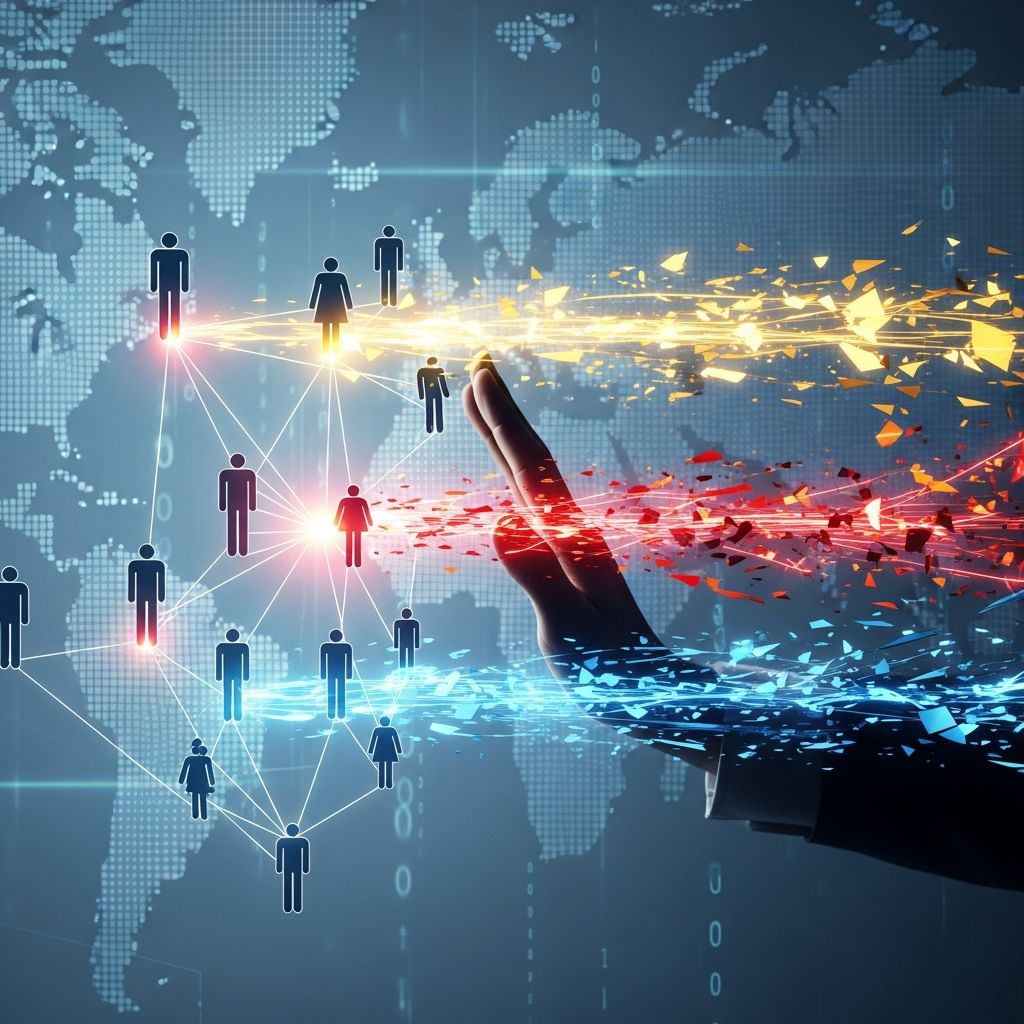
In an era where information travels at the speed of a keystroke, the battle against misinformation rages on. A pivotal study from MIT researchers has upended common assumptions, proving that everyday people—not rogue bots—are the primary engines behind the explosive dissemination of false stories online. This revelation challenges policymakers, tech giants, and users alike to rethink strategies for combating digital deception.
The Alarming Velocity of Falsehoods Online
Picture this: a dubious claim hits your feed, and within hours, it has ricocheted across thousands of accounts. That’s the reality of fake news propagation. Analyzing over 4.5 million tweets from 2006 to 2017, researchers tracked how 126,000 ‘cascades’—chains of retweets—unfolded. Their finding? Falsehoods didn’t just spread quickly; they dominated every metric.
- False stories reached 1,500 users in mere hours, while true ones took six times longer.
- Retweet rates for fakes were 70% higher than for facts.
- The deepest cascades for lies extended 20 times farther than those for truth.
These disparities held across topics like politics, science, and urban myths, with political falsehoods leading the pack in speed and scope.
Debunking the Bot Myth: Humans at the Helm
Blame often falls on automated accounts, especially post-2016 elections. Yet, when MIT scholars applied advanced bot-detection algorithms—filtering out suspicious activity—the gap persisted. Bots boosted both true and false content equally, accelerating fakes by just 0.3% more in early stages, an insignificant edge.
“Bots cannot explain this massive difference between how fast and far false news spreads compared to the truth. Human beings are responsible for that.” — Sinan Aral, MIT Sloan Professor
Even more strikingly, purveyors of fakes tended to be novice tweeters with fewer followers. Despite this ‘handicap,’ their content surged ahead, hinting at deeper behavioral drivers.
Psychological Hooks: Novelty’s Irresistible Pull
Why do we amplify lies? The answer lies in our brains’ wiring for the new and surprising. Falsehoods often pack emotional punch—fear, outrage, wonder—that facts lack. They’re novel, making sharers feel ‘in the know.’
| Factor | True News | False News |
|---|---|---|
| Novelty Score | Low (familiar facts) | High (shocking claims) |
| Emotional Trigger | Neutral | High (anger/fear) |
| Retweet Likelihood | Baseline | 70% higher |
| Avg. Followers of Sharer | High | Low |
Users scanned timelines over 60 days, revealing a bias toward unencountered info—disproportionately false. Sharing it bestows social capital, especially first-movers.
Quantifying the Spread: A Deeper Dive into Data
The study’s rigor sets it apart. Fact-checkers like Snopes and PolitiFact tagged 2,500+ stories as true or false. Twitter’s API yielded cascades, excluding bots via two gold-standard tools. Results painted a stark picture:
- Top 1% of fake cascades hit 100,000 users; true ones capped at 1,000.
- False political news spread an order of magnitude faster.
- Depth, breadth, speed—all amplified for lies across categories.
This wasn’t anecdotal; statistical models confirmed humans’ outsized role.
Real-World Ripples: From Elections to Pandemics
The 2016 U.S. election spotlighted fake news, but implications span far. During COVID-19, WHO coined ‘infodemic’ for rampant myths supercharged by platforms. Recent analyses echo MIT: humans retweet fakes more, bots play a minor role.
Consequences? Eroded trust, polarized societies, even violence fueled by viral hoaxes. Political lies, fastest movers, exacerbate divides.
Countering the Human Factor: Strategies That Work
Since bots aren’t the villain, tech fixes alone fall short. Behavioral nudges shine:
- Prebunking: Expose users to debunked tropes beforehand, building resistance.
- Friction Points: Prompt ‘Why share?’ or fact-check links before posting.
- Accuracy Reminders: Simple cues like ‘Think before sharing’ cut fakes by 20% in trials.
- Platform Tweaks: Downrank unverified sources; amplify corrections.
Education empowers: Teach spotting sensationalism, verifying sources. Platforms must prioritize these over whack-a-bot games.
FAQs: Demystifying Misinformation Spread
What Makes Fake News Spread So Quickly?
Its novelty and emotional appeal make it highly shareable, triggering our psychological need for fresh, attention-grabbing content.
Do Bots Play Any Role?
Minimal. They amplify both truths and lies equally; humans drive the disparity.
How Was the MIT Study Conducted?
Researchers analyzed 4.5M+ tweets in 126K cascades from 2006-2017, using bot filters and fact-checker labels.
Which Topics Spread Fakes Fastest?
Political falsehoods lead, but all categories show fakes outpacing facts.
What Can I Do to Combat Fake News?
Pause before sharing, check sources via fact-checkers, and support accuracy-focused nudges on platforms.
Looking Ahead: A Call for Smarter Digital Literacy
As social media evolves, so must our defenses. The MIT findings underscore: tech is neutral; we are the variable. By harnessing psychology, fostering verification habits, and designing platforms for truth, we can slow the fake news tsunami. The power lies not in algorithms, but in us.
References
- Study: On Twitter, false news travels faster than true stories — MIT News. 2018-03-08. https://news.mit.edu/2018/study-twitter-false-news-travels-faster-true-stories-0308
- The spread of true and false news online — Science (via MIT Sloan). 2018-03-09. https://www.science.org/doi/10.1126/science.aap9559
- Bots and Misinformation Spread on Social Media — National Library of Medicine (PMC/NIH). 2021-05-28. https://pmc.ncbi.nlm.nih.gov/articles/PMC8139392/
- Fake news spreads faster and further—and we’re to blame — Axios. 2018-03-08. https://www.axios.com/2018/03/08/false-news-spreads-faster-1520537127
- Infodemic management — World Health Organization. 2020. https://www.who.int/health-topics/infodemic-management
Similar Articles







Read full bio of medha deb