White House Embraces IPv6 Milestone
Explore how the U.S. White House's adoption of IPv6 marks a pivotal step in federal internet modernization and global connectivity evolution.
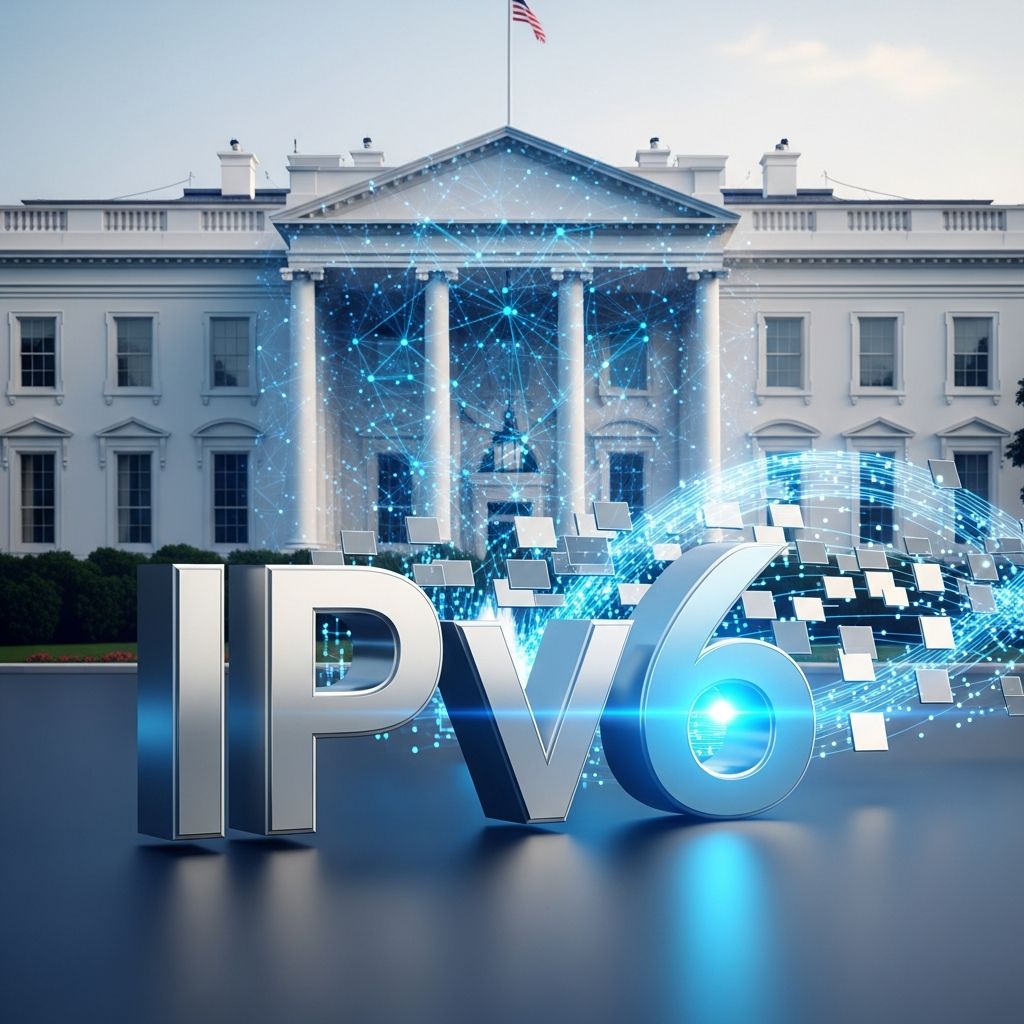
The transition to Internet Protocol version 6 (IPv6) represents one of the most critical evolutions in modern networking infrastructure. When the official White House website, www.whitehouse.gov, became accessible via IPv6, it signaled a landmark achievement in U.S. federal government efforts to future-proof its digital presence. This move, facilitated through partnerships with leading content delivery networks like Akamai, underscores the urgency of moving beyond the limitations of IPv4. As internet-connected devices proliferate worldwide, IPv6’s vast address space and enhanced features are indispensable for sustained growth and security.
The Imperative for IPv6 in Government Networks
Government agencies worldwide face mounting pressure to adopt IPv6 due to the exhaustion of IPv4 addresses. IPv4, with its 4.3 billion unique addresses, can no longer accommodate the explosion of smartphones, IoT devices, and cloud services. IPv6, offering 340 undecillion addresses, resolves this scarcity while introducing improvements like built-in security through IPsec, simplified packet headers for faster routing, and auto-configuration capabilities.
In the U.S., this shift is not merely technical but strategically mandated. Federal policies have long emphasized IPv6 deployment to ensure resilient, scalable networks capable of supporting national missions. The White House’s implementation exemplifies how high-profile sites can lead by example, encouraging broader adoption across public and private sectors.
Federal Mandates Driving the IPv6 Transition
U.S. government directives have systematically pushed IPv6 integration. Early roadmaps from the Office of Management and Budget (OMB) laid the groundwork, requiring agencies to plan for IPv6 during technology upgrades. Subsequent memoranda have escalated these requirements, setting concrete timelines for full operational deployment.
- Public-facing services must support native IPv6.
- Internal systems need upgrades to handle IPv6 communications.
- Agencies are tasked with IPv6-only pilots and phased transitions.
These policies aim for a future where federal networks operate predominantly in IPv6-only environments, phasing out IPv4 dependency. For instance, agencies must achieve specific milestones, such as 20% of IP-enabled assets in IPv6-only mode by certain fiscal years, fostering a secure ecosystem resistant to address exhaustion.
Technical Underpinnings of White House IPv6 Support
Enabling IPv6 on a site like www.whitehouse.gov involves more than flipping a switch. It requires DNS configurations to resolve AAAA records—IPv6 equivalents of IPv4’s A records—alongside backend infrastructure readiness. Content delivery networks play a pivotal role, distributing traffic across global edge servers optimized for both protocols.
A simple network diagnostic reveals the setup: queries for IPv6 addresses return chains of CNAME records pointing to optimized endpoints. This dual-stack approach ensures seamless access for users on IPv6 networks while maintaining IPv4 fallback, minimizing disruptions during the transition period.
| Protocol | Address Type | Key Advantage | Federal Relevance |
|---|---|---|---|
| IPv4 | 32-bit | Legacy compatibility | Phasing out per OMB directives |
| IPv6 | 128-bit | Vast address pool | Mandated for new systems |
This table illustrates the core differences propelling the shift, with IPv6 aligning perfectly with federal goals for expansive, secure connectivity.
Progress and Milestones in Federal IPv6 Adoption
Since the initial White House activation, federal IPv6 deployment has advanced steadily. Agencies have issued IPv6 policies, conducted pilots, and updated strategic plans. Public-facing servers for web, email, and DNS now predominantly support IPv6, with internal clients following suit.
Challenges persist, including legacy system integration and security enhancements. However, collaborative efforts with departments like Homeland Security have bolstered guidelines, ensuring IPv6 networks match or exceed IPv4 resilience. Metrics show increasing percentages of assets operating in IPv6-only modes, validating the roadmap’s efficacy.
Global Context and U.S. Leadership
The U.S. effort mirrors global trends, where regions like Europe and Asia lead in IPv6 penetration. Yet, federal mandates position the U.S. as a pacesetter, particularly through high-visibility implementations. This leadership influences international standards bodies and private enterprises, accelerating worldwide adoption.
IPv6 enables emerging technologies like 5G, smart cities, and autonomous systems, all requiring massive address allocations. By prioritizing IPv6, the U.S. government not only addresses domestic needs but also contributes to a interoperable global internet.
Benefits Beyond Address Space
IPv6’s value extends far beyond capacity. Its mandatory IPsec support enhances data integrity and confidentiality, critical for government operations. Stateless address auto-configuration streamlines device onboarding, reducing administrative overhead. Moreover, improved multicast efficiency optimizes bandwidth for video streaming and group communications—vital for public services.
For citizens, this means faster, more reliable access to government resources, regardless of their ISP’s protocol support. Dual-stack implementations ensure inclusivity during the transition.
Challenges and Strategies for Full Deployment
Despite progress, hurdles remain. Training staff on IPv6 nuances, auditing legacy applications, and coordinating with vendors demand resources. Security tools must evolve to monitor vast address spaces effectively.
Strategies include:
- Prioritizing mature technology areas for initial rollouts.
- Conducting regular audits and pilots.
- Partnering with industry for shared services compatibility.
Federal plans emphasize measurable progress, with annual reporting to track compliance and refine approaches.
Future Outlook: IPv6-Only Federal Networks
Looking ahead, the strategic intent is clear: an IPv6-only federal ecosystem. This vision promises enhanced cybersecurity, simplified architectures, and readiness for next-gen innovations. The White House’s early adoption serves as a beacon, demonstrating feasibility and inspiring replication across agencies.
As deadlines approach, expect accelerated upgrades, with shared services achieving full IPv6 parity. This transition will solidify U.S. digital infrastructure for decades.
Frequently Asked Questions (FAQs)
What is IPv6 and why does it matter?
IPv6 is the successor to IPv4, providing exponentially more addresses and advanced features like built-in security, essential for the growing internet.
Is the White House website fully IPv6-only?
No, it operates in dual-stack mode, supporting both IPv4 and IPv6 for broad accessibility during transition.
What are the federal deadlines for IPv6?
Agencies must hit milestones like 20% IPv6-only assets by FY2023, with full upgrades ongoing toward IPv6-dominant networks.
How does IPv6 improve security?
IPsec is mandatory, offering end-to-end encryption and authentication superior to IPv4 options.
Can I test if a site supports IPv6?
Use tools like ‘dig AAAA domain.com’ or online testers to check for IPv6 address resolution.
References
- Release Memo – Planning Guide/Roadmap toward IPv6 Adoption — Office of Management and Budget (OMB). 2009-05-26. https://trumpwhitehouse.archives.gov/sites/whitehouse.gov/files/omb/assets/egov_docs/release_memo_-_planning_guide_roadmap_toward_ipv6_adoption_052009.pdf
- M-21-07: Completing the Transition to Internet Protocol Version 6 (IPv6) — The White House, Office of Management and Budget. 2020-11. https://www.whitehouse.gov/wp-content/uploads/2020/11/M-21-07.pdf
- IPv6 Business Case and Roadmap — George W. Bush White House Archives, OMB. 2005. https://georgewbush-whitehouse.archives.gov/omb/egov/a-2-EAIPv6.html
- Internet Protocol Version 6 (IPv6) Policy — U.S. Department of Commerce. 2023. https://www.commerce.gov/about/policies/ipv6-policy
- M-22-09: Moving the U.S. Government Toward Zero Trust Cybersecurity Principles — The White House, Office of Management and Budget. 2022-01. https://www.whitehouse.gov/wp-content/uploads/2022/01/M-22-09.pdf
Similar Articles







Read full bio of Sneha Tete