Vint Cerf Champions IPv6 on Colbert
Internet pioneer Vint Cerf takes IPv6 to late-night TV, urging a shift from IPv4 amid address shortages.
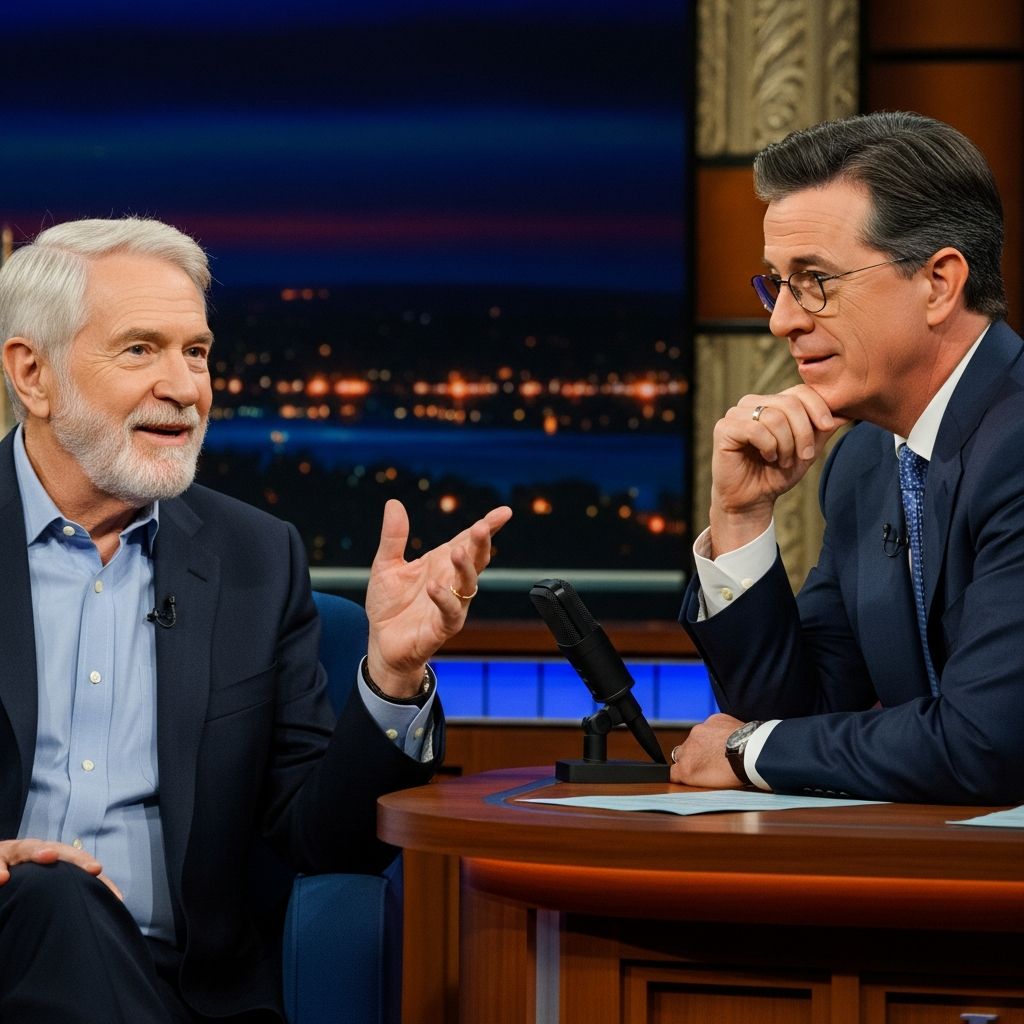
In a memorable crossover of technology and comedy, Vint Cerf—one of the architects behind the modern Internet—took the stage on The Colbert Report to make a compelling case for IPv6. This appearance wasn’t just entertainment; it was a strategic push to accelerate the global transition to the next-generation Internet Protocol. As IPv4 addresses dwindle, Cerf’s pitch underscored the urgency of embracing IPv6 to sustain the Internet’s explosive growth.
The Man Behind the Internet’s Backbone
Vinton Gray Cerf, often dubbed the ‘Father of the Internet,’ co-designed the TCP/IP protocols that power today’s digital world. Working alongside Robert Kahn in the 1970s, Cerf developed the foundational standards that enabled packet-switched networks to interconnect seamlessly. His contributions earned him prestigious accolades, including the Turing Award and the Presidential Medal of Freedom.
Currently serving as Google’s Chief Internet Evangelist, Cerf continues to advocate for an open, accessible Internet. His Colbert appearance highlighted his passion for IPv6, framing it as the ‘production version’ of the Internet, evolving beyond the experimental IPv4 era.
Why IPv6 Matters: Solving the Address Crisis
IPv4, with its 32-bit addressing scheme, supports roughly 4.3 billion unique IP addresses. In the 1980s, this seemed limitless. Fast-forward to today, and the Internet’s expansion—driven by smartphones, IoT devices, and streaming services—has exhausted this pool. Regional Internet Registries have allocated nearly all IPv4 blocks, forcing reliance on workarounds like NAT (Network Address Translation).
IPv6 flips the script with 128-bit addresses, offering approximately 3.4 × 10^38 possibilities. That’s enough for every person on Earth to have billions of addresses. This abundance eliminates NAT complexities, simplifies routing, and paves the way for direct peer-to-peer connections.
- Scalability: Supports trillions of devices without address rationing.
- Security: Built-in IPsec for end-to-end encryption.
- Mobility: Seamless device handoffs across networks.
- Autoconfiguration: Stateless address assignment reduces setup overhead.
According to the Internet Society, IPv6 adoption has surged, but as of 2026, it hovers around 40-50% globally, per recent measurements.
A Humorous Yet Hard-Hitting TV Pitch
Stephen Colbert, known for his satirical takes, grilled Cerf on IPv6’s relevance. Cerf responded with wit, comparing IPv4 exhaustion to running out of phone numbers in a growing city. He quipped that without IPv6, we’d be ‘recycling addresses like old soda cans,’ leading to inefficiencies and security risks.
The segment turned technical concepts into digestible analogies. Cerf explained IPv6 addresses as ‘apartment numbers in a galactic skyscraper,’ contrasting IPv4’s ‘street addresses in a small town.’ Colbert’s feigned confusion amplified the message, making complex networking accessible to millions.
‘We’re still running the beta version of the Internet. Time for the full release!’ – Vint Cerf on The Colbert Report
This viral moment boosted public awareness, encouraging viewers to query their ISPs about IPv6 readiness.
IPv6 Adoption: Progress and Roadblocks
While mobile carriers like T-Mobile and Verizon lead with near-100% IPv6 deployment, fixed broadband lags. In the U.S., Comcast and AT&T report over 50% coverage, but enterprises hesitate due to legacy systems.
| Region | Adoption % | Key Drivers |
|---|---|---|
| North America | 55% | Major ISPs, content providers |
| Europe | 48% | Government mandates |
| Asia-Pacific | 65% | Mobile networks, China rollout |
| Global Average | 42% | IoT growth |
Challenges include dual-stack compatibility (running IPv4 and IPv6 simultaneously), training gaps, and upfront costs. Yet, benefits like reduced operational expenses from simplified routing are compelling.
Cerf’s Broader Vision for Internet Evolution
Beyond addresses, Cerf envisions IPv6 enabling the Internet of Things (IoT). With billions of sensors in smart cities, homes, and industries, IPv6’s scale is indispensable. He also highlights improvements in multicast efficiency for video streaming and gaming.
In forums like the IPv6 Forum—where Cerf serves as honorary chairman—he pushes for standardized testing and certification. His 2018 remarks lamented slow progress, but by 2026, momentum has built, fueled by 5G and edge computing.
How Individuals and Businesses Can Drive Change
- Ask Your ISP: Inquire about IPv6 support and timelines.
- Upgrade Devices: Ensure routers, PCs, and phones are IPv6-compatible.
- Test Connectivity: Use tools like test-ipv6.com to verify deployment.
- Advocate: Support policies mandating IPv6 in public sectors.
- Educate: Share Cerf’s message to build grassroots demand.
Businesses should audit networks, pilot dual-stack setups, and partner with IPv6-ready vendors.
The Future: An IPv6-Dominant Internet
Projections indicate IPv6 surpassing 70% adoption by 2030, driven by native support in new hardware and content delivery networks like Cloudflare and Akamai. Cerf warns that delaying risks a fragmented Internet, with IPv4 islands hindering innovation.
His Colbert pitch remains a cultural touchstone, reminding us that technology transitions need champions who blend expertise with charisma.
Frequently Asked Questions
What is the main difference between IPv4 and IPv6?
IPv6 provides vastly more addresses (128 bits vs. 32 bits) and built-in security features, eliminating NAT needs.
Is IPv6 backward compatible with IPv4?
Not directly; dual-stack or transition mechanisms like 6to4 enable coexistence during migration.
Why did Vint Cerf appear on The Colbert Report?
To popularize IPv6 urgency through humor, reaching a broad audience beyond tech circles.
When will IPv4 be fully replaced?
Not soon; gradual shift expected, with IPv6 dominant by 2030-2040.
How can I check if my connection uses IPv6?
Visit ipv6-test.com or run ‘ipconfig’ (Windows) / ‘ifconfig’ (Mac/Linux) in terminal.
References
- Internet Protocol Version 6 (IPv6) Specification — Internet Engineering Task Force (IETF). 1998-10-20 (original RFC 2460, enduring standard). https://datatracker.ietf.org/doc/html/rfc8200
- World IPv6 Launch Measurement — Internet Society. 2024-06-06 (ongoing metrics). https://www.internetsociety.org/deploy360/ipv6/world-ipv6-launch/
- Vint Cerf: We Need To Move To The Production Version Of The Internet (IPv6) — Internet Society. 2014-06-25. https://www.internetsociety.org/blog/2014/06/vint-cerf-we-need-to-move-to-the-production-version-of-the-internet-ipv6/
- IPv6 Address Allocation Status — Internet Assigned Numbers Authority (IANA). 2026-01-15 (latest update). https://www.iana.org/assignments/ipv6-unicast-address-assignments/ipv6-unicast-address-assignments.xhtml
- Successful Strategies for IPv6 Rollouts — University of Cincinnati (thomam). 2015 (authoritative strategies). https://homepages.uc.edu/~thomam/Net1/Misc/ipv6_strategies.pdf
Similar Articles






Read full bio of Sneha Tete