Vendor Email Compromise Explained
Discover the hidden dangers of vendor email compromise and arm your business with proven defenses against these stealthy supply chain attacks.
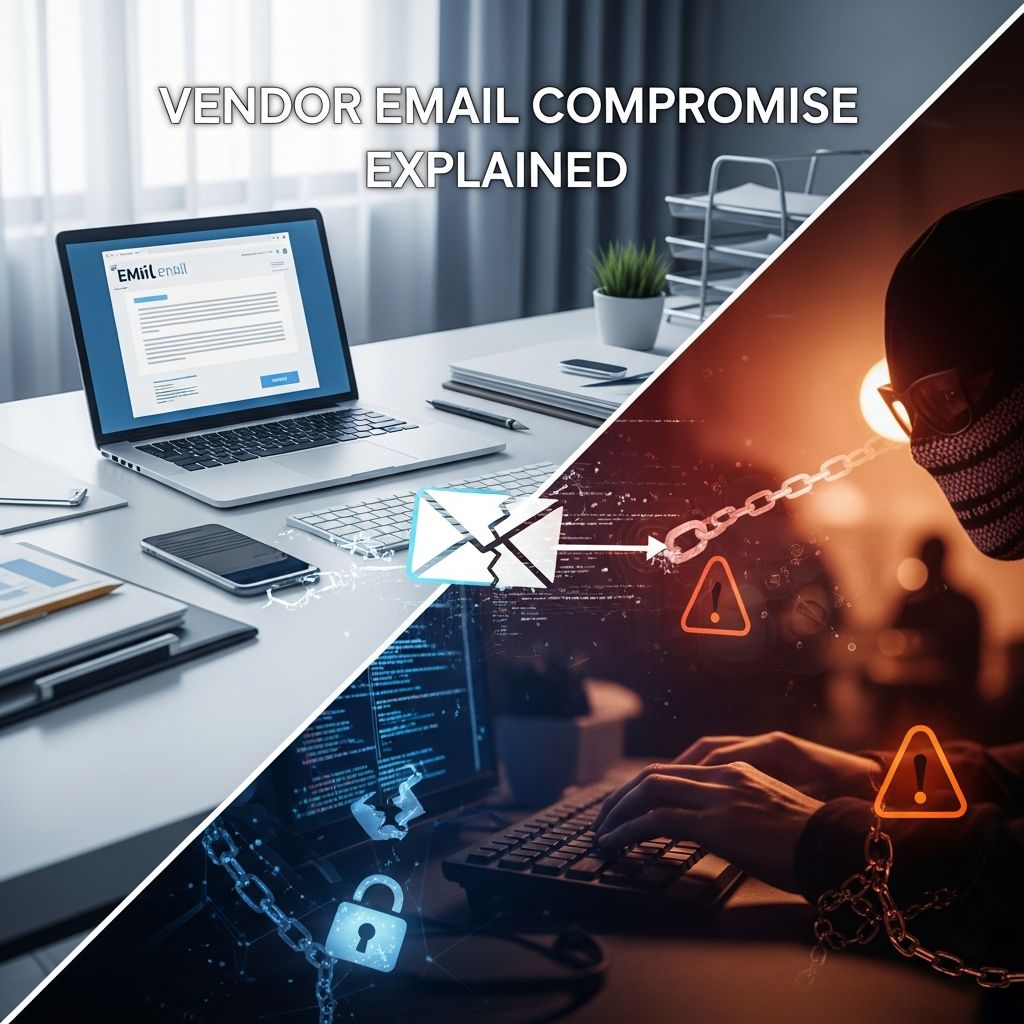
Vendor Email Compromise (VEC) has emerged as one of the most insidious cyber threats targeting modern businesses. Unlike generic phishing attempts that trigger immediate alarms, VEC preys on the deep trust between companies and their suppliers. Attackers infiltrate vendor email systems, patiently observe communications, and then impersonate legitimate contacts to siphon funds or sensitive data. In an interconnected business world, where supply chains span continents and countless partners, VEC represents a high-stakes vulnerability that demands urgent attention.
Financial losses from VEC run into billions annually, with organizations often discovering the breach only after wires have been sent to fraudulent accounts. This article delves into the mechanics of VEC, dissects real-world attack patterns, explores devastating consequences, and provides actionable strategies to fortify your defenses. By understanding this threat, businesses can reclaim control over their email ecosystem and safeguard their bottom line.
Understanding the Anatomy of a VEC Attack
VEC attacks are meticulously orchestrated campaigns that unfold over weeks or months. Cybercriminals select vendors as entry points because they often serve multiple high-value clients, amplifying the attack’s reach. The process begins with breaching the vendor’s email infrastructure, followed by reconnaissance, execution, and evasion.
Attackers employ diverse tactics to gain initial foothold:
- Credential theft via sophisticated phishing kits mimicking login portals.
- Exploiting leaked passwords from past data breaches or dark web markets.
- Deploying malware through drive-by downloads or infected attachments.
- Social engineering to dupe vendor staff into granting remote access.
Once inside, intruders lurk silently, analyzing email threads for payment schedules, key contacts, and communication styles. This intelligence enables them to craft hyper-realistic fraud emails that blend seamlessly into normal traffic.
Key Phases of Vendor Email Exploitation
A typical VEC operation progresses through distinct stages, each designed to maximize stealth and success rates.
Phase 1: Stealthy Infiltration
The entry is low-key. Attackers avoid immediate disruption, setting up email forwarding rules or deleting traces of their activity. They map out the vendor’s client roster and transaction rhythms, often waiting for invoice cycles to align their moves.
Phase 2: Impersonation and Manipulation
Armed with intel, fraudsters hijack ongoing threads. Common scams include:
- Invoice Diversion: Altered PDFs with swapped bank details, urging immediate payment for ‘overdue’ amounts.
- Payment Redirection: Urgent requests to update wire instructions due to ‘bank mergers’ or ‘account changes.’
- RFP Fraud: Fake quotes for new projects, leading to advance payments.
These messages mimic vendor tone, timing, and formatting, evading basic filters.
Phase 3: Monetization and Persistence
Victims wire funds to mule accounts, often overseas. Attackers then launder proceeds through crypto mixers. To extend the compromise, they monitor for vendor alerts and target additional clients from the same account.
Phase 4: Evasion and Exit
Criminals wipe logs, disable rules, and vanish, leaving victims to unravel the damage. This phase underscores why VEC detection lags behind execution.
Real-World Impacts and Statistics
VEC’s toll extends beyond immediate losses. According to industry reports, attacks surged 66% in early 2024, with average incidents costing over $100,000. Supply chain giants face cascading effects: reputational harm erodes partner confidence, regulatory scrutiny invites fines, and recovery diverts resources from core operations.
| Impact Area | Description | Average Cost |
|---|---|---|
| Direct Financial Loss | Fraudulent wire transfers | $120,000+ |
| Investigation & Recovery | Forensic audits, legal fees | $50,000 |
| Reputational Damage | Lost contracts, media fallout | $1M+ |
| Operational Downtime | Process overhauls, training | $30,000 |
Proofpoint data reveals 80% of enterprises encounter compromised vendor emails monthly, highlighting the epidemic scale.
Why Traditional Defenses Fall Short
Legacy email gateways rely on signatures, domain reputation, and URL blacklists—ineffective against VEC. Legitimate vendor domains and benign links (e.g., to Canva hosting malware) sail through. Static rules miss behavioral shifts, like a vendor suddenly requesting urgent payments mid-week.
Human factors compound risks: 70% of VEC succeeds due to inadequate verification. Employees, conditioned to trust vendors, process requests without secondary checks.
Robust Prevention Strategies
Combating VEC demands a defense-in-depth model blending technology, policy, and training.
Implement Behavioral AI Monitoring
Advanced platforms baseline vendor interactions, flagging anomalies like unusual send times or language shifts. Darktrace’s AI, for instance, detected VEC by spotting deviations in a beverage supplier’s patterns, halting phishing before spread.
Mandate Multi-Channel Verification
Institute ironclad rules: No email-driven payment changes without phone or in-person confirmation using known contacts. Use dedicated verification hotlines for vendors.
Fortify Vendor Risk Management
Audit third-party security postures. Require MFA, zero-trust access, and regular pentests. Limit vendor privileges to need-to-know data.
- Deploy DMARC, SPF, DKIM for authentication.
- Scan for mail rules indicating compromise.
- Train staff via phishing simulations.
Leverage Unified Threat Visibility
Integrate email, endpoint, and cloud logs for holistic views. Streamline investigations with automated timelines of compromised activity.
Case Study: Beverage Empire Under Siege
A global beverage firm with 15,000 users fell victim to VEC via a trusted supplier. Attackers sent phishing from the compromised account, embedding payloads on legit sites. AI security held back malicious waves while benign alerts passed, preventing supply chain cascade.
Future-Proofing Against Evolving VEC
As AI aids attackers in crafting flawless impersonations, defenses must evolve. Quantum-safe encryption, blockchain-verified payments, and autonomous response systems loom on the horizon. Businesses ignoring VEC risk obsolescence in a hyper-connected era.
Frequently Asked Questions
What distinguishes VEC from standard BEC?
VEC specifically targets vendor-supplier dynamics, exploiting supply chain trust for broader impact.
How long do VEC attacks typically last?
Reconnaissance can span months, with execution in days to minimize detection.
Can small businesses be VEC targets?
Absolutely—vendors serving SMBs are prime vectors due to weaker security.
Is MFA enough protection?
No; pair it with behavioral analysis and verification protocols.
What to do if VEC is suspected?
Freeze payments, contact vendor via alternate channels, notify banks, and engage forensics.
References
- Detecting Vendor Email Compromise in Supply Chain Attacks — Darktrace. 2023-06-15. https://www.darktrace.com/blog/supply-chain-fraud-darktrace-detects-vendor-email-compromise
- Vendor Email Compromise: 4 Prevention Tips — Proofpoint. 2024-02-20. https://www.proofpoint.com/us/blog/email-and-cloud-threats/vendor-email-compromise
- What Is Vendor Email Compromise (VEC)? — RMail. 2024-08-10. https://rmail.com/glossary/vendor-email-compromise
- Vendor Email Compromise — Garrett Insurance. 2024-05-12. https://www.garrettinsurance.com/vec-vendor-email-compromise-the-cyber-threat-most-businesses-dont-see-coming/
- CISO Guide to Vendor Email Compromise — Abnormal Security. 2023-05-25. https://files.abnormalsecurity.com/production/images/blog/CISO-Guide-to-VEC.pdf
Similar Articles







Read full bio of medha deb