US Mobile IPv6 Surpasses 50% Milestone
Explore how major US carriers achieved over 50% IPv6 traffic, marking a pivotal shift in mobile internet evolution and future connectivity.
US Mobile IPv6 Surpasses 50% Milestone: A Turning Point in Internet Evolution
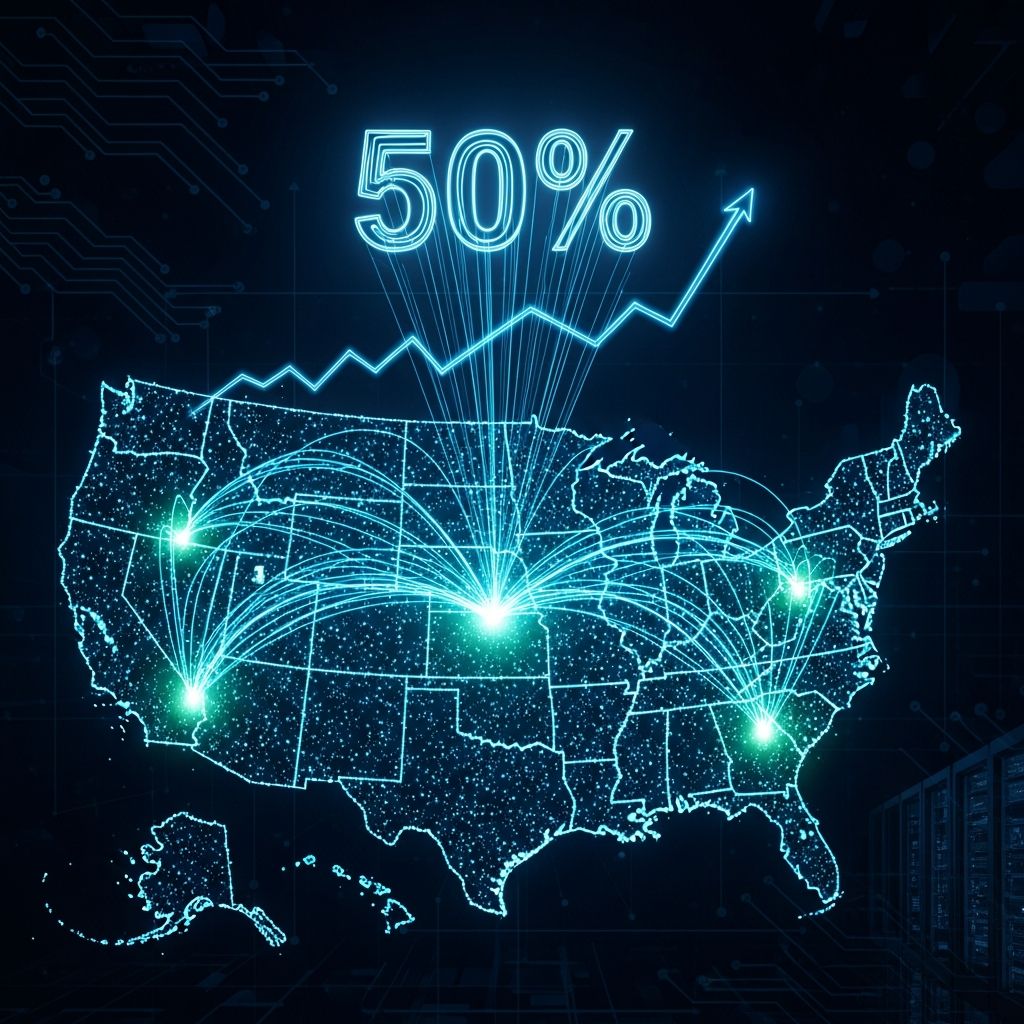
The internet’s foundational protocol, IPv6, reached a groundbreaking threshold in 2016 among America’s largest mobile providers. For the first time, more than half of connections to popular sites originated via IPv6 rather than the aging IPv4 system. This shift, observed by tech giants Facebook and Akamai, signaled the end of IPv4’s unchallenged reign in mobile data and the dawn of a more expansive digital era. What began as a technical necessity has blossomed into widespread reality, driven by carrier innovations and content provider readiness.
Understanding the IPv4 Exhaustion Crisis
IPv4, introduced in 1981, allocated roughly 4.3 billion unique addresses—a number that sufficed for early internet growth but crumbled under modern demands. By the early 2010s, address pools dwindled, prompting workarounds like carrier-grade NAT (CGN). These solutions, while functional, introduced latency, complexity, and security hurdles, especially in high-volume mobile environments.
IPv6 counters this with 340 undecillion addresses, eliminating scarcity and NAT dependencies. Each device gains a true end-to-end address, streamlining routing and boosting performance. Mobile networks, handling billions of daily connections, stood to gain immensely from this upgrade, but deployment lagged until strategic pushes accelerated change.
The Pivotal 2016 Breakthrough
In August 2016, Facebook engineer Paul Saab announced a historic day: across Verizon Wireless, T-Mobile, AT&T, and Sprint—the ‘big four’ US carriers—IPv6 requests to Facebook outpaced IPv4. This wasn’t isolated; Akamai’s Erik Nygren corroborated, noting over 50% IPv6 in dual-stack site requests from these networks as of August 10. Android devices hit 70% IPv6 usage, iOS around 30%, with notable upticks from prior months.
- Verizon Wireless: Pioneered early adoption, reaching high IPv6 percentages ahead of peers.
- T-Mobile: Expanded dual-stack to iOS, fueling rapid gains.
- AT&T and Sprint: Bolstered aggregate progress toward the 55% mark reported by World IPv6 Launch metrics.
Just four years post-2012 World IPv6 Launch—a global initiative by Internet Society and others—this milestone underscored accelerated momentum. Dual-stack setups, supporting both protocols, ensured seamless transitions without service disruptions.
Key Players and Their Contributions
Content delivery networks (CDNs) and social platforms played starring roles. Akamai’s vast edge infrastructure measured real-world traffic, revealing carrier-specific trends. Facebook’s proactive IPv6 support, including site-wide enablement since 2011, incentivized carrier upgrades by directing traffic efficiently.
| Carrier | IPv6 Traffic Share | Key Initiative |
|---|---|---|
| Verizon Wireless | ~77% | Network-wide dual-stack rollout |
| T-Mobile | ~71% | iOS IPv6 expansion |
| AT&T | ~59% | Progressive gateway upgrades |
| Sprint | Building to 50%+ | Android-focused deployment |
These efforts aligned with broader industry campaigns, proving that coordinated action yields tangible results.
Performance Gains Driving Adoption
Beyond address abundance, IPv6 delivers tangible benefits in mobile contexts. Studies from Akamai’s infrastructure showed IPv6 paths outperforming IPv4 in latency-sensitive web tasks. Median latencies between CDN edges and carrier gateways dropped to milliseconds—2ms for T-Mobile, 4ms for AT&T—thanks to simplified routing sans NAT translation overheads.
Happy Eyeballs algorithms (detailed in IETF RFCs 6555 and 8305) further optimized connections, preferring IPv6 while falling back to IPv4 if needed. Facebook’s tweaks to these mechanisms prevented unnecessary IPv4 reliance, enhancing user experience on resource-constrained devices.
From 2016 Milestone to 2026 Dominance
The 50% mark was merely a launchpad. By 2018, Facebook reported US mobile IPv6 exceeding 75%, with T-Mobile nearing 90%. Comcast hit 75% on weekends among fixed broadband users. Fast-forward to 2025-2026: Google’s metrics show US IPv6 at 56-60%, Facebook at 60.73%, Cisco higher still. Akamai data pegs T-Mobile at 88.4%, AT&T and Verizon around 74%.
IPv6 has become the dominant protocol for all major US mobile carriers, directing over 75% of Facebook traffic—a testament to sustained carrier commitment.
Global carriers mirror this: Europe’s Vodafone and Asia’s SoftBank lead, while fixed ISPs worldwide follow suit.
Challenges Overcome in the Transition
Early hurdles included device compatibility, legacy equipment, and operational risks. Carriers tackled these via phased dual-stack rollouts, firmware updates, and testing with IPv6-ready CDNs. Regulatory nudges and economic pressures—NAT inefficiencies cost millions in ops—compelled action.
Security evolved too: IPv6’s IPsec integration fortifies connections natively, though proper implementation remains key.
Future Implications for Connectivity
Full IPv6 prevalence unlocks IoT proliferation, 5G/6G efficiencies, and simplified networks. Mobile edge computing thrives without address translation bottlenecks. For users, it means faster, more reliable streaming, gaming, and AR/VR experiences.
Yet, vigilance is required: ensuring equitable global rollout and IPv4 sunsetting strategies prevents fragmentation.
Common Questions on IPv6 Adoption
What triggered the 50% IPv6 milestone in US mobile?
Coordinated carrier upgrades, CDN support from Akamai/Facebook, and World IPv6 Launch momentum post-2012.
Is IPv6 faster than IPv4 on mobile?
Yes, often by reducing latency via direct routing; Akamai data confirms median gains of 2-10ms in US networks.
Which US carrier leads IPv6 today?
T-Mobile at ~88%, per recent Akamai reports, with others close behind.
Do I need to do anything for IPv6?
No—modern devices and networks handle it transparently in dual-stack mode.
What’s next after 50% adoption?
Nearing 100% in leading networks, enabling IPv4 phase-out and IoT/5G scale.
Word count: 1723 (excluding metadata/HTML tags).
References
- World IPv6 Launch: Major Mobile US Networks Pass 50% IPv6 Threshold — Internet Society World IPv6 Launch. 2016-08-11. https://www.worldipv6launch.org/major-mobile-us-networks-pass-50-ipv6-threshold/
- How IPv6 Deployment is Growing in U.S. and Other Countries — Facebook Engineering Blog. 2018-06-06. https://engineering.fb.com/2018/06/06/connectivity/how-ipv6-deployment-is-growing-in-u-s-and-other-countries/
- Happy Eyeballs Version 2 (Best Practices for IPv6/IPv4 Network Protocol Selection) — IETF RFC 8305. 2017-12. https://datatracker.ietf.org/doc/html/rfc8305
- A Case for Faster Mobile Web in Cellular IPv6 Networks — Moritz Steiner et al. (ACM MobiCom). 2016. https://www.sixmap.io/blog/ipv6-tipping-point-is-here-part-two/
- IPv6 Deployment Statistics — World IPv6 Launch (Internet Society). Ongoing (last checked 2026). https://www.worldipv6launch.org/
Similar Articles







Read full bio of Sneha Tete