Bridging Digital Divide in Rural Tanzania Using TV White Space
How unused television spectrum is revolutionizing internet access in underserved communities
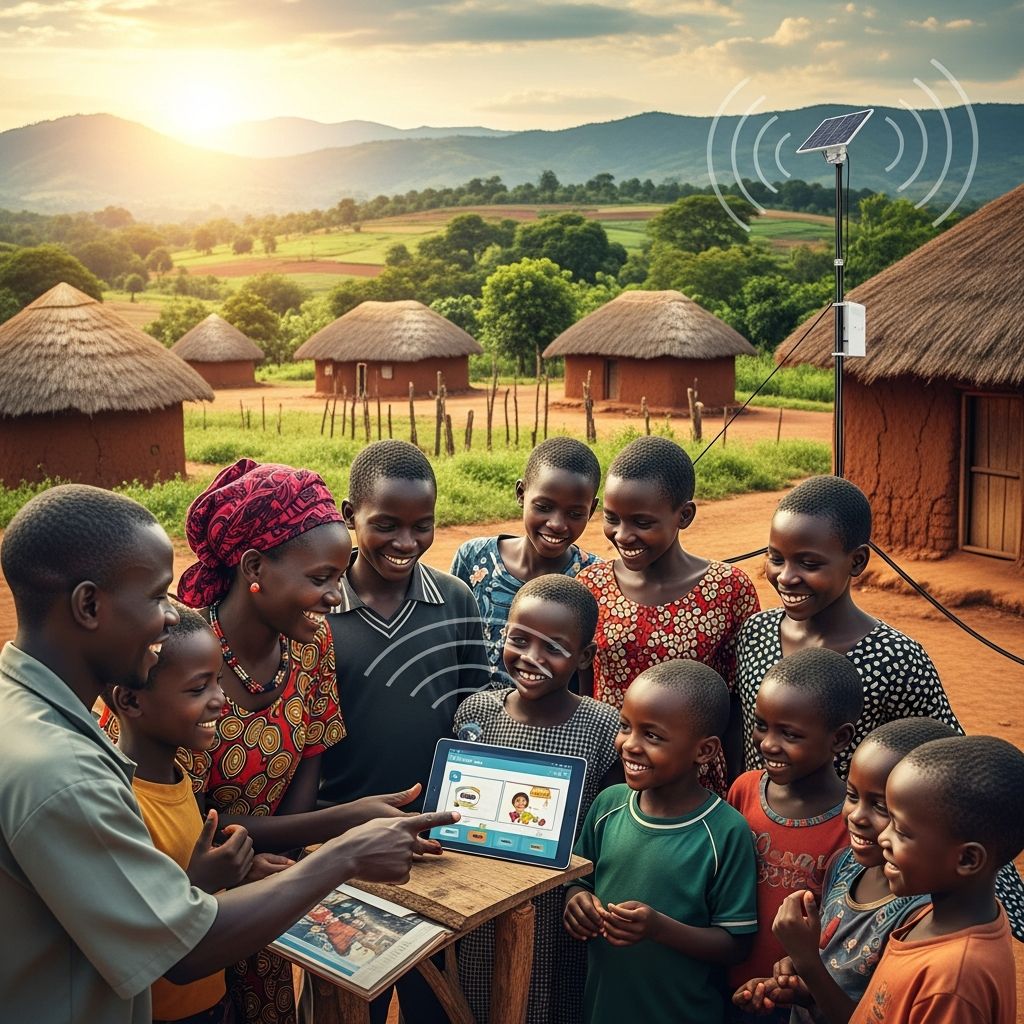
Understanding the Connectivity Challenge in Remote Communities
Rural and remote areas across the African continent face persistent challenges in gaining access to reliable internet connectivity. Traditional broadband infrastructure deployment in sparsely populated regions proves economically unfeasible for commercial service providers due to high capital costs and low population density. Tanzania, like many developing nations, confronts this connectivity disparity acutely, where vast geographical areas remain disconnected from digital services essential for education, commerce, and healthcare delivery. The absence of internet access perpetuates economic disadvantages and limits educational opportunities for residents in these regions.
The Dodoma Region of Tanzania exemplifies this challenge, with communities located approximately 160 kilometers from the regional center experiencing severe limitations in digital access. Three educational institutions serving approximately 2,287 people in this area operate without sufficient internet resources to support modern teaching methodologies or access online learning materials. Students and educators lack the digital tools that have become fundamental to contemporary education globally.
What Is Television White Space Technology
Television White Space (TVWS) represents the unused portions of the electromagnetic spectrum previously designated for analog television broadcasting. When digital television broadcasting standards replaced analog transmission globally, significant spectrum segments became available for alternative uses. These unused frequency bands retain valuable propagation characteristics that make them particularly effective for long-distance wireless communication.
The technical properties of TVWS frequencies enable radio signals to travel considerable distances while penetrating physical obstacles including vegetation, buildings, and terrain features that would attenuate higher-frequency signals. This characteristic proves invaluable in rural environments where dense vegetation and geographic variations challenge conventional wireless infrastructure deployment. TVWS operates at lower frequencies than typical WiFi and cellular networks, requiring substantially less transmitter power while maintaining coverage over extended geographical areas.
Key Technical Characteristics
- Extended propagation range of up to 10 kilometers through vegetation and obstacles
- Lower power requirements enabling solar-powered infrastructure deployment
- Spectrum availability without licensing in many jurisdictions
- Cost-effective base station deployment compared to conventional alternatives
- Compatibility with existing WiFi protocols for end-user connectivity
The Kondoa Community Network Initiative
The Internet Society Tanzania Chapter, in collaboration with the University of Dodoma and supported by the Beyond the Net Funding Programme, conceived an ambitious pilot project to deploy community-owned broadband infrastructure utilizing TVWS spectrum. This initiative targets the Kondoa District and surrounding areas, representing the first community network deployment of this technology in Tanzania’s rural regions.
The project structure prioritizes community ownership and operation rather than external corporate management. Secondary schools within the Dodoma Region serve as the network’s operating entities, ensuring that educational institutions become the primary beneficiaries and stewards of connectivity infrastructure. This approach aligns digital access provision with existing community institutions, creating sustainable long-term operational models.
Organizational Structure and Stakeholder Involvement
The initiative embraces a multi-stakeholder framework incorporating diverse community participants. Religious leaders, political representatives, educational administrators, private sector actors, and community members collaborate to ensure the project addresses local needs and gains sustained community support. This inclusive approach recognizes that successful infrastructure projects require buy-in from multiple societal layers.
The University of Dodoma assumed responsibility for acquiring all necessary hardware equipment and managing regulatory compliance with Tanzania’s telecommunications authority. This institutional involvement provided technical expertise and credibility essential for navigating complex spectrum licensing processes and ensuring equipment compliance with national technical standards.
Regulatory Framework and Spectrum Access
One substantial obstacle to deploying TVWS networks involves securing regulatory authorization from national telecommunications authorities. Tanzania’s regulatory landscape initially presented uncertainty regarding TVWS spectrum utilization in non-urban settings. The project team successfully negotiated with the local telecommunications regulator to obtain formal licensing authorization for TVWS spectrum usage, a critical milestone that removed the primary regulatory impediment.
This licensing achievement carries significance beyond the immediate pilot project. It establishes legal precedent enabling other communities throughout Tanzania to pursue similar TVWS-based connectivity solutions. The regulatory pathway now exists for scaling this technology across the nation’s underserved regions, potentially transforming rural broadband accessibility nationwide.
Infrastructure Design and Implementation Approach
The pilot project design incorporates distributed TVWS base stations strategically positioned to serve the target population. Each base station utilizes commercially available TVWS radio equipment configured to deliver broadband connectivity across multiple community locations simultaneously. Solar power systems enable operation independent of grid electricity, a critical requirement in areas with unreliable or absent electrical infrastructure.
WiFi access points distributed throughout coverage areas allow end users to connect using standard wireless devices without requiring specialized equipment. This approach ensures that community members can access network services through smartphones, tablets, and laptops utilizing familiar technology without additional capital investment or technical training. The network architecture maintains simplicity while maximizing accessibility for non-technical users.
Coverage and Capacity Specifications
The TVWS base stations deliver broadband capability comparable to contemporary 4G mobile network standards, providing users with internet experience quality sufficient for educational, commercial, and informational applications. The propagation characteristics of TVWS frequencies enable coverage across the dispersed settlement patterns typical of rural Tanzania, where population density does not support conventional urban-oriented infrastructure models.
Benefits for Educational Institutions
Students and educators across the three participating educational institutions gain access to digital learning resources previously unavailable in their communities. Online educational platforms, research databases, and distance learning capabilities become accessible, enabling curriculum enhancement and supporting academic achievement. Teachers can access pedagogical resources and professional development materials distributed through internet-based platforms.
Educational equity improves substantially when rural students access identical learning resources and opportunities as their urban counterparts. Digital literacy becomes practically achievable rather than theoretical when reliable internet infrastructure exists. The availability of online educational tools supports improved learning outcomes and prepares students for participation in digitally-mediated work environments.
Economic and Social Development Implications
Beyond educational benefits, community internet access catalyzes broader economic development. Agricultural producers gain ability to access commodity price information, weather data, and market intelligence enabling informed production and marketing decisions. Small entrepreneurs can establish digital presence and reach broader customer bases through e-commerce platforms.
Healthcare delivery improves when community health workers can access telemedicine resources and consultation with distant specialists. Administrative efficiency increases across government services when rural populations can access e-government platforms and digital service delivery channels. Social cohesion strengthens as communities maintain connections with diaspora members and broader networks across greater distances.
Addressing Migration Pressures Through Connectivity
Rural-to-urban migration pressures intensify when rural areas lack economic opportunities and essential services. Connectivity infrastructure that enables digital economic participation reduces the necessity for physical relocation to urban centers. When rural residents can participate in digital commerce, remote work, and information-based economic activities, the economic incentive for migration diminishes.
The pilot project explicitly aims to reduce rural-to-urban migration by improving rural economic vitality and quality of life. By maintaining viable economic opportunities in rural locations, communities preserve social structures and cultural traditions that strengthen when families remain geographically proximate. Regional development becomes more balanced when rural areas maintain sufficient population and economic activity.
Scalability and Replication Potential
The experience and knowledge generated through the Kondoa Community Network pilot provide valuable insights for replicating this model across Tanzania’s numerous underserved rural regions. The successful regulatory pathway established through this project removes major obstacles for subsequent deployments. The technical and operational experience accumulated through pilot implementation informs best practices for future installations.
Financial models developed through pilot operations demonstrate the economic viability of community-owned TVWS networks, enabling cost projections that attract investment from development partners and social impact organizations. The technology platform already deployed and tested reduces technical risks associated with novel deployments, accelerating expansion timelines and reducing implementation costs for scaling initiatives.
Comparative Analysis with Alternative Connectivity Solutions
TVWS technology presents distinct advantages compared to alternative rural broadband approaches. Satellite internet requires expensive user equipment and suffers from latency characteristics unsuitable for real-time applications. Terrestrial wireless networks operating at higher frequencies require more frequent base stations and higher power consumption. Fixed-line fiber deployment proves prohibitively expensive across sparsely populated regions.
TVWS solutions balance cost-effectiveness, coverage capability, and technical performance in ways that alternative technologies cannot match for rural deployment scenarios. The combination of extended range, low power requirements, and reasonable capital costs creates a compelling value proposition for community-owned network deployment models across developing regions.
Challenges and Mitigation Strategies
TVWS deployment encounters technical challenges including spectrum interference management and equipment availability. Regulatory uncertainty in many jurisdictions limits commercial equipment development and supplier diversity. Community-based operation models require substantial technical support and capacity building to ensure sustainable long-term management.
The Tanzania pilot addresses these challenges through institutional partnerships providing technical support and regulatory navigation. Community training programs build local capacity for basic network maintenance and troubleshooting. Integration with educational institutions provides administrative infrastructure for operational sustainability.
International Context and Global TVWS Initiatives
The Tanzania TVWS pilot operates within a broader global context of TVWS exploration. Similar projects in Jamaica, South Africa, Kenya, Namibia, and other developing nations explore TVWS application to rural connectivity challenges. International organizations including the ITU and academic institutions conduct research advancing TVWS technologies and deployment methodologies.
These global initiatives collectively develop the knowledge base, equipment standards, and regulatory frameworks enabling widespread TVWS adoption. Tanzania’s pilot contributes valuable African perspective on rural deployment challenges and community-based operation models, informing global best practice development.
Future Directions and Expansion Opportunities
Successful pilot operation may lead to expansion beyond the initial three educational institutions. Additional base stations could extend coverage to neighboring communities and districts, creating a regional network serving larger populations. Integration with national broadband policy frameworks could position TVWS as a component of comprehensive rural connectivity strategies.
Potential commercialization pathways could emerge where private sector partners deploy TVWS infrastructure under different business models. Community licensing arrangements might enable sustainable revenue generation supporting perpetual network operation and infrastructure upgrades. Public-private partnerships could leverage community ownership advantages while accessing commercial expertise and financing capabilities.
Policy Implications and Governance Considerations
The pilot project generates important policy insights regarding spectrum regulation, technology neutrality, and community infrastructure ownership. National telecommunications policy could incorporate TVWS allocation provisions enabling broader community network deployment. Universal service obligation frameworks might include TVWS deployment as an acceptable mechanism for achieving rural connectivity targets.
International development assistance could prioritize TVWS projects as cost-effective rural connectivity mechanisms. Regional harmonization of TVWS spectrum allocation and equipment standards would facilitate equipment availability and reduce deployment costs across East African countries.
References
- Piloting the use of TV White Space for Community Networks in Rural Tanzania — Internet Society Tanzania Chapter & University of Dodoma. 2018. https://www.internetsociety.org/blog/2018/04/piloting-use-tv-white-space-community-networks-rural-tanzania/
- An Experience from Kondoa Community Network — Internet Society. 2019. https://www.internetsociety.org/wp-content/uploads/2019/10/Kondoa-Community-Networks-in-Tanzania-2019.pdf
- Connecting Africa Using the TV White Spaces: From Research to Implementation — Microsoft Research. 2016. https://www.microsoft.com/en-us/research/wp-content/uploads/2016/02/main-5.pdf
- TV White Spaces to bring affordable internet to rural communities — Wireless Access Provider Association (WAPA). 2021. https://wapa.org.za/sites/default/files/2021-04/TV%20Space%20key%20to%20bring%20affordable%20internet%20to%20rural%20communities%20Final.pdf
- Jamaica TV White Space Pilot — 1 World Connected. Accessed 2026. https://1worldconnected.org/project/lac_tvws_jamaicatvwspilot/
- GSR13 TVWS Discussion Paper — International Telecommunication Union (ITU). 2013. https://www.itu.int/en/itu-d/conferences/gsr/documents/gsr_paper_whitespaces_gomez.pdf
Similar Articles








Read full bio of medha deb