Trust Foundations: Routing and Water Systems
Discover how trust underpins both urban water distribution and global Internet routing, and why securing it matters for reliability.

The Internet’s backbone relies on a complex web of routing decisions that direct data packets across the globe, much like pipes and valves guide water through a city’s infrastructure. Both systems operate invisibly until disruption strikes, revealing their fragility. At the heart of their functionality lies trust—between operators, systems, and users. This article delves into these parallels, examining vulnerabilities, protective measures, and the path forward for safeguarding our digital lifelines.
Essential Infrastructure: Parallels in Design and Dependency
Urban water networks and Internet routing share fundamental traits. Water systems channel resources from distant sources to households via interconnected mains, reservoirs, and treatment plants. Similarly, the Border Gateway Protocol (BGP) enables routers to exchange path information, ensuring data reaches its destination efficiently.
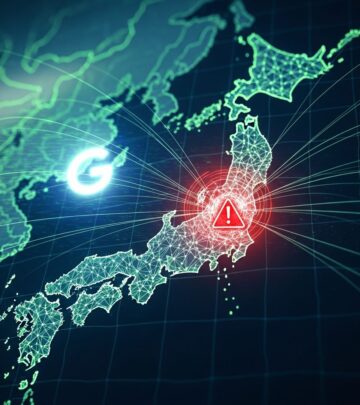
Dependence on these systems is absolute. A burst pipe floods streets; a routing error blackens screens worldwide. Historical incidents underscore this: In 2008, Pakistan’s attempt to block YouTube triggered a global outage affecting millions. Just as contaminated water spreads illness, faulty routes propagate disruptions exponentially.
- Interconnectivity: Thousands of autonomous systems (ASes) peer via BGP, akin to municipal grids linking suburbs.
- Scalability: Both expand to serve growing populations without central oversight.
- Invisibility: Failures surface only when service halts, masking ongoing risks.
These similarities highlight why trust is non-negotiable. Operators assume announcements from peers are legitimate, mirroring assumptions that upstream water suppliers maintain purity.
Vulnerabilities Exposed: When Trust is Breached
Trust-based systems invite exploitation. In routing, BGP lacks inherent validation, allowing malicious or erroneous announcements to hijack traffic. Route leaks occur when networks advertise prefixes beyond their scope, flooding tables and skewing paths. Hijacks are deliberate, redirecting traffic for surveillance, censorship, or attack.
Water equivalents include cross-connections permitting backflow contamination or intentional tampering at junctions. Real-world examples abound: The 2010 China hijack rerouted U.S. traffic through its networks for 18 minutes, raising espionage fears. More recently, the 2021 Facebook outage stemmed from a configuration error, severing global access for hours.
| Incident Type | Example | Impact |
|---|---|---|
| Route Leak | Level 3 announcing T-Mobile prefixes (2010) | Disrupted U.S. mobile Internet |
| Route Hijack | Russia-Ukraine conflict prefixes (2022) | Potential traffic interception |
| Configuration Error | Fastly CDN failure (2021) | Global website outages |
Such events erode confidence, amplifying DDoS attacks where spoofed sources overwhelm targets, paralleling sewer overflows straining purification.
Building Resilience: Technological Safeguards
Fortifying trust demands cryptographic and procedural innovations. Resource Public Key Infrastructure (RPKI) emerges as a cornerstone, issuing digital certificates binding IP prefixes to authorized ASes. Route Origin Authorizations (ROAs) within RPKI are signed attestations, enabling validators to reject invalid routes.
Mutually Agreed Norms for Routing Security (MANRS) complements this by outlining voluntary actions: filtering announcements, global validation, anti-spoofing, and incident coordination. Adoption grows, with over 1,000 participants as of 2024.
- Implement ROA validation on border routers.
- Apply prefix and AS-path filters.
- Deploy Source Address Validation (ingress/egress filtering).
- Participate in incident reporting via platforms like the Routing Security Incident Database.
These measures mirror water security: chlorination (RPKI), backflow preventers (filtering), and regular inspections (MANRS audits).
Policy Imperatives: Governments Leading the Charge
While technical fixes are vital, policy drives widespread adoption. Governments control vast networks and influence vendors. The U.S. Department of Commerce’s 2024 directive mandates RPKI for federal providers, setting a precedent. Procurement policies can require MANRS compliance, extending security to private sectors.
Internationally, forums like the Internet Governance Forum (IGF) advocate cooperation. Regional Internet Registries (RIRs) as trust anchors distribute RPKI certificates hierarchically, fostering global consistency.
Securing routing transcends borders; policymakers must prioritize open standards like RPKI to mitigate transnational threats.
Challenges persist: Deployment lags in developing regions due to resource constraints, and validator inconsistencies undermine efficacy. Yet, progress is evident—ROA coverage exceeded 50% of IPv4 space by 2025.
Future Horizons: Evolving Threats and Solutions
Emerging technologies like BGPsec promise end-to-end path validation, though uptake is slow. AI-driven anomaly detection could preempt leaks, akin to smart water sensors predicting bursts. Quantum threats loom, necessitating post-quantum cryptography in RPKI.
Stakeholder collaboration is key. Network operators, vendors, and regulators must align. Incentives like certification badges or insurance discounts for MANRS participants accelerate change.
Practical Steps for Network Operators
Start small: Assess current BGP configurations, deploy RPKI validators (e.g., Routinator), and join MANRS. Test filters in labs before production. Monitor via tools like BGPStream for anomalies.
- Validate ROAs for all peers.
- Enable global RPKI validation.
- Implement BCP38 for anti-spoofing.
- Coordinate with peers on incidents.
These actions not only protect your network but contribute to collective resilience.
Frequently Asked Questions
What is BGP and why is it vulnerable?
BGP is the protocol routing Internet traffic between networks. Its trust model lacks authentication, enabling leaks and hijacks.
How does RPKI enhance security?
RPKI uses cryptography to authorize route origins, allowing rejection of invalid announcements.
What is MANRS?
MANRS is a global initiative promoting routing norms like filtering and validation to reduce incidents.
Can individuals contribute to routing security?
Yes—advocate for ISP adoption, support policies, and choose MANRS-compliant providers.
Is routing security improving globally?
Progress is steady with rising RPKI deployment, but full coverage requires sustained effort.
References
- Routing Security for Policymakers: An Introduction — Internet Society. 2018-10-01. https://www.internetsociety.org/resources/doc/2018/routing-security-for-policymakers/
- The US Makes a Big Step Toward Better Routing Security — Internet Society. 2024-05-01. https://www.internetsociety.org/blog/2024/05/the-us-makes-a-big-step-toward-better-routing-security/
- Increasing Routing Security Globally through Cooperation — Digital Watch Observatory (IGF 2023). 2023-11-01. https://dig.watch/event/internet-governance-forum-2023/increasing-routing-security-globally-through-cooperation-igf-2023-ws-339
- Routing Security — OECD. 2023-01-01. https://www.oecd.org/en/publications/routing-security_40be69c8-en.html
- RPKI: Securing Internet Routes Against Attackers — INCIBE-CERT. 2023-06-01. https://www.incibe.es/en/incibe-cert/blog/rpki-securing-internet-routes-against-attackers
Similar Articles




Read full bio of Sneha Tete