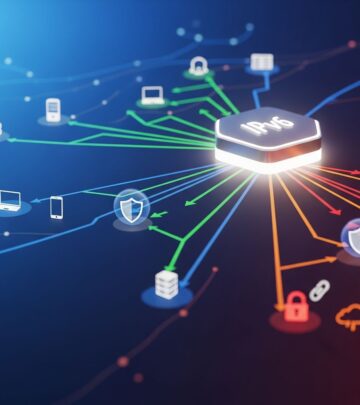
Trust and Collaboration: Pillars of Internet Evolution
Explore how trust and collaboration drive the Internet's secure, innovative future amid rising digital challenges.

The Internet has transformed society, enabling unprecedented connectivity, commerce, and communication. Yet, as billions more devices and users join this vast network, foundational elements like trust and collaboration become critical to its sustainability. Without them, vulnerabilities in security, privacy erosion, and fragmented governance could undermine progress. This article delves into these pillars, drawing on established frameworks and recent insights to outline pathways for a robust digital future.
Understanding Digital Trust in a Hyper-Connected Era
Digital trust refers to the assurance that online interactions—whether personal transactions, business operations, or data exchanges—remain secure, reliable, and private. In today’s landscape, where IoT devices, cloud services, and AI-driven systems proliferate, trust is not optional but imperative. It empowers users to engage confidently, knowing their data integrity is protected against tampering, theft, or misuse.
Consider the scale: by 2025, projections indicated over 75 billion connected devices worldwide, amplifying risks like cyberattacks and data breaches. Trust mitigates these by fostering confidence in the ecosystem. For instance, when users shop online or share health data via apps, they rely on invisible safeguards that verify identities and encrypt transmissions.
Core Components of Digital Trust
Building digital trust rests on interconnected pillars: authentication, integrity, and encryption. Authentication confirms the legitimacy of users, devices, and services, preventing impersonation. Integrity ensures data remains unaltered during transit or storage, detectable through cryptographic hashes. Encryption scrambles data, rendering it inaccessible to unauthorized parties.
- Authentication: Verifies entities via multi-factor methods or digital certificates.
- Integrity: Uses checksums and signing to detect modifications.
- Encryption: Employs protocols like TLS for secure channels.
Public Key Infrastructure (PKI) underpins these, issuing certificates that bind identities to cryptographic keys. Widely adopted in HTTPS, email security, and VPNs, PKI has proven resilient over decades.
Expanding Trust Beyond Basics: Management and Connectivity
While PKI provides a strong base, comprehensive trust demands more. Organizations must integrate compliance, automated management, and ecosystem-wide connectivity.
Compliance involves aligning with evolving regulations like GDPR in Europe or CCPA in California, ensuring audits and policies keep pace. Trust management automates certificate lifecycles—issuance, renewal, revocation—to prevent outages from expired credentials. Tools reduce manual errors, maintaining policy adherence amid thousands of certificates.
Connected trust extends assurance across supply chains, device lifecycles, and multi-vendor environments. In IoT, for example, trust chains from manufacturer to end-user prevent weak links exploited by malware.
| Pillar | Description | Benefits |
|---|---|---|
| Authentication | Identity verification | Prevents unauthorized access |
| Integrity | Data tamper-proofing | Ensures reliability |
| Encryption | Data protection in transit | Safeguards confidentiality |
| Compliance & Operations | Regulatory alignment | Avoids fines, builds credibility |
| Trust Management | Automation of certs | Scales efficiently |
| Connected Trust | Ecosystem integration | Holistic security |
The Power of Collaboration in Internet Resilience
No entity can secure the Internet alone; it thrives on voluntary cooperation among operators, governments, and technologists. This ‘Internet way’—rooted in open standards like TCP/IP and BGP—enables seamless global traffic exchange without central mandates.
Collaboration manifests in forums like the Internet Engineering Task Force (IETF), where engineers draft RFCs for protocols such as DNSSEC, enhancing DNS security against spoofing. Similarly, initiatives like the Open Stand principles promote voluntary adoption of standards for scalability and security.
Recent reports highlight collaboration’s role in 2025’s trust landscape. Interviews with executives in banking and telecom reveal that federated approaches—sharing threat intelligence without exposing data via tokenization—counter complex threats. Transparency in data practices further bolsters user confidence.
Real-World Collaboration Successes
- Global anti-phishing efforts via shared blacklists.
- IPv6 deployment through operator incentives and tools.
- Encryption advocacy, pushing HTTPS Everywhere.
These examples show how peer-led initiatives outperform top-down regulations, adapting swiftly to threats.
Challenges Threatening Trust and Unity
Despite progress, hurdles persist. Cybersecurity incidents, like the 2023 MOVEit breach affecting millions, erode confidence. Privacy concerns arise from surveillance capitalism, where data monetization outpaces protections. Fragmented regulations create compliance burdens, while legacy systems hinder modern trust tech adoption.
In IoT, dynamic environments demand adaptive trust models. Research proposes social-inspired frameworks, blending direct observations, recommendations, and QoS metrics for decentralized reliability. Yet, scaling these amid decentralization remains challenging.
Strategies for Cultivating Trust and Collaboration
To advance, stakeholders must prioritize:
- Invest in Standards: Support bodies like IETF and ICANN for interoperable solutions.
- Leverage Automation: Deploy AI-driven trust management to handle certificate volumes.
- Foster Public-Private Partnerships: Align governments with industry on policies like the Paris Call for Trust and Security in Cyberspace.
- Promote Education: Equip users with tools for privacy hygiene and threat awareness.
- Innovate Inclusively: Ensure trust frameworks bridge digital divides, aiding underserved regions.
Boardrooms now view digital trust as a growth driver, per McKinsey insights, linking it to revenue via customer loyalty.
Future Outlook: A Collaborative, Trusted Internet
Looking ahead, quantum computing poses risks to current encryption, necessitating post-quantum cryptography. Edge computing and 6G will demand evolved trust models. Yet, collaboration offers hope: initiatives like the Declaration for the Future of the Internet reaffirm commitments to openness, privacy, and rights.
By embedding trust and collaboration, the Internet can evolve into a safer, more equitable platform, unlocking innovations in health, education, and beyond.
Frequently Asked Questions (FAQs)
What is digital trust?
Digital trust is the confidence in the security, privacy, and reliability of online systems and interactions.
Why is collaboration essential for the Internet?
It enables networks to interconnect seamlessly, share best practices, and address global threats collectively.
How does PKI support trust?
PKI provides digital certificates for authentication, integrity, and encryption across systems.
What role do standards play?
Open standards ensure interoperability and voluntary adoption, foundational to Internet operations.
Can organizations build trust alone?
No, federated collaboration across ecosystems is crucial for comprehensive coverage.
References
- Digital trust: Toward a brighter future of the internet — Security Magazine. 2023-01-18. https://www.securitymagazine.com/articles/98655-digital-trust-toward-a-brighter-future-of-the-internet
- Why Collaboration Is the Key to Digital Trust in 2025 — techUK. 2024-12-01. https://www.techuk.org/resource/why-collaboration-is-the-key-to-digital-trust-in-2025.html
- A Conceptual Trust Model for the Internet of Things Interactions — American National Standards Institute (ANSI). 2016-01-01. https://www.anslab.org/paper/IST2016_v7.pdf
- Internet is All About Collaboration — Internet Society. 2015-04-01. https://www.internetsociety.org/blog/2015/04/internet-is-all-about-collaboration/
- Digital trust: Why it matters for businesses — McKinsey & Company. 2023-06-15. https://www.mckinsey.com/capabilities/quantumblack/our-insights/why-digital-trust-truly-matters
Similar Articles







Read full bio of Sneha Tete