Tanzania’s Community Networks: Bridging Rural Digital Divides
Discover how grassroots tech initiatives in Tanzania are empowering remote communities with affordable internet access using innovative spectrum solutions.
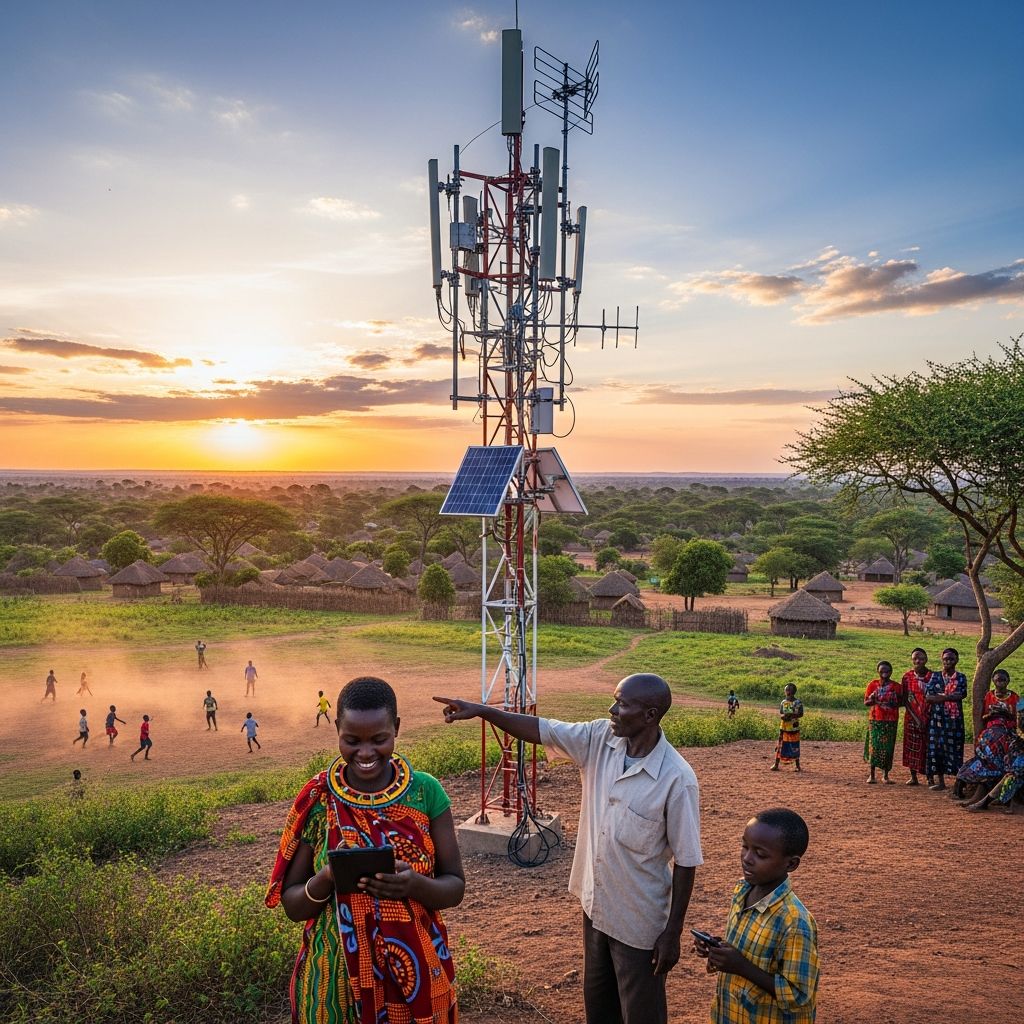
In the vast landscapes of Tanzania, where urban centers buzz with digital life but rural expanses remain shrouded in disconnection, a quiet revolution is underway. Community-driven internet initiatives are emerging as powerful tools to extend broadband access to underserved regions. These efforts, powered by innovative uses of underutilized spectrum, are not just about providing Wi-Fi—they’re about unlocking education, healthcare, and economic opportunities for millions. This article delves into the rise of these networks, their technical foundations, real-world implementations, and the path forward for sustainable digital inclusion.
The Persistent Challenge of Rural Internet Access
Tanzania, with its diverse geography from coastal plains to towering mountains, faces a stark digital disparity. While urban areas enjoy relatively robust connectivity, rural populations—comprising over 70% of the country—grapple with limited infrastructure. Traditional telecom models prioritize profitable zones, leaving remote villages with unreliable or nonexistent service. According to recent data, only a fraction of rural households have reliable broadband, exacerbating inequalities in access to information and services.
This gap hinders progress across sectors. Students lack online learning resources, farmers miss market prices and weather updates, and health workers can’t access telemedicine. Community networks offer a grassroots alternative, where locals take charge of deployment and management, tailoring solutions to their unique needs.
Innovative Tech: Harnessing TV White Space for Broadband
At the heart of Tanzania’s community connectivity push is TV white space (TVWS) technology. TVWS utilizes unused frequencies in the television broadcast spectrum—typically in the ultra-high frequency (UHF) band between 470-694 MHz. These frequencies excel at long-range transmission, penetrating obstacles like foliage and buildings far better than standard Wi-Fi signals.
Unlike crowded Wi-Fi bands, TVWS provides stable, wide-area coverage ideal for rural settings. Devices scan for idle TV channels and transmit data dynamically, avoiding interference. This approach requires minimal infrastructure: a base station connected to fiber or satellite backhaul, plus low-cost receivers at end points. In Tanzania, pilots have demonstrated links spanning several kilometers, serving multiple institutions from a single tower.
- Key Advantages: Long-distance propagation, obstacle penetration, low power use.
- Cost Efficiency: Reuses existing spectrum without new auctions.
- Scalability: Supports hundreds of users per link.
Pioneering Projects: From Pilots to Widespread Impact
Collaborations between local chapters of global tech organizations, universities, and communities have sparked tangible projects. One standout initiative linked four rural educational facilities, extending free access to surrounding villages. Using TVWS, the setup provided speeds sufficient for video streaming and file downloads, transforming school computer labs into community hubs.
Further expansions have birthed cooperative societies in districts like Kondoa, Kasulu, Nyasa, Tarime, and Mpimbwe. These groups, trained in network operations, manage their own systems. In Kondoa, for instance, a widows’ cooperative partnered to deploy TVWS, prioritizing gender-inclusive access amid sub-Saharan Africa’s 37% female broadband gap.
| Location | Institutions Connected | Population Served | Key Outcome |
|---|---|---|---|
| Kondoa | Schools & Health Centers | Thousands | Training 186 locals |
| Kasulu | Community Hubs | Expanding | Cooperative Model |
| Ruvuma | Villages | Growing | Policy Advocacy |
These projects emphasize local ownership, with training programs building skills in installation, maintenance, and business management.
Building Local Capacity: Training for Sustainability
Sustainability hinges on empowering residents. Initiatives include workshops on radio engineering, spectrum management, and cooperative governance. Over 186 individuals across sites have gained technical and entrepreneurial skills, enabling self-run operations. Non-technical training covers marketing internet services and financial literacy, turning networks into revenue-generating entities.
Women and youth are focal points, addressing barriers like affordability and literacy. In partnerships with groups like the Kondoa Widows’ Association, programs ensure inclusive participation, fostering leadership in tech among marginalized voices.
Policy Hurdles and Advocacy Wins
Regulatory environments pose challenges. Spectrum allocation favors incumbents, and licensing can be bureaucratic. Yet, advocates have secured registrations for three cooperatives, pushing for TVWS pilots and community licensing frameworks. Alliances like the Tanzania Community Networks Alliance (tzCNA) lobby for policies enabling shared infrastructure and affordable tariffs.
Government bodies, including the Universal Communication Service Access Fund (UCSAF), support extensions to 1,974 wards serving 23.8 million. These blend public funds with community efforts for broader reach.
Broader Impacts: Transforming Lives and Economies
Beyond connectivity, these networks catalyze change. Education surges with e-learning; agriculture improves via apps for crop advice; healthcare advances through remote consultations. Economically, they spawn jobs in tech support and enable e-commerce for artisans.
In Kondoa’s rugged terrain, TVWS has proven resilient, outpacing fiber in deployment speed and cost. Scaling via cooperatives could connect millions, aligning with national digital economy goals.
Future Roadmap: Scaling for National Coverage
tzCNA envisions nationwide expansion, mapping demand in schools, clinics, and villages. Plans include hybrid models blending TVWS with 5G and satellite. International funders and tech firms provide backing, but local innovation drives momentum.
Challenges remain: funding backhaul, cybersecurity, and competition from giants. Solutions lie in cooperatives’ agility and community trust.
Frequently Asked Questions (FAQs)
What is a community network?
A community network is a locally owned and operated internet system, managed by residents to serve their area, often using affordable tech like TVWS.
How does TV white space work in Tanzania?
TVWS repurposes unused TV frequencies for data transmission, offering long-range broadband in rural zones without new infrastructure.
Are these networks profitable?
Yes, through cooperative models charging affordable fees, covering costs and reinvesting in expansion.
What role does the government play?
Via UCSAF, it funds rural extensions and is engaging on community licensing reforms.
Can this model apply elsewhere in Africa?
Absolutely—similar pilots in neighboring countries show promise for region-wide adoption.
References
- Connecting Rural Communities: UCSAF’s Role in Tanzania’s Digital Transformation — Universal Communication Service Access Fund (UCSAF). 2024. https://www.ucsaf.go.tz/uploads/documents/sw-1736250043-ATTACHMENT%20(1)%20(1).pdf
- In Tanzania, Community Network Cooperative Society Brings Affordable Connectivity — Mozilla Foundation. 2023 (approx., based on fellowship timeline). https://www.mozillafoundation.org/en/blog/in-tanzania-community-network-cooperative-society-brings-affordable-connectivity/
- Tanzania Country Report: Infrastructure — Global Information Society Watch (GISWatch). 2023. https://www.giswatch.org/en/country-report/infrastructure/tanzania
- Bridging Gender Digital Gaps through Community Networks — GeDIA Network. 2024. https://gedia-network.org/bridging-gender-digital-gaps
- Community Networks in Tanzania: Helping to Close the Connectivity Gap — Internet Society. 2019-01-17. https://www.internetsociety.org/blog/2019/01/community-networks-in-tanzania-helping-to-close-connectivity-gap/
Similar Articles








Read full bio of Sneha Tete