Tanzania’s Digital Evolution: A Decade of Change
Explore how internet access has revolutionized daily life, economy, and education in Tanzania over the past decade.
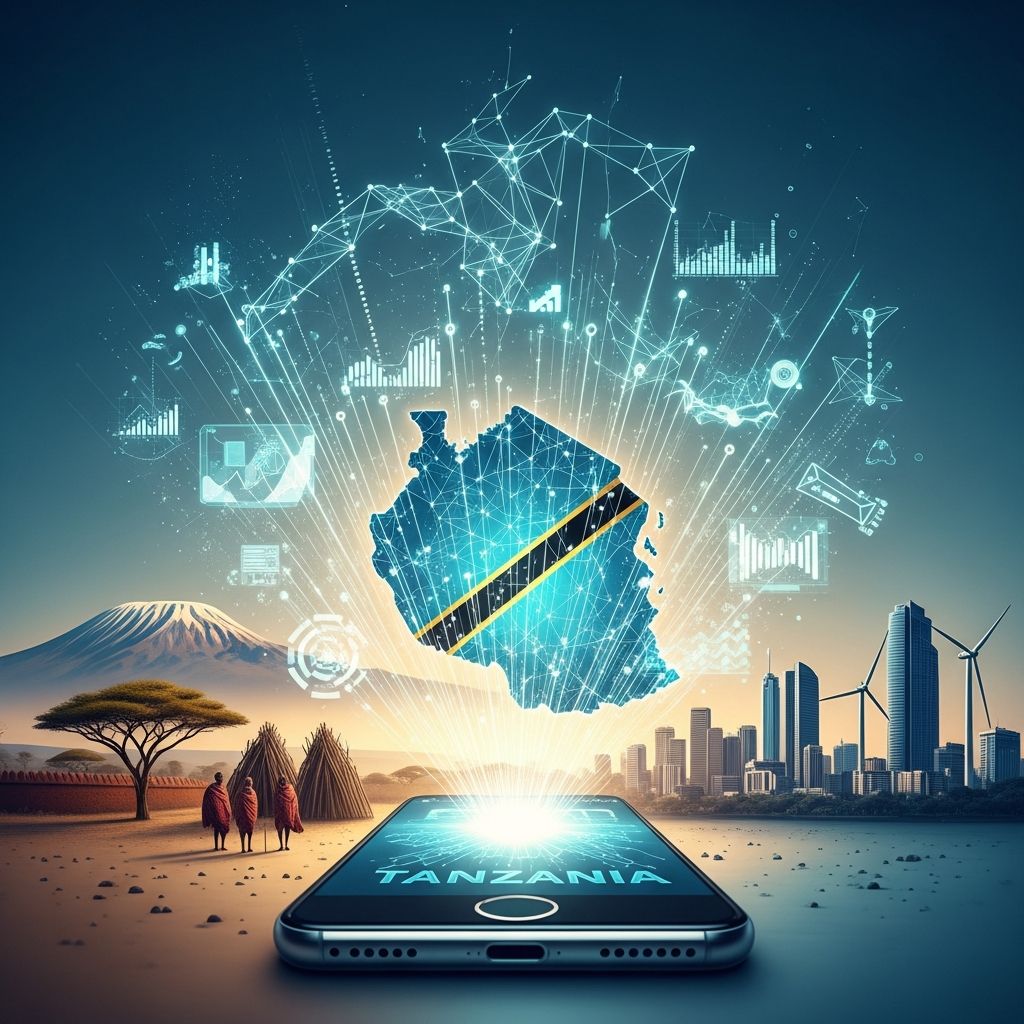
In the heart of East Africa, Tanzania stands as a beacon of rapid technological advancement. Just over ten years ago, access to the internet was a luxury confined to urban elites and academic institutions. Today, millions of Tanzanians rely on digital tools for everything from sending money to loved ones to running small businesses. This transformation, fueled by strategic government investments and private sector innovation, has reshaped the social, economic, and cultural fabric of the nation.
The Dawn of Connectivity: From Scarcity to Ubiquity
A decade ago, internet penetration in Tanzania hovered around 10-15% of the population, primarily through dial-up connections in major cities like Dar es Salaam and Arusha. Rural areas, home to over 70% of Tanzanians, were largely disconnected. Mobile phones existed, but data services were rudimentary and expensive. Fast-forward to 2025, and the landscape is unrecognizable. According to the Tanzania Communications Regulatory Authority (TCRA), internet users have surged to over 60 million, with penetration rates exceeding 100% when accounting for multiple devices per person.1
This leap is no accident. The government’s National ICT Policy, updated in 2016, prioritized broadband infrastructure. Projects like the National ICT Broadband Backbone (NICTBB), spanning over 10,000 kilometers of fiber optic cable, connected even remote regions. Coupled with the liberalization of the telecom market, companies like Vodacom, Airtel, and Tigo expanded 4G and now 5G networks nationwide.
- Key Milestones: 2010: Launch of submarine cable SEACOM; 2015: NICTBB Phase II completion; 2020: 4G rollout to 80% coverage; 2025: 5G pilots in urban centers.
- Impact on Accessibility: Affordable data bundles (under $1 for 1GB) and smartphones priced below $50 have democratized access.
Revolutionizing Communication and Social Bonds
Communication has undergone the most visible shift. Ten years back, staying in touch meant costly landline calls or letters that took weeks. Today, platforms like WhatsApp, Facebook, and TikTok keep families connected in real-time. Migrant workers in the Middle East video-call home daily, sharing life’s moments instantly.
Social media has also amplified voices. Grassroots movements, from environmental campaigns in Zanzibar to youth-led political activism, gain traction overnight. During the 2020 elections, social platforms mobilized voters like never before, with live debates reaching millions.
| Aspect | ~2015 | 2025 |
|---|---|---|
| Primary Method | SMS & Voice Calls | Video & Messaging Apps |
| Cost per Interaction | High (TZS 200/min) | Near-Zero (Data Bundles) |
| Reach | Local/National | Global |
Business and Entrepreneurship: Digital Marketplaces Thrive
Commerce has exploded online. A decade ago, market stalls in Kariakoo were the epicenter of trade. Now, platforms like Jumia, Kilimall, and homegrown apps enable sellers to reach customers nationwide. Small entrepreneurs use Instagram shops to sell handmade crafts to international buyers.
Mobile money, pioneered by M-Pesa’s equivalents like Tigo Pesa and Airtel Money, handles billions in transactions annually. In 2023 alone, mobile money transactions hit TZS 150 trillion, per TCRA data.1 This has formalized informal economies, allowing street vendors to accept digital payments and track inventory via apps.
Startups flourish too. Fintech firms offer microloans via smartphone apps, bypassing traditional banks. Agriculture benefits immensely: Farmers access real-time crop prices on platforms like Mkulima Young, reducing middlemen exploitation.
Education Transformed: From Chalkboards to E-Learning
Education, once limited by physical textbooks and teacher shortages, now leverages digital resources. A decade ago, university students queued for limited computers in cyber cafes. Today, platforms like eLimu and government portals provide free curricula to millions.
During the COVID-19 pandemic, schools pivoted to online classes, a feat unimaginable earlier. Rural students stream lessons via low-data apps. The World Bank notes Tanzania’s digital education investments have boosted literacy rates by 12% since 2015.2
- Interactive apps teach coding to primary kids.
- MOOCs from platforms like Coursera connect Tanzanians to global universities.
- AI tutors personalize learning for underserved areas.
Government Services Go Digital: Efficiency and Transparency
Public services were notoriously bureaucratic. Registering a business took months; paying taxes involved long queues. Now, the e-Government portal (gepg.go.tz) streamlines everything: tax filings, license renewals, even passport applications online.
Health services benefit too. The Ministry of Health’s app tracks vaccinations and telemedicine connects rural clinics to specialists. This digital shift has cut service delivery times by 70%, per a 2023 UN report.3
Challenges on the Horizon: Bridging the Remaining Gaps
Despite progress, hurdles persist. Rural-urban digital divide lingers, with 20% of villages still offline. Cybersecurity threats rise with connectivity; data breaches hit banks in 2024. Affordability remains an issue for the poorest quintile.
Gender gaps narrow slowly—women’s internet use lags at 45% vs. 65% for men—but initiatives like Google’s Women in Tech programs help. Power outages plague remote areas, though solar-powered WiFi hubs emerge as solutions.
Future Prospects: 5G, AI, and Beyond
Looking ahead, 5G promises ultra-fast speeds for IoT in farming and smart cities. AI-driven agriculture could double yields, per IMF projections.4 Tanzania aims for 90% broadband by 2030 under Vision 2025 extensions.
With youth comprising 65% of the population, a digital-native generation will drive innovation. Expect more Tanzanian apps conquering African markets.
FAQs
What was internet access like in Tanzania 10 years ago?
Limited to cities, expensive, and low-speed, serving under 10 million users.
How has mobile money changed daily life?
It enables cashless transactions, financial inclusion for unbanked populations, and economic growth.
Is Tanzania’s internet infrastructure world-class?
It’s among Africa’s best, with extensive fiber and growing 5G, though rural gaps remain.
What role did government play in this transformation?
Through policies, fiber backbones, and IXPs, boosting user growth from 3.6M to over 60M.
Can digital tools boost Tanzania’s GDP further?
Yes, IMF estimates 1-2% annual GDP growth from digital economy expansion.
References
- Tanzania Communications Regulatory Authority Annual Report — TCRA. 2024-12-31. https://www.tcra.go.tz/images/documents/reports/TCRA_Annual_Report_2024.pdf
- World Bank Digital Economy for Africa Report — World Bank. 2023-06-15. https://www.worldbank.org/en/programs/de4a/publication/digital-economy-for-africa-report
- United Nations E-Government Survey — UN Department of Economic and Social Affairs. 2024-07-01. https://publicadministration.un.org/egovkb/en-us/Reports/UN-E-Government-Survey-2024
- IMF Regional Economic Outlook: Sub-Saharan Africa — International Monetary Fund. 2025-04-15. https://www.imf.org/en/Publications/REO/SSA/Issues/2025/04/15/regional-economic-outlook-for-sub-saharan-africa-april-2025
- National ICT Broadband Backbone Project Overview — Ministry of Communications and Information Technology, Tanzania. 2023-01-10. https://www.mcit.go.tz/pages/national-ict-backbone
Similar Articles








Read full bio of medha deb