Supreme Court Threatens Open Internet Access
A pivotal US Supreme Court case could upend internet neutrality, forcing providers to surveil and disconnect users over copyright claims.
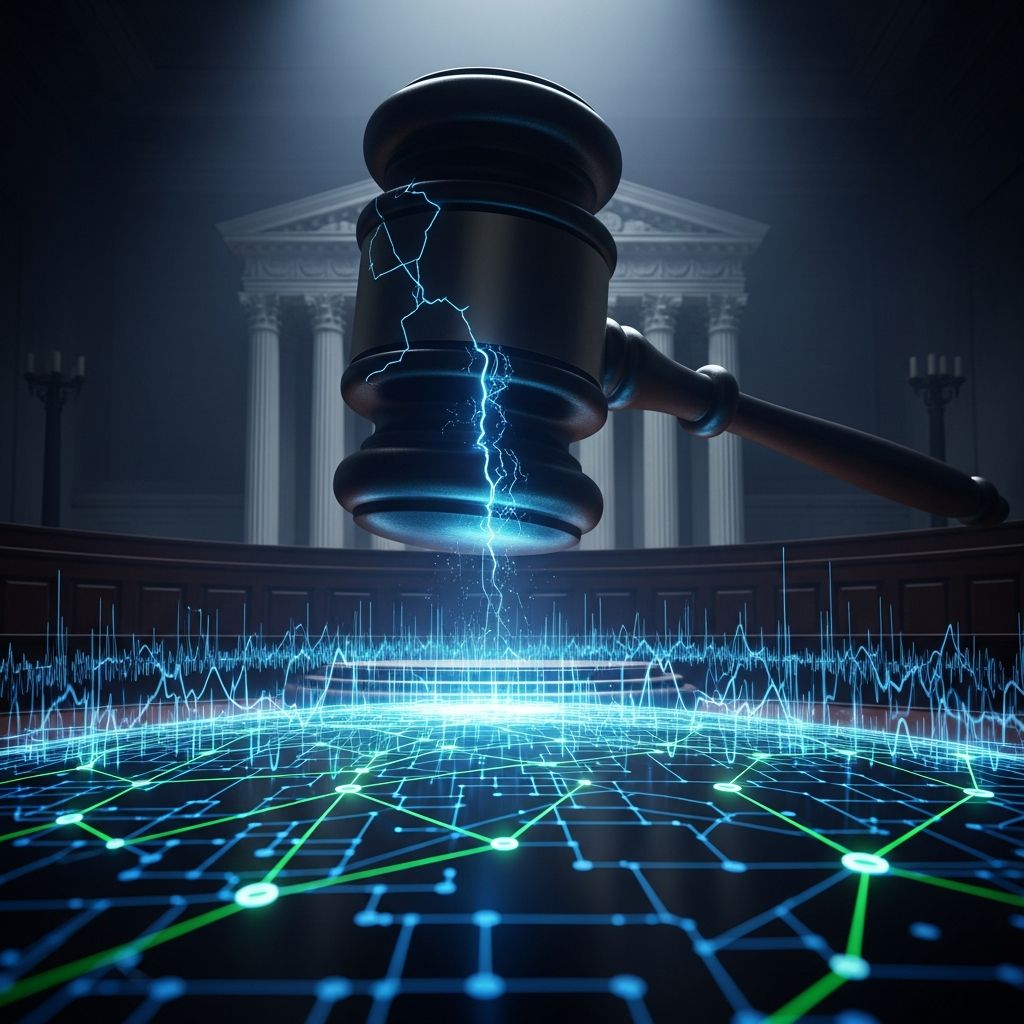
The digital world we rely on daily for work, education, entertainment, and connection faces an unprecedented challenge. A high-stakes legal battle before the United States Supreme Court could redefine the rules governing internet service providers (ISPs), potentially leading to widespread surveillance, arbitrary disconnections, and the erosion of online privacy. At the heart of this controversy is Cox Communications v. Sony Music Entertainment, a case that questions the extent of ISP responsibility for user actions related to copyright violations.
The Legal Battlefield: Understanding the Case
This dispute originated from allegations of unauthorized music sharing on peer-to-peer networks facilitated through Cox’s broadband services. Sony and other music labels argue that ISPs like Cox should bear direct liability for their subscribers’ alleged infringements unless they implement aggressive monitoring and enforcement measures. Lower courts have leaned toward holding ISPs accountable, setting the stage for Supreme Court review.
The core issue revolves around longstanding protections for online intermediaries. For decades, laws have shielded platforms and networks from being punished for third-party misconduct, promoting an open ecosystem where innovation thrives without constant fear of litigation. A shift in this paradigm could compel ISPs to act as digital gatekeepers, scanning traffic and terminating service based on unverified claims.
Potential Fallout: Who Gets Hurt First?
Imagine losing internet access because a single family member or even a guest on your network is accused of downloading copyrighted material. This isn’t a distant hypothetical—it’s a real risk under the proposed liability framework.
- Households: Shared Wi-Fi in homes means one user’s actions could black out connectivity for everyone, from remote workers to students.
- Educational Institutions: Schools and universities, with thousands of devices on campus networks, face heightened vulnerability to mass shutdowns over isolated incidents.
- Public Spaces: Libraries and community centers providing free access could be forced to limit or eliminate services to avoid penalties.
- Critical Services: Hospitals, emergency responders, and rural clinics dependent on stable broadband might suffer disruptions, endangering lives and operations.
These scenarios underscore a broader threat: the internet’s universality. When access becomes conditional on perfect compliance, inequality widens. Low-income areas, already underserved, could be hit hardest, exacerbating the digital divide.
Surveillance Society: Privacy Under Siege
To mitigate liability risks, ISPs might deploy deep packet inspection tools, analyzing every byte of data traversing their networks. This invasive monitoring contravenes principles of data minimization and user autonomy, opening doors to abuse.
Consider the chilling effects: users self-censoring content sharing, fearing false positives from automated systems. Legitimate activities—like streaming public domain media or accessing open educational resources—could trigger flags. Moreover, aggregated user data becomes a goldmine for advertisers, governments, or hackers, amplifying identity theft and targeted exploitation risks.
| Current Model | Post-Ruling Risk |
|---|---|
| Neutral conduit: ISPs transmit data without interference | Active enforcer: Constant scanning and intervention |
| Protected privacy: Minimal logging required | Mass surveillance: Detailed activity records |
| Innovation-friendly: Low barriers for new services | Stifled growth: Over-cautious blocking |
Historical Safeguards: Why Neutrality Matters
The internet’s explosive growth stems from its end-to-end design, where intelligence resides at the edges—your device—not the pipes. Policies like Section 230 of the Communications Decency Act have preserved this by immunizing intermediaries from user-generated content liability. Altering this for ISPs would cascade, pressuring edge providers too.
Advocacy groups, including the Internet Society, have submitted amicus briefs urging the Court to uphold intermediary neutrality. They argue that imposing liability distorts market incentives, favoring large incumbents who can afford compliance over nimble startups.
Economic Ripples: Innovation and Costs
Beyond individuals, businesses stand to lose. E-commerce relies on seamless peer-to-peer transfers for updates and collaborations. Cloud services, video calls, and IoT devices could falter under throttled or monitored connections. A 2023 NTIA report highlights how broadband underpins 30% of US GDP growth; disruptions here could shave billions from the economy.
Consumers face hikes too. ISPs might pass compliance costs—hardware upgrades, legal fees, AI monitoring—onto bills, pricing out vulnerable populations.
Global Echoes: Lessons from International Precedents
Other nations have tested strict ISP liability. France’s HADOPI system, which issues warnings before cuts, has led to over 1 million alerts but minimal piracy reduction, per a 2019 OECD analysis. Australia’s 2015 model similarly burdened providers without curbing infringement, proving enforcement escalates without solving root issues like content availability.
These experiments reveal a pattern: top-down controls fragment the web, driving activity to unregulated shadows and undermining trust.
Paths Forward: Advocacy and Action
The Supreme Court holds the gavel, but public pressure shapes outcomes. Petitions, congressional outreach, and voter awareness can amplify voices for an open internet. Organizations worldwide rally, emphasizing access as a public good akin to electricity or roads.
Individuals can act: contact representatives, support net neutrality bills, and use privacy tools like VPNs in the interim. Long-term, reforming copyright to prioritize fair use and global licensing offers sustainable alternatives to draconian ISP mandates.
FAQs: Key Questions Answered
What is the Cox v. Sony case about?
It challenges whether broadband providers must police copyright infringement or face lawsuits, potentially ending neutral network status.
Could I lose my internet over someone else’s download?
Yes, under the lower court’s view, unsubstantiated claims could trigger household-wide termination to shield ISPs from fines.
How does this affect privacy?
ISPs may monitor traffic deeply, logging activities and sharing data to prove diligence against infringement accusations.
Is this just about music piracy?
No, precedents could extend to video, software, and any shared content, reshaping the entire digital ecosystem.
What can I do right now?
Sign amicus-supported petitions, educate peers, and advocate for legislative protections like updated DMCA safe harbors.
Broader Implications for Digital Rights
This case tests the fragility of our connected age. An adverse ruling doesn’t just tweak policy; it rearchitects the internet from permissionless to policed. Schools lose research tools, businesses innovation edges, and citizens free expression. Yet, history shows resilience: the web endured SOPA threats through collective action.
Stakeholders must unite—tech firms, civil liberties groups, educators—for a verdict safeguarding universal access. The alternative? A balkanized net where connectivity is a privilege, not a right.
References
- State of Broadband America Report — National Telecommunications and Information Administration (NTIA). 2023-10-01. https://www.ntia.gov/report/2023/state-broadband-america
- HADOPI: A French Experiment in the Fight Against Internet Piracy — Organisation for Economic Co-operation and Development (OECD). 2019-06-15. https://www.oecd.org/sti/ieconomy/hadopi.htm
- Section 230: The Twenty-Six Words That Created the Internet — Congressional Research Service. 2024-05-20. https://crsreports.congress.gov/product/pdf/IF/IF12228
- Broadband Internet Access and the Digital Economy — Federal Communications Commission (FCC). 2023-11-10. https://www.fcc.gov/reports-research/reports/broadband-progress-reports/2023-broadband-deployment-report
- Internet Governance and Neutrality Principles — United Nations Conference on Trade and Development (UNCTAD). 2024-02-14. https://unctad.org/publication/digital-economy-report-2024
Similar Articles








Read full bio of medha deb