Supreme Court Shields Internet Access in Landmark Ruling
Unanimous SCOTUS decision in Cox v. Sony prevents ISPs from mass disconnections over copyright claims, safeguarding digital rights for millions.
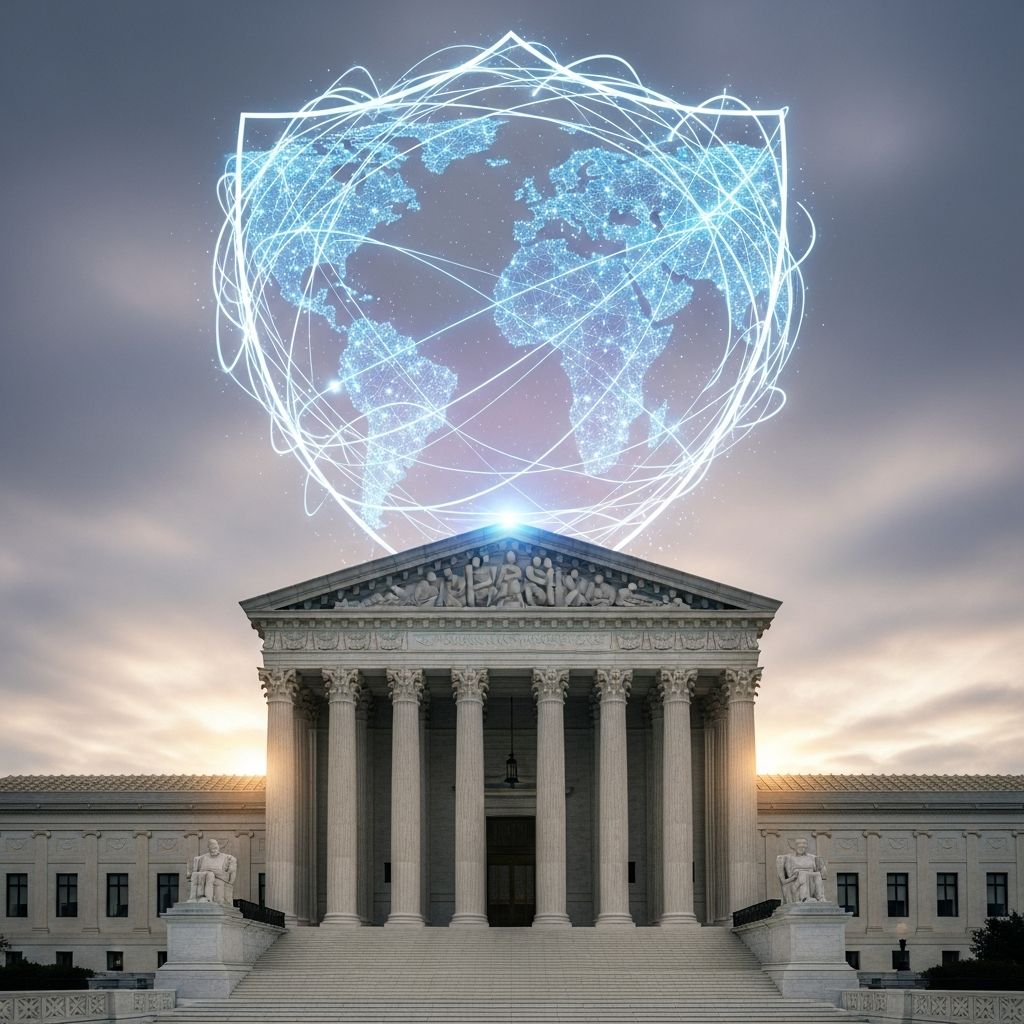
In a pivotal 9-0 decision dated March 25, 2026, the United States Supreme Court delivered a resounding victory for broadband users nationwide. The case, Cox Communications, Inc. v. Sony Music Entertainment, addressed whether internet service providers (ISPs) could face massive financial penalties or be compelled to terminate customer accounts based solely on allegations of copyright infringement by their subscribers. This ruling fundamentally reaffirms that ISPs are neutral conduits of data, not enforcers of copyright law, ensuring that everyday Americans retain reliable internet connectivity.
The Genesis of the Cox v. Sony Dispute
The controversy originated from Sony Music Entertainment’s aggressive campaign against music piracy. In 2019, Sony initiated legal action against Cox, a major ISP serving around six million customers, claiming that Cox failed to adequately police its network for illegal file-sharing activities. A district court jury shockingly awarded Sony $1 billion in statutory damages—the largest such award in copyright history—holding Cox vicariously liable for its users’ actions.
On appeal, the Fourth Circuit Court of Appeals partially upheld the verdict, affirming Cox’s liability for contributory infringement while overturning the vicarious portion. This left Cox—and by extension, the entire ISP industry—facing existential threats. Providers were caught in a dilemma: implement draconian monitoring and mass disconnections to mitigate risks, or brace for crippling lawsuits from content owners. The Supreme Court granted certiorari to resolve this circuit split and clarify longstanding principles of secondary liability under copyright law.
Unpacking the Court’s Legal Reasoning
Justice Clarence Thomas, authoring the majority opinion, meticulously dissected the doctrines of contributory and vicarious liability. For contributory liability, the Court reiterated that an ISP must have specific knowledge of infringing activity and materially contribute to it. Mere provision of internet access, even with awareness of potential misuse, does not suffice. Cox demonstrated proactive measures—issuing warnings, suspending accounts, and terminating repeat offenders—thus negating any intent to facilitate piracy.
Vicarious liability requires a direct financial benefit from infringement plus the right and ability to supervise it. The Court found Cox’s service neither promoted nor was designed exclusively for illegal purposes. Broadband enables myriad lawful activities: streaming legal content, remote work, online education, and e-commerce. Justice Thomas emphasized that IP addresses are not foolproof identifiers; multiple users (family members, guests, neighbors via unsecured Wi-Fi) share them, making unilateral ISP judgments unreliable and prone to abuse.
- Key Takeaway 1: ISPs are not “internet police” obligated to preemptively disconnect users on unverified claims.
- Key Takeaway 2: Copyright holders must pursue individual infringers, not shotgun-style actions against providers.
- Key Takeaway 3: The ruling preserves safe harbors under the Digital Millennium Copyright Act (DMCA) while balancing creator rights.
Immediate Impacts on Broadband Users and Providers
For millions of American households, this decision is a bulwark against arbitrary service cutoffs. Low-income families, rural communities, and urban apartments dependent on shared networks are particularly vulnerable. Schools and libraries, often serving as digital lifelines, avoid disruptions that could halt virtual learning or research access. Small ISPs, which power connectivity in underserved regions, are spared bankruptcy from disproportionate penalties.
Industry groups like USTelecom hailed the outcome as a “critical victory for consumers.” Without it, providers might have adopted “guilty until proven innocent” policies, exacerbating the digital divide. Public Knowledge, a digital rights advocate, noted that internet access is “necessary to participate in modern society,” from job applications to telemedicine.
| Stakeholder Group | Pre-Ruling Risk | Post-Ruling Protection |
|---|---|---|
| Households | Disconnection for shared IP misuse | Stable access for education, work |
| Small ISPs/Community Networks | $1B+ liability threats | Viable operations in rural areas |
| Schools & Libraries | Network-wide shutdowns | Uninterrupted public services |
| Content Creators | Weakened enforcement tools | Existing DMCA takedown processes intact |
Broader Ramifications for Digital Policy and Innovation
This precedent extends beyond music piracy to streaming, gaming, and emerging technologies like AI-generated content. It discourages “notice-and-terminate” regimes that prioritize volume over accuracy, reducing false positives that harm innocents. Policymakers must now pursue nuanced reforms, such as improving IP attribution tech or expanding DMCA safe harbors.
Economically, the decision bolsters U.S. competitiveness. Robust broadband underpins a $2 trillion digital economy. Forcing ISPs into vigilante roles would stifle investment in fiber rollout and 5G expansion, per Federal Communications Commission data. Internationally, it aligns with global norms rejecting intermediary liability, influencing treaties like those from the World Intellectual Property Organization.
Navigating Copyright in the Streaming Era
While protecting access, the ruling upholds core copyright incentives. Creators retain robust remedies: DMCA notices compel swift content removal, and direct lawsuits target egregious pirates. Platforms like YouTube already deploy sophisticated Content ID systems, proving enforcement without sacrificing user rights. The Court signaled tolerance for tailored ISP policies but rejected blanket liability.
Looking ahead, debates will intensify over “site-blocking” injunctions and AI’s role in infringement detection. Advocacy groups urge Congress to modernize laws, perhaps via a “notice-and-stay-down” framework that minimizes repeat violations without overreach.
Frequently Asked Questions (FAQs)
What does the Cox v. Sony ruling mean for my internet service?
Your ISP cannot legally terminate your account solely based on a copyright holder’s accusation without due process. Providers must investigate claims reasonably.
Can music labels still go after individual downloaders?
Yes, primary infringers remain fully liable. The decision targets secondary claims against innocent providers.
Does this affect DMCA safe harbors?
No, it strengthens them by clarifying liability thresholds, encouraging compliance without fear of vicarious penalties.
How does this impact small internet providers?
Small ISPs gain protection from outsized lawsuits, enabling sustainable service in rural and tribal areas.
Will there be more copyright lawsuits against ISPs now?
Unlikely; the ruling raises the bar for plaintiffs, deterring frivolous suits while preserving legitimate actions.
Conclusion: A Win for Open Internet Principles
The Supreme Court’s unanimous stance in Cox v. Sony enshrines the internet as a democratizing force, not a privatized toll road policed by record labels. By rejecting intermediary liability overreach, it safeguards connectivity for 330 million Americans, fostering innovation while respecting intellectual property. As digital life evolves, this decision reminds us: access is not a privilege to be rationed by accusation, but a foundation of opportunity. Future challenges demand balanced policies that connect without censoring.
References
- Supreme Court Rules in Favor of Internet Providers in Cox v. Sony — USTelecom – The Broadband Association. 2026-03-25. https://ustelecom.org/scotus-protects-internet-access-in-cox-v-sony-decision/
- US Supreme Court Ruling in Favor of Cox Protects Internet Access — Association of Research Libraries (ARL). 2026-03-25. https://www.arl.org/blog/us-supreme-court-ruling-in-favor-of-cox-protects-internet-access/
- Public Knowledge Applauds Supreme Court Decision Protecting Consumers’ Internet Access — Public Knowledge. 2026-03-25. https://publicknowledge.org/public-knowledge-applauds-supreme-court-decision-protecting-consumers-internet-access/
- U.S. Supreme Court Rules Internet Providers Not Liable for Users’ Copyright Infringement — Pearl Cohen. 2026-03-25. https://www.pearlcohen.com/u-s-supreme-court-rules-internet-providers-not-liable-for-users-copyright-infringement/
Similar Articles







Read full bio of Sneha Tete