Spectrum: Powering Wireless Connectivity
Discover how electromagnetic spectrum, a vital natural resource, drives modern wireless networks and bridges the digital divide for global access.
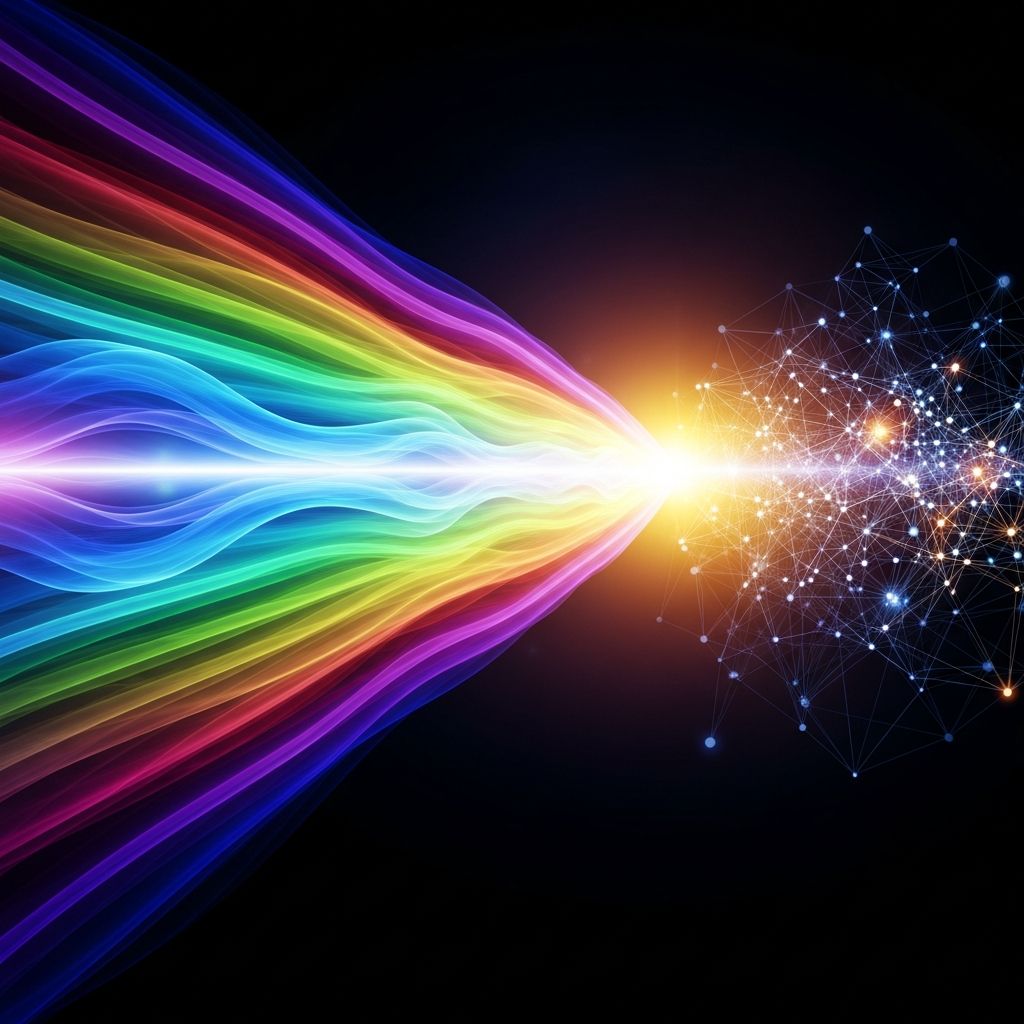
The invisible waves traveling through the air form the backbone of our connected world. Radio spectrum, often called the lifeblood of wireless systems, allows smartphones, laptops, satellites, and IoT sensors to exchange data seamlessly. This finite resource underpins everything from streaming videos to emergency alerts, yet its complexity remains hidden from everyday users. As demands for faster, more reliable connections surge, grasping spectrum’s fundamentals becomes essential for policymakers, engineers, and citizens alike.
The Physics Behind Radio Waves
At its core, radio spectrum consists of electromagnetic waves oscillating at specific frequencies. These waves propagate through space, carrying modulated signals that devices interpret as voice, video, or commands. Frequency measures the number of wave cycles per second, expressed in hertz (Hz), with usable bands spanning from kilohertz to terahertz.
Key characteristics define each segment:
- Low frequencies (below 1 GHz): Excel in propagation over long distances and through obstacles like buildings or foliage, ideal for rural coverage but limited in data capacity.
- Mid-range bands (1-6 GHz): Strike a balance, supporting moderate speeds and reasonable range, powering much of 4G and early 5G deployments.
- High frequencies (mmWave, above 24 GHz): Deliver gigabit speeds for dense urban areas but suffer from high attenuation, requiring line-of-sight paths.
This diversity enables networks to layer services: low bands for broad reach, high bands for capacity bursts. According to the U.S. Federal Communications Commission (FCC), strategic band combinations have accelerated 5G rollout, enhancing throughput by up to 100 times over prior generations.1
Everyday Applications Relying on Spectrum
Spectrum touches daily life in profound ways. GPS navigation uses L-band signals around 1.5 GHz for precise positioning. Wi-Fi operates primarily in 2.4 GHz and 5 GHz unlicensed bands, fostering home and office networks. Cellular services leverage licensed mid-bands for voice and data, while satellite TV beams from Ku-band (12-18 GHz).
| Technology | Frequency Range | Primary Use |
|---|---|---|
| FM Radio | 88-108 MHz | Broadcast audio |
| 4G/5G Cellular | 600 MHz – 40 GHz | Mobile broadband |
| Wi-Fi 6 | 2.4/5/6 GHz | Local networks |
| Radar | 3-100 GHz | Weather, aviation |
Beyond consumer tech, spectrum supports critical infrastructure. Aviation relies on VHF (118-137 MHz) for air traffic control, while first responders use 700/800 MHz bands for public safety communications. NASA’s missions depend on spectrum for telemetry and deep-space links, coordinating allocations to avoid interference.2
Challenges of a Finite Resource
Unlike land or water, spectrum isn’t consumed but is scarce due to mutual exclusivity: one signal at a given frequency, time, and location blocks others. Global demand has exploded with 18 billion connected devices projected by 2025, per ITU estimates. Congestion risks degrade service quality, especially in unlicensed bands like 2.4 GHz, plagued by Bluetooth, microwaves, and IoT chatter.
Governments worldwide allocate via auctions or lotteries, generating billions—$85 billion in the U.S. 2021 C-band auction alone. Yet, static licensing leaves vast swaths idle in rural or off-peak areas, exacerbating urban-rural divides. Innovation Canada highlights spectrum’s role in economic growth, noting efficient use could boost GDP by enabling faster data transmission for industries like healthcare and manufacturing.3
Strategies for Efficient Spectrum Management
Modern approaches transcend rigid licensing. Dynamic Spectrum Access (DSA) employs cognitive radios to detect and utilize idle channels opportunistically. The FCC’s Citizens Broadband Radio Service (CBRS) at 3.5 GHz exemplifies this: tiered access includes incumbents (Tier 1), priority licensees (Tier 2), and general users (Tier 3), managed by automated frequency coordinators.
Other innovations include:
- License-exempt bands: Unfettered access in ISM bands spurs Wi-Fi and short-range IoT growth.
- Shared spectrum: TV White Spaces repurpose unused TV frequencies for rural broadband.
- Advanced technologies: Massive MIMO and beamforming squeeze more capacity from existing bands.
International coordination via the ITU’s World Radiocommunication Conferences (WRC) harmonizes global bands, preventing cross-border interference. Recent WRC-23 decisions opened 6 GHz for Wi-Fi, balancing incumbent fixed services with new demands.
Bridging the Digital Divide Through Spectrum
Equitable access hinges on inclusive policies. Rural areas, often spectrum-starved, benefit from low-band refarming—repurposing 600 MHz for 5G coverage. Developing nations face acute challenges; the World Bank reports 2.6 billion people offline, largely due to infrastructure costs tied to spectrum scarcity perceptions.
Public-private partnerships and subsidies can unlock potential. For instance, the U.S. Rural Digital Opportunity Fund allocates $20.4 billion for broadband in underserved regions, prioritizing low-frequency spectrum for propagation advantages. Globally, initiatives like Giga from ITU and UNICEF map school connectivity, advocating spectrum policies for education equity.
Future Horizons: 6G and Beyond
Looking ahead, 6G visions target terahertz bands for terabit speeds, integrated sensing and communication (ISAC) for radar-like applications, and AI-driven allocation. Yet, challenges loom: higher frequencies demand denser infrastructure, raising deployment costs. Spectrum harmonization will be pivotal, with WRC-27 eyeing upper mid-band (7-15 GHz) for mobile.
Sustainability enters the fray—energy-efficient waveforms and green spectrum use mitigate environmental impacts. NTIA emphasizes spectrum’s role in national security, reserving bands for defense while fostering commercial innovation.4
Frequently Asked Questions
What exactly is radio spectrum?
Radio spectrum refers to the range of electromagnetic frequencies used for wireless transmission, from 3 kHz to 300 GHz, enabling communication without physical wires.
Why is spectrum considered a natural resource?
It’s finite and shared publicly; overuse causes interference, akin to overfishing, requiring regulation for sustainable use.
How do governments allocate spectrum?
Through licensing auctions, administrative assignments, or unlicensed access, coordinated nationally and internationally via ITU.
Can we run out of spectrum?
No, but poor management leads to inefficiency. Technological advances like sharing expand effective capacity.
What role does spectrum play in 5G?
5G uses diverse bands: low for coverage, mid for capacity, high for speed, delivering transformative performance.
In conclusion, radio spectrum’s judicious stewardship promises a hyper-connected future. By embracing sharing, innovation, and inclusion, we ensure this priceless asset serves humanity broadly, powering progress while narrowing divides.
References
- 5G America Frequency Spectrum Guide — FCC. 2025-03-15. https://www.fcc.gov/wireless/bureau-divisions/technologies-systems-and-innovation-division/spectrum-dashboard
- Coordinating a Limited Resource in Radio Communications — NASA. 2024-06-12. https://www.nasa.gov/general/coordinating-a-limited-resource-in-radio-communications-to-enable-future-missions/
- What is Spectrum? — Innovation, Science and Economic Development Canada. 2025-01-20. https://ised-isde.canada.ca/site/communications-research-centre-canada/en/what-spectrum
- Regulating the Use of the Spectrum — NTIA. 2023-11-08. https://www.ntia.gov/book-page/regulating-use-spectrum
- Spectrum Policy for the 21st Century — ITU Radiocommunication Bureau. 2024-09-30. https://www.itu.int/pub/R-REP-SM.2571
Similar Articles



Read full bio of medha deb