SpaceX Starlink FCC Approval
SpaceX gains key FCC nod to deploy thousands of satellites, revolutionizing global internet access from space.
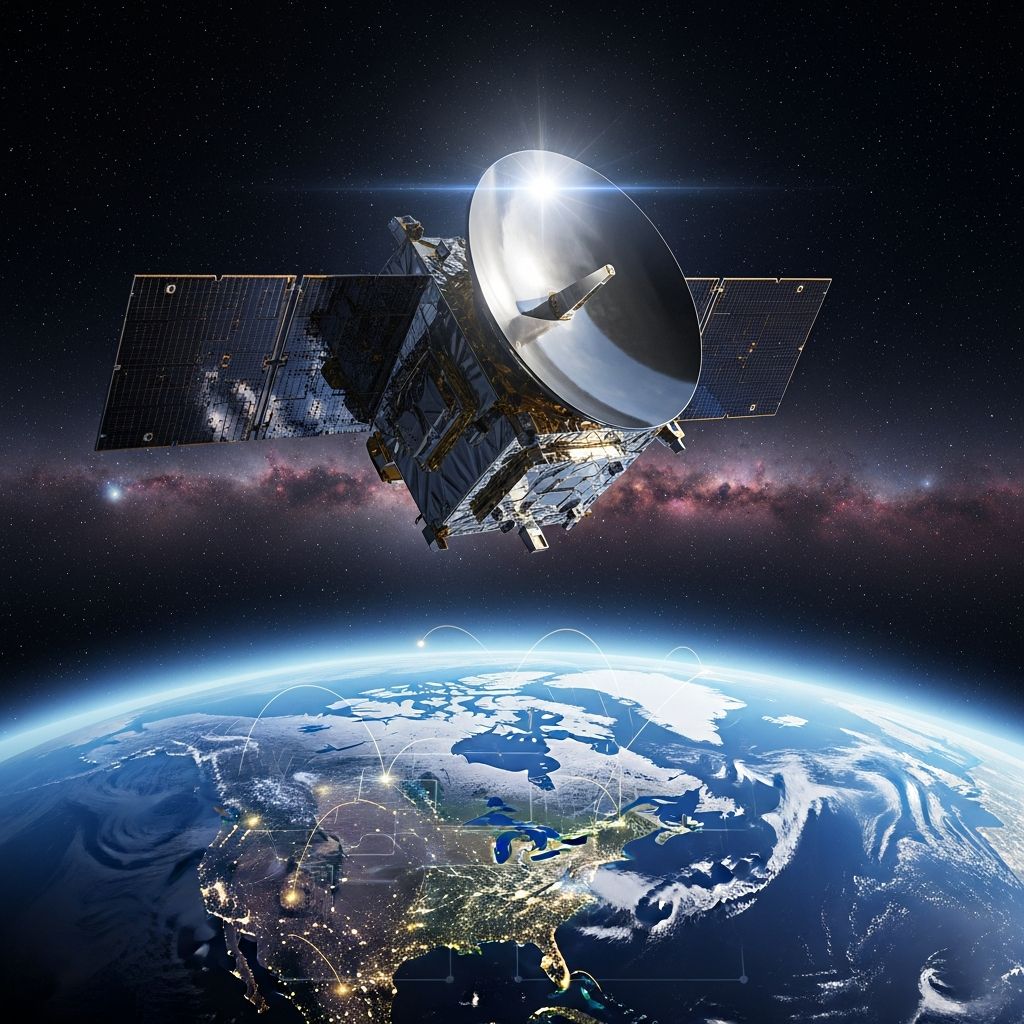
The telecommunications landscape is on the cusp of a monumental shift as SpaceX receives pivotal authorization from the U.S. Federal Communications Commission (FCC) to deploy a vast constellation of satellites aimed at providing high-speed internet to even the most isolated corners of the globe. This approval marks a significant milestone in the quest to eliminate the digital divide, leveraging cutting-edge space technology to deliver broadband services comparable to terrestrial fiber-optic networks.
The Dawn of Orbital Internet Connectivity
Traditional internet infrastructure relies heavily on ground-based cables, towers, and fiber lines, which often leave rural, remote, and underserved areas in the dark. SpaceX’s innovative approach circumvents these limitations by placing thousands of satellites in low-Earth orbit (LEO). Positioned much closer to the planet than geostationary satellites—typically at altitudes around 550 kilometers—these LEO satellites promise reduced latency and higher data throughput, making them ideal for real-time applications like video streaming, online gaming, and remote work.
The approved constellation, branded as Starlink, will consist of 4,425 satellites initially, with potential expansions in the future. This network is designed to beam internet signals directly to user terminals on the ground, bypassing the need for extensive terrestrial infrastructure. The FCC’s decision underscores a growing recognition of satellite-based solutions as viable complements to existing broadband providers.
Key Milestones and Deployment Timeline
SpaceX’s roadmap for Starlink is ambitious yet methodical. The company must launch and operationalize at least half of the satellites—approximately 2,213—within six years of the approval to maintain the license. Initial launches were slated to begin as early as 2019, with the full network requiring around 800 satellites to achieve basic operational coverage across the United States, including territories like Puerto Rico and the U.S. Virgin Islands.
- Phase 1: Prototype testing and early launches to validate technology.
- Phase 2: Scaling to 800+ satellites for U.S.-wide service.
- Phase 3: Global expansion for near-planetary coverage.
This phased rollout minimizes risks associated with large-scale satellite deployments, such as orbital debris management and interference mitigation. By 2026, Starlink has evolved far beyond these initial plans, but the 2018 approval laid the foundational regulatory groundwork.
Technical Innovations Powering Starlink
At the heart of Starlink’s success are advanced phased-array antennas on the satellites and user terminals. These antennas electronically steer beams without mechanical parts, enabling rapid tracking of ground users and dynamic bandwidth allocation. Satellites communicate via inter-satellite laser links, forming a mesh network in space that reduces reliance on ground stations and enhances global reach.
Speeds are projected to rival fiber, with downloads exceeding 100 Mbps and uploads around 20-40 Mbps, at latencies under 50 milliseconds—far superior to traditional satellite internet’s 600+ ms delays. Power efficiency and compact design allow for mass production and frequent launches aboard SpaceX’s reusable Falcon 9 rockets.
| Feature | Starlink (LEO) | Traditional Satellite (GEO) | Fiber Optic |
|---|---|---|---|
| Orbit Altitude | 550 km | 35,786 km | N/A |
| Latency | <50 ms | 600+ ms | <10 ms |
| Speed | 100+ Mbps | 25-50 Mbps | 1 Gbps+ |
| Coverage | Global | Regional | Urban-focused |
This comparison highlights Starlink’s edge in bridging performance gaps between space and ground technologies.
Addressing Global Connectivity Gaps
Over 3 billion people worldwide lack reliable internet access, per UN estimates, stifling education, healthcare, and economic growth. Starlink targets these gaps, particularly in rural America, maritime routes, aviation, and developing nations. In the U.S. alone, millions in underserved areas stand to benefit, aligning with national broadband goals.
Beyond consumers, enterprises like shipping companies and airlines anticipate seamless connectivity mid-ocean or at 30,000 feet. Governments in remote regions see potential for e-governance and disaster response, where traditional infrastructure fails.
Regulatory Navigation and FCC Conditions
The FCC’s approval wasn’t unconditional. SpaceX committed to rigorous spectrum management to avoid interference with other satellite operators and terrestrial networks. Key stipulations include:
- Deployment of 50% satellites within 6 years.
- Deorbiting non-functional satellites within 5 years to curb space debris.
- Coordination with international regulators for global operations.
These measures reflect broader concerns over orbital congestion, with over 20,000 satellites projected by decade’s end. The FCC order emphasizes sustainable space use, influencing future approvals for competitors like OneWeb and Amazon’s Kuiper.
FCC Authorization Order details these requirements, citing SpaceX’s engineering prowess as justification.
Challenges on the Horizon
Despite optimism, hurdles remain. Astronomers worry about light pollution from satellite trails obscuring night skies, prompting mitigation like anti-reflective coatings. Space traffic management is critical amid rising launches, with the U.S. Space Force monitoring collisions.
Economically, user terminals (around $500 initially) and subscription fees must compete with cable providers. Regulatory harmonization across 190+ countries poses diplomatic challenges. Environmentally, frequent launches raise carbon footprint questions, though reusability mitigates some impacts.
Starlink’s Broader Ecosystem Impact
Starlink isn’t just about internet; it’s a catalyst for innovation. IoT proliferation benefits from ubiquitous coverage, enabling smart agriculture in fields and wildlife tracking in jungles. Telemedicine could reach Arctic outposts, while education platforms serve off-grid schools.
Competition intensifies: Telesat, SES, and others vie for LEO supremacy, potentially driving prices down and services up. SpaceX’s vertical integration—from rockets to chips—gives it an edge, but antitrust scrutiny looms as market dominance grows.
Future Prospects and Global Rollout
By 2026, Starlink boasts millions of users, but the 2018 approval was the spark. Expansions include V2 satellites with higher capacity and direct-to-cell tech partnering with telecoms for phone connectivity sans towers. Polar orbits ensure Arctic/Antarctic coverage, vital for climate research.
International approvals from ITU and bodies like Ofcom pave global paths, though spectrum auctions and local partnerships are key. Starlink’s role in crises—like Ukraine aid—demonstrates resilience when cables are cut.
Frequently Asked Questions
What is Starlink?
Starlink is SpaceX’s satellite internet constellation providing high-speed, low-latency broadband globally via LEO satellites.
When did FCC approve Starlink?
The initial approval came in March 2018 for 4,425 satellites, with subsequent expansions approved later.
How many satellites does Starlink need for service?
About 800 for initial U.S. coverage, scaling to thousands for global reach.
Will Starlink replace home internet?
It complements fiber in rural areas, offering viable alternatives where infrastructure lags.
What are the speeds and costs?
Expect 100+ Mbps downloads; costs vary by region, with terminals ~$500-$600.
Conclusion: A New Era of Connectivity
SpaceX’s FCC approval heralds a future where internet is as universal as air travel. By democratizing access, Starlink empowers billions, fostering innovation and equity. As deployments accelerate, the stars align for a truly connected planet.
References
- FCC Authorizes SpaceX to Provide Broadband Satellite Services — Federal Communications Commission. 2018-03-29. https://www.fcc.gov/document/fcc-authorizes-spacex-provide-broadband-satellite-services
- SpaceX Starlink — SpaceX Official Website. 2026-05-01 (last updated). https://www.starlink.com/
- ITU Radiocommunication Bureau — International Telecommunication Union. 2023-01-15. https://www.itu.int/en/ITU-R/space/Pages/default.aspx
- State of Broadband 2023 — ITU & UNESCO. 2023-09-20. https://www.itu.int/en/ITU-D/Statistics/Pages/stat/default.aspx
- FCC OKs SpaceX to Launch 7,518 More Broadband Satellites — Light Reading. 2024-05-30. https://www.lightreading.com/broadband/fcc-oks-spacex-to-launch-7-518-more-broadband-satellites
Similar Articles








Read full bio of medha deb