South Sudan’s Fight to Preserve Internet Access
How local advocates swiftly countered a government ban on social media, safeguarding connectivity and rights in a critical moment.
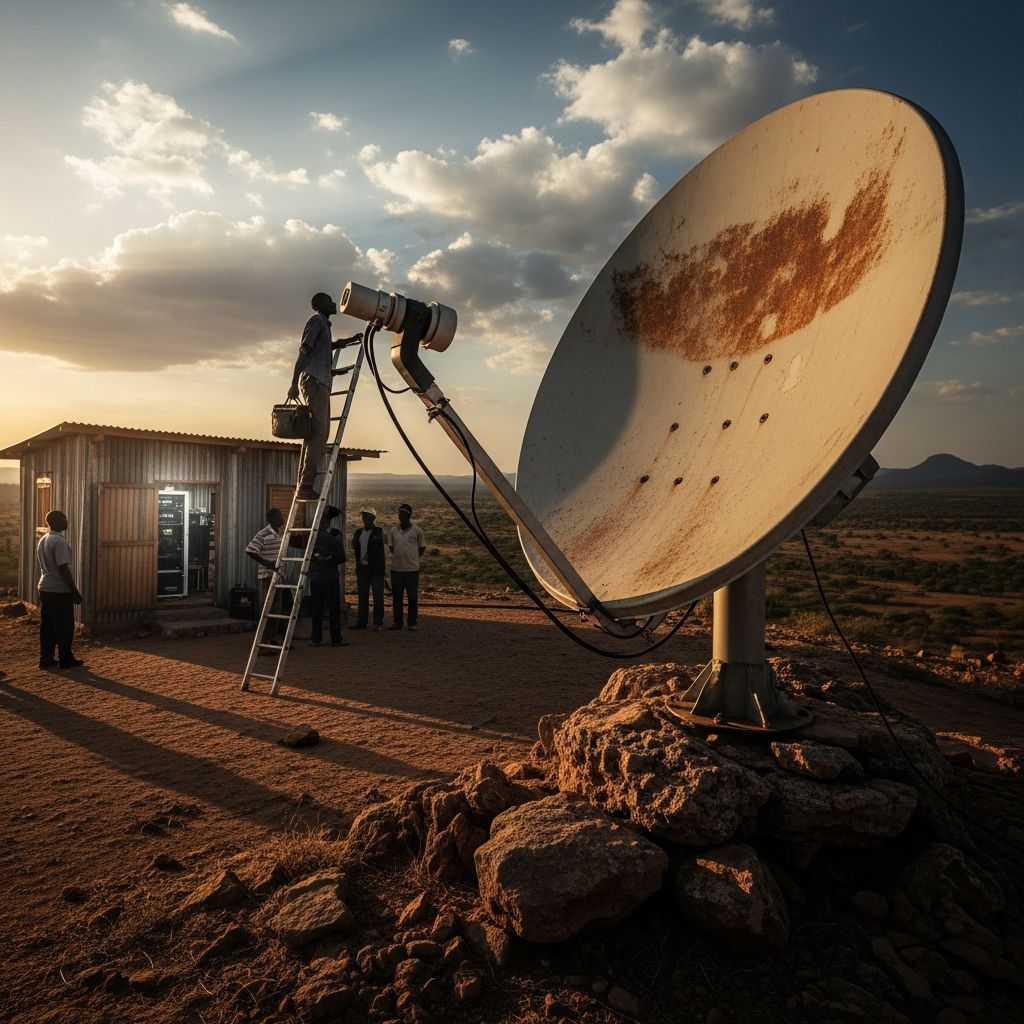
In the fragile digital landscape of South Sudan, where connectivity is both a lifeline and a battleground, a swift government directive threatened to sever millions from essential online platforms. This event unfolded in early 2025, underscoring the vulnerabilities of internet access in regions grappling with conflict spillover and political sensitivities. What followed was a remarkable display of grassroots activism led by the Internet Society’s local chapter, demonstrating how informed advocacy can reverse potentially devastating policies.
The Spark: A Directive Amid Regional Tensions
The catalyst for this crisis emerged on January 22, 2025, when South Sudan’s National Communications Authority (NCA) issued an urgent order to all internet service providers (ISPs). The mandate required the immediate blocking of major social media platforms, specifically Facebook and TikTok, for an initial period of 30 days, with the possibility of extension up to 90 days. The stated rationale was to curb the dissemination of disturbing graphic videos depicting violence against South Sudanese nationals in neighboring Sudan’s Wad Madani region.
This measure came at a time when cross-border conflicts were intensifying, with footage of alleged atrocities by Sudanese forces circulating widely online. Authorities argued that such content fueled unrest and incited retaliation within South Sudan. Major ISPs like MTN South Sudan and Zain promptly notified users via their own social media channels, announcing the impending blackout starting at midnight. Within hours, access began to dwindle, forcing users to resort to VPNs for circumvention—a solution inaccessible to many in a country where internet penetration hovers around 9%, primarily via mobile broadband, as noted in World Bank assessments.
The decision rippled through a nation already burdened by economic fragility and limited infrastructure. South Sudan, one of the world’s youngest countries, faces chronic challenges including low broadband coverage at just 37% in some areas, making any disruption disproportionately harmful.
Immediate Repercussions on Society and Economy
The potential fallout from this ban was multifaceted. Social media platforms serve as vital conduits for communication, news dissemination, and commerce in South Sudan. Businesses rely on Facebook for marketplaces, where vendors sell everything from agricultural goods to imported essentials. Families separated by conflict use these tools to stay connected, while activists and journalists depend on them for real-time reporting.
- Economic Impact: Small enterprises could lose daily revenue streams, exacerbating poverty in a country with high unemployment.
- Social Connectivity: Communities fragmented by civil strife would face further isolation.
- Information Flow: Reliable access to news about regional events would be curtailed, heightening misinformation risks.
- Human Rights Concerns: Blanket restrictions infringe on freedoms of expression and assembly, as highlighted by international observers.
Journalists reported immediate difficulties in verifying stories without open access, turning what was intended as a temporary curb into a broader threat to democratic discourse. Human rights groups warned that such shutdowns set dangerous precedents, echoing patterns seen in other African nations during unrest.
Rapid Mobilization by Local Digital Advocates
Recognizing the gravity, the Internet Society South Sudan Chapter—a volunteer-driven group dedicated to promoting open internet principles—sprang into action within hours of the NCA’s announcement. Comprising tech enthusiasts, policy experts, and community leaders, the chapter leveraged its network to craft a compelling response.
By the afternoon of January 22, they released a public statement emphasizing the internet’s role as a public good. The document outlined the ban’s adverse effects on education, healthcare coordination, and emergency communications. It urged reconsideration, proposing targeted content moderation over wholesale blocking. Shared across remaining channels and local media, the statement gained traction swiftly, amplified by international partners.
This wasn’t isolated action. The chapter drew on prior experiences, such as advocating for the nation’s first Internet Exchange Point (IXP) through peering roadshows, which improved local traffic efficiency and reduced costs. Their track record lent credibility, positioning them as trusted voices in digital policy dialogues.
Building Alliances and Amplifying Voices
The chapter’s strategy extended beyond a single statement. They engaged directly with ISPs, policymakers, and civil society. Collaborations with global coalitions like #KeepItOn, which unites over 300 organizations against shutdowns, provided additional pressure. Joint press releases demanded restoration, framing the ban as disproportionate and counterproductive.
Local influencers and youth groups echoed these calls, organizing virtual forums to discuss alternatives like enhanced platform algorithms for harmful content. Media outlets, despite constraints, covered the advocacy, creating public momentum. By January 24, international bodies such as the Committee to Protect Journalists (CPJ) had joined, condemning the move as censorship that hindered journalism amid unrest.
| Date | Event |
|---|---|
| Jan 22, 2025 | NCA issues ban directive; ISPs notify users. |
| Jan 22 PM | Internet Society chapter releases statement. |
| Jan 24 | CPJ and others call for reversal. |
| Jan 27 | NCA lifts ban, citing public interest. |
Policy Reversal and Its Implications
Just five days later, on January 27, the NCA announced the ban’s revocation. Remarkably, their statement mirrored phrasing from the chapter’s original appeal, acknowledging the platforms’ importance for communication and economic activity. Access was restored promptly, averting prolonged damage.
This outcome marked a victory for evidence-based advocacy. It demonstrated that data-driven arguments—highlighting shutdown costs estimated in billions globally—can sway decisions. For South Sudan, it preserved a fragile digital ecosystem, enabling continuity in e-commerce and social services.
Lessons for Global Internet Resilience
The episode offers broader insights into combating digital restrictions. First, speed matters: rapid, unified responses can outpace implementation. Second, local knowledge trumps external narratives; the chapter’s grasp of national contexts was pivotal. Third, partnerships amplify impact, blending grassroots efforts with global solidarity.
In a world where governments increasingly wield shutdowns—over 100 incidents in Africa alone since 2020—such stories inspire. They affirm the internet’s end-to-end nature and the need for encryption and open standards, as championed by groups like the Internet Society.
Challenges Ahead and Ongoing Advocacy
Despite the win, vulnerabilities persist. South Sudan’s digital economy lags, with World Bank reports citing coverage gaps and high costs. Future threats, from election-related curbs to encryption bans, loom. The chapter continues mobilizing, promoting IXPs and encryption while denouncing fragmentation.
Sustaining momentum requires capacity building: training ISPs on rights-respecting compliance and educating citizens on VPNs and alternatives. International support, via funding and technical aid, remains crucial.
FAQs
What prompted the social media ban in South Sudan?
The ban aimed to stop graphic videos of violence against South Sudanese in Sudan from spreading and inciting unrest.
How long did the restriction last?
It was in effect for about five days, from January 22 to 27, 2025.
Who led the effort to reverse it?
The Internet Society South Sudan Chapter, supported by local and international allies.
Why is internet access critical in South Sudan?
It supports economy, communication, and rights in a low-penetration, conflict-prone setting.
Are similar incidents common?
Yes, shutdowns occur frequently in Africa during tensions, per #KeepItOn data.
References
- #KeepItOn: authorities must restore access to social media in South Sudan — Access Now. 2025-01-30. https://www.accessnow.org/press-release/keepiton-in-south-sudan-restore-social-media/
- South Sudan blocks social media access amid unrest — Committee to Protect Journalists (CPJ). 2025-01-24. https://cpj.org/2025/01/south-sudan-blocks-social-media-access-amid-unrest/
- Digital Economy Assessment – South Sudan — The World Bank. 2022-06-01. https://thedocs.worldbank.org/en/doc/61714f214ed04bcd6e9623ad0e215897-0400012021/related/Digital-Economy-SouthSudan-jun22.pdf. Note: Authoritative baseline data on penetration remains relevant despite age.
- How the South Sudan Chapter Mobilized to Keep the Internet On — Internet Society. 2025-03-01. https://www.internetsociety.org/blog/2025/03/how-the-south-sudan-chapter-mobilized-to-keep-the-internet-on/
Similar Articles






Read full bio of medha deb