South Africa’s IXP Triumph: Achieving 80/20 Internet Goal
How South Africa led Africa in localizing 80% of internet traffic through innovative IXPs, driving affordability and speed.
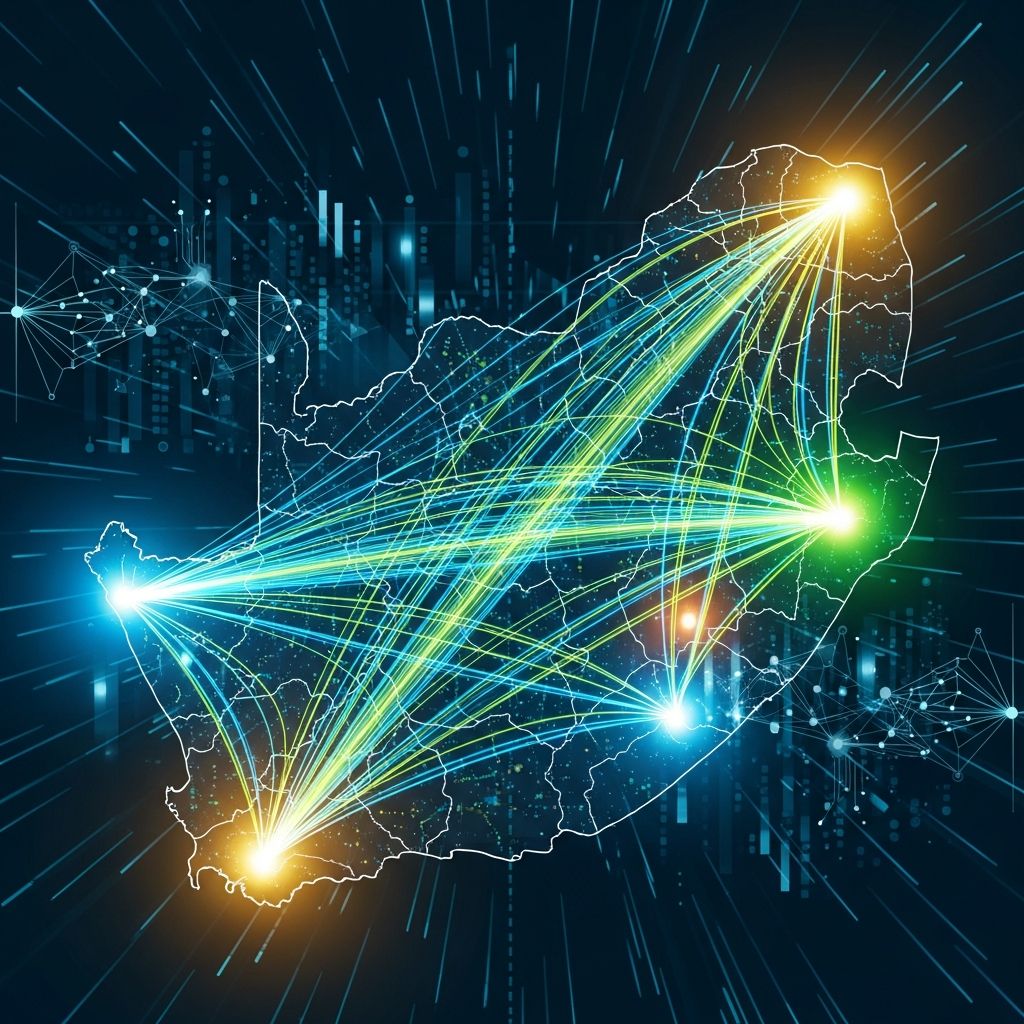
In the evolving landscape of global connectivity, Internet Exchange Points (IXPs) serve as critical hubs where networks interconnect to exchange traffic locally. South Africa stands out as a beacon of success in Africa, uniquely attaining the ambitious 80/20 goal—localizing 80% of consumed internet traffic within the continent while limiting external routing to just 20%. This milestone, set by the African peering community in 2010, underscores the power of strategic infrastructure investments and collaborative efforts.
The Foundations of the 80/20 Initiative
The 80/20 Initiative emerged from a collective vision to transform Africa’s internet ecosystem. Launched in 2010 by the African Internet community in partnership with organizations like the Internet Society, it aimed to foster self-sufficiency in data exchange by 2020. The core idea was simple yet transformative: by encouraging local peering at IXPs, African nations could reduce reliance on expensive international bandwidth, lower latency, and make internet access more affordable for millions.
Prior to this push, much of Africa’s internet traffic traversed vast distances to Europe or North America for exchange, incurring high costs and delays. The initiative catalyzed the growth of IXPs across the continent, tripling their number from around 15 to 47 by the decade’s end.1 South Africa, with its six operational IXPs, emerged as the frontrunner, demonstrating what targeted development could achieve.
Key Drivers Behind South Africa’s IXP Leadership
Several factors converged to propel South Africa ahead. First, extensive fiber optic deployments created a robust backbone. Wireless ISPs capitalized on this, aggressively expanding coverage to underserved areas. This infrastructure synergy enabled seamless integration with IXPs.
- Fiber Expansion: Massive investments in national and regional fiber networks provided the physical layer for high-capacity exchanges.
- Wireless Innovation: Mobile operators and fixed wireless providers connected en masse, boosting participant numbers beyond 50 at major IXPs.
- Policy Support: Favorable regulations encouraged open peering without restrictive clauses, unlike some neighboring countries.
These elements fostered an ecosystem where over 480 networks now interconnect at hubs like NAPAfrica, handling peak traffic exceeding 2Tbps—a staggering 100% growth in a single year.
Spotlight on NAPAfrica: The Continent’s Premier IXP
At the heart of South Africa’s success is NAPAfrica, Africa’s largest neutral Internet Exchange Point, operational for over a decade. Located in Johannesburg and Cape Town, it offers carriers, ISPs, and content providers a platform for direct peering. Participants gain access to shared IP resources, dramatically cutting costs—some report up to 80% savings on international capacity.
| Metric | Value | Impact |
|---|---|---|
| Connected Networks | 480+ | Enables broad peering across Africa and globally |
| Peak Traffic | 2Tbps | Supports massive local content delivery |
| Traffic Localization | 80%+ | Reduces latency and bandwidth costs |
| Growth Rate (YoY) | 100% | Reflects surging demand and adoption |
NAPAfrica’s model emphasizes neutrality and openness, attracting international content delivery networks (CDNs) and regional players. This has positioned South Africa as a gateway for pan-African traffic.
Comparative Progress Across Africa
While South Africa leads, other nations show promise. Kenya and Nigeria, with IXPs boasting over 50 members, have localized 70% of traffic, up from 30% in 2012.2 Only four IXPs continent-wide surpass 50 connections, all in these three countries.
Challenges persist elsewhere:
- Regulatory Hurdles: Incumbent ISPs often resist peering due to fears of revenue loss.
- Infrastructure Gaps: Limited fiber and power instability hamper growth in rural areas.
- Awareness Deficits: Many smaller providers remain unaware of IXP benefits.
Development follows three stages: initial local ISP connections, influx of CDNs, and full ecosystem maturity at 80% localization. South Africa exemplifies stage three.
Quantifying the Benefits of High Localization
Achieving 80/20 yields tangible gains. Local traffic exchange slashes international bandwidth needs, directly lowering costs for end-users. In South Africa, this has democratized access, with broadband prices dropping and speeds improving.
- Cost Efficiency: ISPs save millions annually, passing savings to consumers.
- Performance Boost: Reduced round-trip times enhance streaming, VoIP, and cloud services.
- Economic Ripple: Localized content hosting spurs data center investments, creating jobs.
These outcomes align with broader goals of digital inclusion, as outlined in World Bank analyses of African connectivity.1
Overcoming Barriers: Lessons for Lagging Regions
For countries trailing the goal, priorities include:
- Expanding IXP memberships through awareness campaigns.
- Attracting CDNs via incentives like tax breaks for local caching.
- Liberalizing policies to mandate or encourage peering.
Financial sustainability remains key—39% of experts prioritize more connections, followed by traffic volume and revenue models.2 Emerging strategies involve remote peering and cloud-based exchanges to bridge geographic divides.
Future Horizons: Beyond 80/20
With the 2020 target met in select areas, attention shifts to new ambitions: 90/10 localization, IPv6 adoption, and 5G integration at IXPs. South Africa’s model offers a blueprint, emphasizing public-private partnerships and capacity building. As Africa’s population surges online, scaling IXPs will be pivotal for a resilient digital economy.
Frequently Asked Questions (FAQs)
- What is an IXP?
- An Internet Exchange Point is a physical location where ISPs and networks connect to exchange traffic directly, bypassing costly transit routes.
- Why is the 80/20 goal important for Africa?
- It promotes affordable, low-latency internet by keeping data local, reducing dependency on foreign infrastructure.
- Has any other African country met 80/20?
- South Africa is the only one; Kenya and Nigeria are close at around 70%.
- How does NAPAfrica contribute?
- As Africa’s largest IXP, it interconnects 480+ networks, handling 2Tbps and enabling massive savings.
- What are the next steps post-2020?
- Focus on more members, CDNs, sustainability, and advanced tech like IPv6.
References
- World Bank Open Knowledge Repository: Digital Development Report — World Bank. 2020. https://openknowledge.worldbank.org/bitstreams/624008c3-f257-5cd1-9d4c-6842116609f9/download
- AFPIV Virtual Peering Series: 80/20 by 2020 Event Summary — Africa Focus on Public Internet Forum (AFPIV). 2021-11. https://www.afpif.org/virtual-peering-series-africa/80-20-by-2020-what-next/event-summary/
- Internet Exchange Points (IXPs) — Internet Society. Accessed 2026. https://www.internetsociety.org/issues/ixps/
- Internet interconnection infrastructure: lessons from the global South — Internet Policy Review. 2017. https://policyreview.info/articles/analysis/internet-interconnection-infrastructure-lessons-global-south
- Emerging business models and related use cases and best practices — International Telecommunication Union (ITU). 2025. https://www.itu.int/dms_pub/itu-t/opb/fg/T-FG-CD-2025-5-PDF-E.pdf
Similar Articles








Read full bio of Sneha Tete