Smart Homes and IPv6: Building the Connected Future
Exploring how next-generation internet protocols enable truly smart home ecosystems
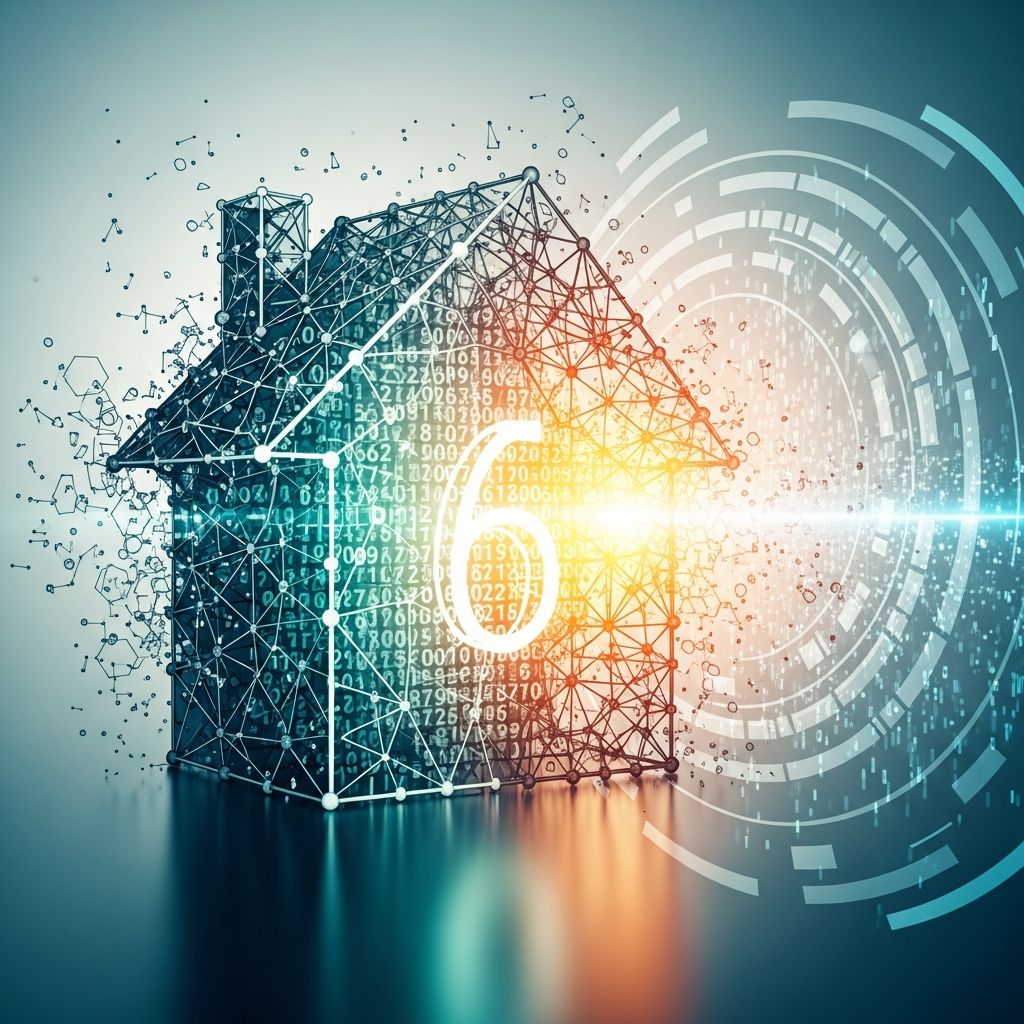
The evolution of residential living has entered a transformative phase where technology seamlessly integrates with everyday life. At the heart of this transformation lies a critical technological foundation: IPv6, the next-generation internet protocol. As households accumulate an increasing number of connected devices—from thermostats and lighting systems to security cameras and appliances—the need for a robust, scalable addressing system becomes paramount. This article explores how IPv6 technology enables comprehensive home automation, examining the practical applications, technical advantages, and real-world implementations that are reshaping modern residential environments.
Understanding the Foundation: Why IPv6 Matters for Connected Homes
The original internet protocol, IPv4, was designed in the 1980s with a maximum theoretical capacity of approximately 4.3 billion unique addresses. While this seemed virtually limitless at the time, the explosive growth of internet-connected devices has rendered this limitation increasingly problematic. IPv6, developed throughout the 1990s and gradually adopted in the 2000s, provides 340 undecillion unique addresses—an astronomical increase that fundamentally changes how we can architect networked systems.
For residential automation specifically, this abundance of addresses represents more than just a technical specification. It enables a paradigm shift in how homes can be designed and controlled. Rather than relying on complex network address translation schemes or shared connection protocols, each device in a home can have its own unique, globally routable address. This architectural advantage creates opportunities for direct communication between devices, more sophisticated automation logic, and simplified network management.
The Multi-Device Reality of Contemporary Households
Today’s average household contains far more connected devices than most residents realize. Beyond smartphones and computers, modern homes typically include:
- Climate control systems with networked thermostats and humidity sensors
- Lighting infrastructure with individually addressable bulbs and dimmer switches
- Security systems incorporating cameras, door sensors, and motion detectors
- Kitchen appliances ranging from refrigerators to ovens with network connectivity
- Entertainment systems including streaming devices and speakers
- Personal health and fitness monitoring equipment
- Water management systems and leak detection sensors
- Energy monitoring and optimization devices
In a typical residence, this easily accumulates to 50 or more connected devices. IPv4’s addressing limitations force these devices to operate within constrained network architectures, often requiring intermediary hubs or bridges that complicate system integration. IPv6 eliminates these constraints by providing sufficient address space that each device can operate as a first-class networked citizen without requiring complex translation layers.
Architectural Advantages of IPv6-Native Smart Homes
The implementation of IPv6 in residential automation environments creates several significant technical and practical advantages. First, device discovery becomes more straightforward. IPv6 includes built-in mechanisms for devices to announce their presence on a network and discover other devices, enabling plug-and-play functionality that IPv4 implementations require external protocols to achieve.
Second, security can be implemented more comprehensively. IPv6 was designed with security considerations from its inception, including built-in support for IPsec, a protocol that encrypts and authenticates network communications. This means that security can be implemented at the network layer rather than requiring each individual device to implement its own security measures.
Third, network performance improves. IPv6’s simplified header structure and more efficient routing mechanisms reduce processing overhead compared to IPv4. For battery-powered devices like wireless sensors, this efficiency translates to extended operational lifespans between recharges.
Fourth, the elimination of network address translation (NAT) creates opportunities for peer-to-peer communication between devices. Rather than all traffic flowing through a central gateway, devices can communicate directly when appropriate, reducing latency and enabling more sophisticated automation logic.
Practical Implementation Scenarios in Residential Settings
Consider a realistic scenario in an IPv6-enabled smart home. A homeowner returns from work on a cold evening. Their smartphone, which maintains an IPv6 connection to the home network through a VPN tunnel, communicates directly with the thermostat using its unique IPv6 address. The thermostat increases temperature according to preferences while simultaneously communicating with window sensors to verify they are closed, and with the heating system to optimize energy efficiency.
Simultaneously, motion sensors near the entrance detect the homeowner’s approach. The lighting system, with each bulb assigned its own IPv6 address, receives coordinated instructions to progressively illuminate the entryway. The security camera, which has been recording in low-power mode, increases to full resolution and uploads footage to secure cloud storage. The refrigerator, detecting the homeowner’s arrival, provides a summary of contents and suggests dinner options based on scheduled grocery deliveries.
All of these actions occur through direct IPv6 communications between devices, without requiring translation layers or complex bridge protocols. The automation logic can be implemented at various levels—on individual devices, on a central hub, or distributed across multiple devices—with full transparency into network communications for security and optimization purposes.
Security Considerations in IPv6 Home Networks
While IPv6’s design includes security considerations, implementing a secure IPv6-based smart home requires deliberate architectural decisions. Each device’s unique address means that every connected item represents a potential network entry point. Proper implementation requires:
- Segmentation of networks to isolate critical devices from entertainment systems
- Implementation of host-based firewalls on devices that support them
- Regular firmware updates to address security vulnerabilities
- Strong authentication mechanisms for device-to-device communication
- Encryption of sensitive communications, particularly those involving personal health or financial data
- Monitoring for unusual network patterns that might indicate compromise
Organizations like the Internet Engineering Task Force (IETF) have developed specifications for securing IPv6 networks in residential environments, including recommendations for firewall configuration and intrusion detection approaches adapted specifically for home automation contexts.
Integration With Emerging IoT Standards
The Internet of Things ecosystem has developed multiple competing standards for device communication and interoperability. IPv6 serves as an underlying transport mechanism that can support various application-layer protocols. Matter, Thread, and other modern smart home protocols increasingly leverage IPv6 as their primary networking foundation, recognizing that the protocol’s addressing abundance and native security features provide advantages over IPv4-based alternatives.
This convergence represents an important development. Rather than requiring different protocols for different device types, an IPv6 foundation allows heterogeneous devices to coexist on a unified network infrastructure. A smart home might simultaneously run devices using proprietary protocols, standardized protocols, and custom implementations, all unified through the IPv6 network layer.
Addressing Common Implementation Challenges
Despite its advantages, IPv6 adoption in residential settings faces practical obstacles. Many residential internet service providers still allocate only a single IPv6 address prefix to subscribers, requiring careful network design to subdivide this allocation among multiple segments and devices. Consumer-grade routers frequently lack sophisticated IPv6 routing capabilities, limiting the segmentation and control options available to homeowners.
Additionally, the transition period—where IPv4 and IPv6 must coexist—creates complexity. Devices and infrastructure must support both protocols, and ensuring seamless interoperability requires careful configuration. Many home automation devices still prioritize IPv4, with IPv6 support being optional or not yet fully implemented.
Furthermore, the technical expertise required to design and maintain a sophisticated IPv6-based home network exceeds what most residential users possess. User interfaces and management tools for IPv6 networks remain less mature than their IPv4 equivalents, making configuration and troubleshooting more challenging for non-technical homeowners.
The Future Trajectory of Residential Automation
As IPv6 adoption accelerates and consumer-grade equipment improves, the residential automation landscape will likely see significant evolution. Homes will evolve from collections of semi-independent smart devices toward genuinely integrated systems where automation logic operates at a higher level of sophistication. Devices will communicate directly with minimal latency, enabling real-time responses to changing conditions.
Energy management will become more granular and efficient. Distributed renewable energy sources at residential properties can be integrated with building management systems through IPv6 networks that directly communicate energy production and consumption data with grid management systems. Electrical vehicles can negotiate charging schedules directly with home energy management systems based on utility pricing signals and grid conditions.
Health and wellness applications will leverage the rich data available from numerous networked sensors to provide unprecedented insights into residential environmental quality. Air quality sensors can communicate directly with ventilation systems, humidity sensors can coordinate with dehumidification equipment, and occupancy sensors can optimize lighting and climate control for both comfort and energy efficiency.
Frequently Asked Questions About IPv6 and Smart Homes
Is IPv6 adoption mandatory for smart home technology?
While IPv6 offers significant advantages, smart home systems can function with IPv4. However, IPv6 is increasingly becoming the preferred foundation for new systems due to addressing abundance and native features that simplify implementation and improve security.
Can existing IPv4 home networks transition to IPv6?
Yes, most modern routers support dual-stack operation, running both IPv4 and IPv6 simultaneously. This allows gradual transition as devices are upgraded and new systems are installed.
What skills do homeowners need to implement IPv6-based automation?
Basic networking knowledge is helpful but not strictly necessary. Most configuration can be handled by service providers or professional installers, though homeowners who want advanced customization benefit from understanding IPv6 concepts.
Are there privacy implications of each device having a unique address?
IPv6 does create unique device identifiers, but privacy protection relies on network security measures and service provider policies rather than address obscurity. Proper firewalling and authentication mechanisms protect privacy effectively.
How does IPv6 improve device battery life?
More efficient network protocols and simplified addressing reduce the computational load on devices, enabling them to spend more time in low-power states between necessary communications.
References
- Internet Protocol Version 6 (IPv6) Specification — Internet Engineering Task Force (IETF). RFC 8200. September 2017. https://tools.ietf.org/html/rfc8200
- IPv6 Security Considerations for Home Networks — Internet Engineering Task Force (IETF). RFC 7721. March 2016. https://tools.ietf.org/html/rfc7721
- IPv6 Address Architecture — Internet Engineering Task Force (IETF). RFC 4291. January 2006. https://tools.ietf.org/html/rfc4291
- The Matter Protocol Specification — Connectivity Standards Alliance. 2022-2024. https://csa-iot.org/csa_iot_topics/matter/
Similar Articles








Read full bio of Sneha Tete