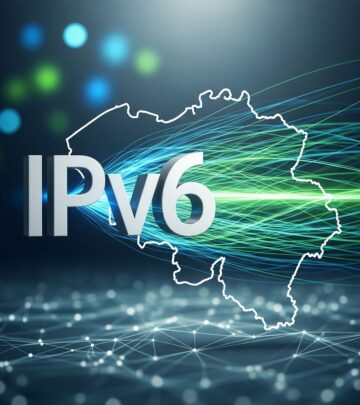
Sky Broadband Hits 90% IPv6 Milestone
Explore how Sky Broadband's IPv6 rollout to 90% of customers is transforming UK internet access and preparing networks for the future.

In a landmark achievement for internet infrastructure in the United Kingdom, Sky Broadband has successfully activated next-generation Internet Protocol version 6 (IPv6) connectivity for more than 90% of its vast customer base. This rollout, completed through meticulous updates to millions of home routers, positions Sky as a trailblazer among major service providers, addressing the looming crisis of IPv4 address exhaustion while paving the way for seamless expansion of online services.
The Urgent Need for IPv6 Transition
The internet’s foundational addressing system, IPv4, which has powered global connectivity since the 1980s, is running out of available addresses. With only about 4.3 billion unique IPv4 addresses, the explosive growth in connected devices—from smartphones and smart home gadgets to IoT sensors—has depleted this finite resource. IPv6, designed to offer virtually unlimited addresses (approximately 340 undecillion), emerges as the essential upgrade to sustain the digital economy.
Sky Broadband’s proactive deployment underscores the strategic importance of this shift. By enabling IPv6 alongside existing IPv4 through a dual-stack configuration, customers experience uninterrupted service while gaining access to expanded capabilities. This approach minimizes disruption, allowing networks to evolve without forcing users into abrupt changes.
Technical Foundations of Sky’s IPv6 Implementation
Sky’s engineering teams orchestrated a comprehensive upgrade across their infrastructure. Central to this was the deployment of dual-stack connectivity, where both IPv4 and IPv6 operate in parallel. Each eligible subscriber receives a /56 IPv6 prefix, enabling the creation of up to 256 subnets within a home network. This generous allocation supports complex setups, such as multiple devices, virtual machines, and local servers, without address conflicts.
Key technical features include:
- Link-local WAN addressing: Ensures robust initial connections between customer premises equipment (CPE) and the provider’s network.
- Stateful IPv6 firewall: Integrated into Sky’s router firmware, this provides layered security by tracking connection states and blocking unauthorized inbound traffic.
- Prefix delegation via DHCPv6: Automates address assignment, simplifying setup for end-users and third-party routers.
These elements combine to deliver reliable, secure IPv6 access. For customers using Sky-supplied routers, activation was automatic via over-the-air firmware updates, rolled out in phases to monitor performance and iron out issues.
Scale and Scope of the Rollout
As the UK’s second-largest broadband provider, Sky serves around 6 million residential customers. Achieving 90% IPv6 coverage translates to millions of households now equipped for the IPv6 era. Projections indicated full enablement for all eligible lines by late 2016, pushing coverage to 95% overall.
Exceptions were limited to specific cases:
| Category | Reason | Impact |
|---|---|---|
| Third-party routers | Potential non-compliance with IPv6 standards | Affected users can upgrade or configure manually |
| Sky Connect product | Legacy service architecture | Minimal subscriber base |
| Older Sky routers | Hardware limitations | Replacement options available |
This targeted approach ensured broad compatibility while prioritizing scalability. Sky’s network backbone, including MPLS core enhancements and dual-stacked peering with content delivery networks (CDNs), was fortified to handle the influx of IPv6 traffic.
Industry Recognition and Broader Implications
Sky’s efforts earned prestigious accolades, including the Jim Bound IPv6 Award, highlighting their leadership in driving adoption. As the first major UK ISP to reach this milestone, Sky set a benchmark for competitors like BT, Virgin Media, and TalkTalk, who were trailing in IPv6 readiness at the time.
The rollout’s success demonstrates that large-scale IPv6 deployment is feasible without compromising service quality. It alleviates pressure from IPv4 scarcity, exacerbated by policies like the RIPE NCC’s final /8 allocation in 2012, which accelerated the need for alternatives.
Benefits for Customers and the Ecosystem
For everyday users, IPv6 means faster access to emerging services, reduced reliance on carrier-grade NAT (which can hinder peer-to-peer applications), and better support for the Internet of Things (IoT). Gaming, video streaming, and cloud services perform optimally with native IPv6, minimizing latency and improving reliability.
From a business perspective, content providers and app developers gain confidence in reaching Sky’s massive audience natively. This fosters innovation, as seen in dual-stack CDNs serving IPv6 content directly to compatible devices.
Security enhancements via stateful firewalls mitigate risks associated with the larger address space, ensuring that IPv6’s openness doesn’t introduce vulnerabilities. Users also benefit from end-to-end connectivity, enabling direct device-to-device communication without translation layers.
Challenges Overcome in the Deployment
Transitioning a network of Sky’s magnitude involved overcoming hurdles like firmware compatibility, backend integration, and DDoS mitigation upgrades. Three years of planning culminated in controlled trials, ensuring stability before full rollout.
Customer education played a role too—many were unaware of IPv6 until router lights indicated activation. Sky’s support channels provided guidance for manual configurations, empowering tech-savvy users to leverage third-party equipment.
Current Status and Future Outlook
By 2026, Sky’s early adoption has normalized IPv6 across the UK. Global IPv6 deployment now exceeds 40% in many regions, with mobile networks leading. Sky’s infrastructure remains robust, supporting hybrid environments as IPv4 phases out gradually.
Looking ahead, full IPv6-only networks, advanced features like IPv6 segment routing, and integration with 5G/6G promise even greater efficiencies. Sky’s pioneering work continues to influence standards bodies and peers.
Frequently Asked Questions
What is dual-stack IPv6?
Dual-stack allows simultaneous IPv4 and IPv6 operation, ensuring backward compatibility while enabling new features.
Do I need a new router for Sky IPv6?
Most Sky routers auto-update; third-party ones require IPv6 support and proper DHCPv6 configuration.
Is IPv6 faster than IPv4?
Not inherently, but it eliminates NAT bottlenecks, improving performance for certain applications.
How does Sky assign IPv6 addresses?
Via /56 prefix delegation, supporting extensive home networks.
Is my connection secure with IPv6?
Yes, Sky’s stateful firewall protects against threats.
References
- Sky completes roll out of IPv6 becoming the first major UK Internet provider to futureproof its service for customers — Sky Group. 2016-09-06. https://www.skygroup.sky/article/sky-completes-roll-out-of-ipv6-becoming-the-first-major-uk-internet-provider-to-futureproof-its-service-for-customers
- Connecting 5 Million Users to IPv6 — RIPE NCC Labs (Richard Patterson). 2016-11-01. https://labs.ripe.net/author/richard_patterson/connecting-5-million-users-to-ipv6/
- UK ISP Sky Broadband Officially “Completes” the Roll-Out of IPv6 — ISPreview UK. 2016-09-06. https://www.ispreview.co.uk/index.php/2016/09/uk-isp-sky-broadband-officially-finish-roll-ipv6.html
- IPv6 Address Allocation and Assignment Policies (RIPE-738) — RIPE NCC. 2023-11-15 (updated; original final /8 policy 2012 authoritative). https://www.ripe.net/publications/docs/ripe-738
Similar Articles







Read full bio of medha deb