Securing Smart Homes: Power of IoT Platforms
Discover how leading IoT platforms from tech giants enhance home automation security while addressing key challenges in 2026.
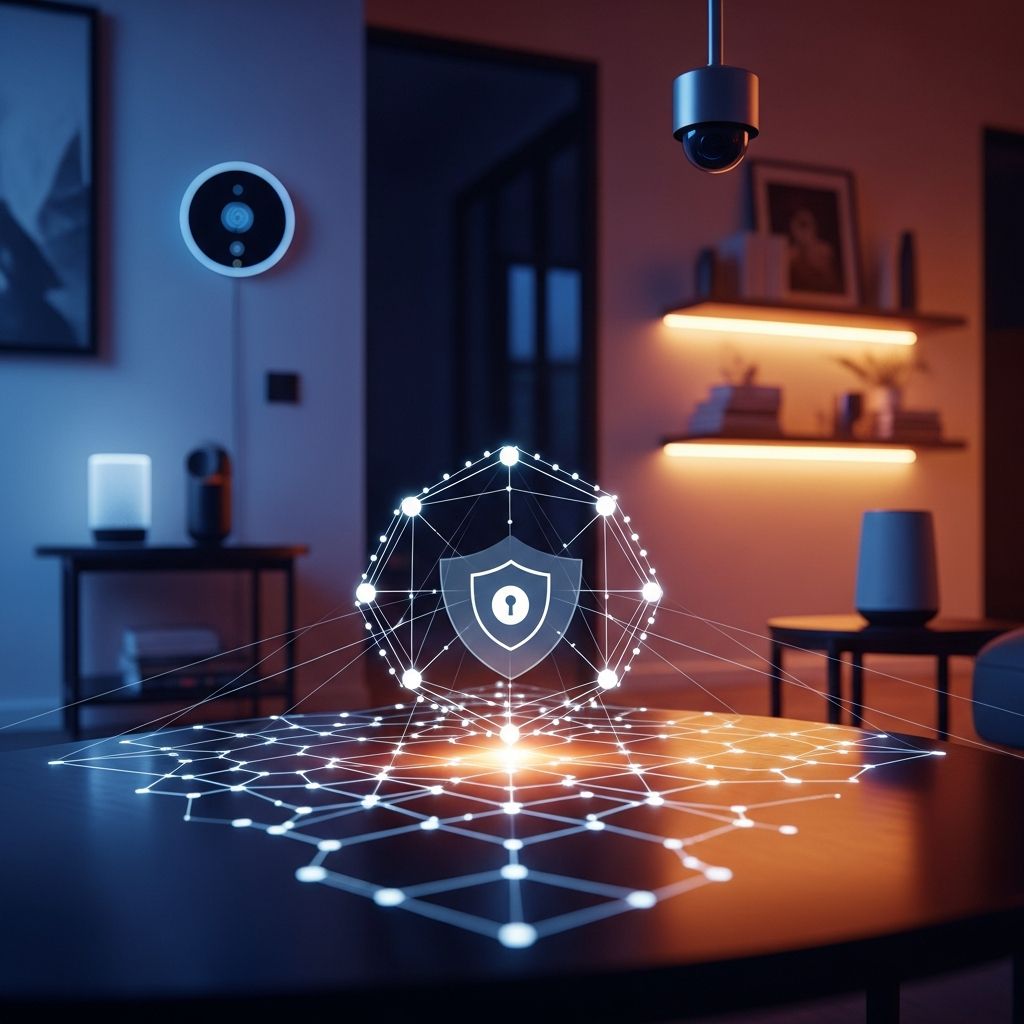
In the rapidly evolving landscape of connected living, smart home devices promise unparalleled convenience—from automated lighting and climate control to advanced surveillance systems. However, this connectivity introduces significant cybersecurity risks, including botnet attacks and unauthorized access. Major tech companies have responded by developing centralized IoT platforms that aim to unify and safeguard these ecosystems. This article delves into how platforms from Apple, Google, and Samsung are transforming home automation into a more secure environment, examining their technical foundations, strengths, limitations, and practical recommendations for users.
The Rise of Unified Smart Home Ecosystems
Modern homes are filled with diverse gadgets: smart thermostats, door locks, cameras, and voice assistants. Without a central hub, managing them requires multiple apps, leading to fragmented control and heightened vulnerability. IoT platforms serve as middleware, akin to mobile operating systems, enabling seamless interoperability. They handle device discovery, communication protocols, and automation rules, reducing complexity while enforcing security standards.
These platforms draw inspiration from smartphone ecosystems, where app stores vet software and operating systems manage permissions. In smart homes, they extend this model to hardware, ensuring devices communicate securely over local networks or the cloud. For instance, advancements like the Matter standard—backed by the Connectivity Standards Alliance—promote cross-platform compatibility, allowing devices to work across ecosystems without compromising safety.
Apple HomeKit: Privacy-First Security Architecture
Apple’s HomeKit stands out for its emphasis on user privacy and robust encryption. Integrated across iOS, macOS, and tvOS, it uses the HomeKit Accessory Protocol (HAP) for all device interactions. HAP employs end-to-end encryption with 384-bit elliptic curve keys, ensuring data remains protected even during remote access via a HomePod or Apple TV hub.
Pairing devices involves Secure Remote Password (SRP) authentication, which avoids transmitting passwords over the network, mitigating man-in-the-middle attacks. Manufacturers must pass the Made for iPhone/iPad (MFi) certification, involving hardware audits and software compliance checks. This process verifies secure bootloaders, key storage in secure enclaves, and resistance to common exploits.
Key features include:
- Local processing for low-latency automations without cloud dependency.
- Siri integration for voice commands processed on-device where possible.
- Thread and Matter support for reliable, low-power mesh networking.
Despite these strengths, HomeKit’s closed ecosystem limits device compatibility compared to rivals. Third-party apps may bypass platform controls for proprietary features, potentially introducing risks like open ports or weak credentials.
Google Home: AI-Enhanced Protection and Scalability
Google Home (formerly Nest) leverages artificial intelligence to deliver intelligent security. It supports a vast array of devices through Wi-Fi, Zigbee, and Matter protocols, with the Google Nest Hub acting as a central controller. Security is embedded via Google Play Protect for apps and automatic firmware updates for devices.
Communication uses TLS 1.3 encryption, and features like Factory Reset Protection prevent unauthorized reuse of stolen devices. Google’s Advanced Protection Program extends to smart homes, offering multi-factor authentication and activity monitoring. AI-driven anomaly detection flags unusual patterns, such as unexpected door unlocks.
Pros and considerations:
- Broad compatibility with over 50,000 devices.
- Context-aware routines, e.g., adjusting lights based on occupancy.
- Integration with Google Assistant for natural language control.
Challenges include occasional product discontinuations and reliance on cloud services, which could expose data if servers are breached—though Google mitigates this with zero-trust architecture.
Samsung SmartThings: Versatile Hub for Multi-Protocol Homes
Samsung’s SmartThings excels in flexibility, supporting Zigbee, Z-Wave, Wi-Fi, and Matter via its dedicated hub. The platform’s Edge drivers enable local execution of automations, minimizing internet dependency and latency. Security features include geofencing, routine-based access controls, and automatic device quarantining during threats.
Devices undergo SmartThings certification, ensuring compliance with secure pairing and over-the-air updates. The SmartThings app provides network maps and vulnerability scans, alerting users to weak configurations. Recent updates integrate AI for predictive maintenance, like notifying about failing sensors.
Standout elements:
- Customizable dashboards for web and mobile.
- Scenes and routines with multi-device triggers.
- Developer tools for community-contributed integrations.
While versatile, its open nature risks unvetted third-party devices; users must enable strict permission models.
Comparative Analysis of Leading Platforms
To aid decision-making, here’s a comparison table based on key security and usability metrics:
| Platform | Encryption Strength | Device Compatibility | Privacy Focus | Local Processing | Best For |
|---|---|---|---|---|---|
| Apple HomeKit | End-to-End (384-bit) | High (Certified Only) | Excellent | Strong | Privacy Enthusiasts |
| Google Home | TLS 1.3 + AI Detection | Very High | Good | Moderate | AI-Driven Homes |
| Samsung SmartThings | TLS + Local Edge | Very High (Multi-Protocol) | Good | Strong | Custom Automators |
This table highlights trade-offs: HomeKit prioritizes security over breadth, while SmartThings and Google emphasize ecosystem size.
Overcoming Common Vulnerabilities in Smart Homes
Even robust platforms can’t eliminate all risks. Botnets like Mirai exploit default credentials and unpatched firmware. Platforms counter this with mandatory updates and Manufacturer Usage Descriptions (MUD), which define network behavior via IETF standards. MUD files auto-configure firewalls to allow only necessary traffic, e.g., blocking inbound connections except from verified controllers.
Users should adopt defense-in-depth:
- Network Segmentation: Isolate IoT devices on a VLAN using routers like those supporting WPA3.
- Monitoring Tools: Deploy solutions for anomaly detection.
- Firmware Vigilance: Enable auto-updates and check vendor sites regularly.
Best Practices for a Fortified Smart Home
To maximize security:
- Choose Matter-certified devices for future-proofing.
- Use strong, unique Wi-Fi passwords and disable WPS.
- Review app permissions and revoke unused access.
- Implement guest networks for visitors’ devices.
- Regularly audit connected devices via platform dashboards.
Combine platforms if needed—many devices support multiple hubs via Matter.
Frequently Asked Questions (FAQs)
What is the safest smart home platform?
Apple HomeKit leads for privacy due to local processing and strict certification, per security analyses.
Can I mix platforms like Google and Samsung?
Yes, Matter enables cross-compatibility, though full features may require primary hub allegiance.
How do I protect against IoT botnets?
Enforce MUD policies, segment networks, and use monitoring tools like those from cybersecurity firms.
Are cloud-dependent platforms risky?
They are if breached, but leaders use enterprise-grade protections; prefer local-first options.
What’s new in 2026 for smart home security?
Matter 1.2 enhances encryption, and AI threat detection is standard across top platforms.
References
- Internet Engineering Task Force (IETF) RFC 8520: Manufacturer Usage Description (MUD) — IETF. 2019-03-13. https://datatracker.ietf.org/doc/html/rfc8520
- Made for iPhone/iPad (MFi) License Agreement — Apple Inc. 2025 (Updated). https://mfi.apple.com/MFi-Web/get-document?document=154748879
- Connectivity Standards Alliance: Matter Specification — Connectivity Standards Alliance. 2025-10-01. https://csa-iot.org/all-solutions/matter/
- Google Nest Help: Security and Privacy — Google LLC. 2026-04-15. https://support.google.com/googlenest/answer/7072285
- SmartThings Security Whitepaper — Samsung Electronics. 2025-12-01. https://www.smartthings.com/en/security
Similar Articles








Read full bio of Sneha Tete