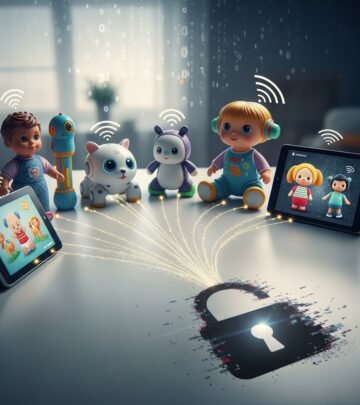
Securing IoT: Privacy Essentials from Day One
Explore why embedding security and privacy in IoT design is crucial for trust, safety, and a resilient digital future amid rising threats.

In an era where billions of devices connect seamlessly to our daily lives, the Internet of Things (IoT) promises unprecedented convenience, efficiency, and innovation. From smart thermostats regulating home temperatures to wearable health monitors tracking vital signs, these interconnected systems are transforming industries and personal routines. However, this rapid expansion brings profound challenges, particularly in safeguarding user data and preventing cyber vulnerabilities. Prioritizing security and privacy during the initial design phases is not optional—it’s fundamental to ensuring long-term adoption and resilience.
The Expanding IoT Landscape and Its Inherent Risks
The IoT ecosystem has grown exponentially, with projections indicating over 75 billion connected devices by 2025, according to recent analyses from authoritative tech reports. This surge amplifies exposure to threats, as many devices operate with minimal built-in protections. Weak authentication, outdated firmware, and unencrypted communications create entry points for malicious actors.
Consider the anatomy of a typical IoT attack: Hackers exploit default credentials or software flaws to infiltrate a single device, then pivot to broader networks. This can lead to data theft, service disruptions, or worse—ransomware demands targeting critical infrastructure. Historical incidents, such as the Mirai botnet in 2016, demonstrated how compromised cameras and routers fueled massive distributed denial-of-service (DDoS) attacks, crippling internet services worldwide.
- Common Vulnerabilities: Insecure interfaces, insufficient encryption, and lack of secure boot mechanisms.
- Attack Vectors: Phishing via device apps, man-in-the-middle intercepts, and supply chain compromises.
- Consequences: Personal data breaches, financial losses, and threats to public safety.
Without proactive measures, IoT proliferation risks eroding public trust, stalling innovation, and inviting stricter regulations.
Why Proactive Security and Privacy Matter
Building security and privacy into IoT from the ground up—often termed “security by design”—mitigates risks more effectively than retroactive fixes. Devices engineered with robust protocols resist exploitation, protect sensitive information, and enable secure updates over time. Privacy, meanwhile, ensures users retain control over their data, aligning with global standards like GDPR and emerging U.S. state laws.
Consumer surveys reveal overwhelming demand for these features. A study by the Federal Trade Commission (FTC) underscores that 90% of users prioritize certified secure devices, influencing purchasing decisions. Manufacturers ignoring this face market rejection, while compliant ones gain competitive edges through trust labels and endorsements.
| Approach | Benefits | Challenges |
|---|---|---|
| Reactive Patching | Quick fixes for known issues | Leaves unknown vulnerabilities; resource-intensive |
| Design-Integrated Security | Holistic protection; scalable | Higher upfront costs; requires expertise |
This table illustrates the superiority of upfront integration, fostering ecosystems where devices interoperate securely.
Core Principles for IoT Fortification
To achieve resilient IoT systems, adhere to established principles drawn from standards bodies like NIST and ETSI.
- Data Minimization: Collect only essential information, reducing breach impacts.
- End-to-End Encryption: Protect data in transit and at rest using AES-256 or equivalent.
- Unique Device Identities: Implement hardware-based keys to prevent spoofing.
- Automated Updates: Ensure seamless, authenticated firmware delivery.
- User Controls: Provide granular privacy settings and opt-out options.
These elements form the backbone of trustworthy IoT, as outlined in NIST’s IoT Cybersecurity Framework (updated 2023), which emphasizes risk management across device lifecycles.
Real-World Threats and Lessons Learned
High-profile breaches highlight the stakes. In 2023, a vulnerability in popular smart doorbells allowed remote unlocking, exposing millions to burglary risks. Similarly, healthcare IoT devices have been hijacked for ransomware, delaying treatments and compromising patient privacy.
Industrial IoT faces even graver perils. Compromised sensors in power grids or water treatment plants could cause outages or contamination, as simulated in U.S. Department of Homeland Security (DHS) exercises. These scenarios underscore the domino effect: One weak device endangers entire networks, economies, and lives.
Mitigation demands collaboration. Governments advocate for baseline standards, while industry groups like the Connectivity Standards Alliance promote Matter protocol for interoperable, secure ecosystems.
Building User Confidence Through Transparency
Trust hinges on visibility. Certification programs, such as those from the IoT Security Foundation, offer labels verifying compliance with rigorous tests. Consumers, empowered by clear disclosures on data practices, can make informed choices.
Developers should publish privacy policies in plain language, detailing data flows, retention periods, and third-party sharing. Tools like network segmentation—isolating IoT from critical systems—further bolster defenses, as recommended by cybersecurity agencies.
Best Practices for Developers and Users
For Developers:
- Conduct threat modeling early in the design process.
- Integrate secure coding practices and regular penetration testing.
- Support over-the-air (OTA) updates with integrity checks.
For Users:
- Change default passwords immediately.
- Monitor device activity via companion apps.
- Use VPNs for public Wi-Fi connections.
These steps, combined with education, bridge the gap between innovation and safety.
The Role of Regulations and Standards
Governments are stepping up. The EU’s Cyber Resilience Act mandates security for all connected products, with penalties for non-compliance. In the U.S., the Cyber Trust Mark initiative aims for voluntary labeling by 2025. International alignment via ISO/IEC 27001 ensures global portability.
Yet, self-regulation remains vital. Frameworks like the Internet Society’s Online Trust Alliance provide blueprints for ecosystem-wide accountability.
Future-Proofing IoT: Emerging Trends
Advancements like zero-trust architectures, AI-driven anomaly detection, and quantum-resistant cryptography promise next-level protections. Edge computing reduces latency while minimizing cloud exposures. By 2026, blockchain for device authentication could become standard, per IEEE forecasts.
Stakeholders must invest now to harness these, ensuring IoT evolves as a force for good.
FAQs
What is the biggest IoT security risk?
The proliferation of weakly secured devices forming botnets for large-scale attacks.
How can I secure my home IoT network?
Segment networks, enable WPA3 encryption, and update firmware regularly.
Are there global standards for IoT privacy?
Yes, including NIST frameworks and GDPR principles adapted for devices.
Why integrate privacy from the start?
Retrofitting is costly and incomplete; design-time measures ensure comprehensive coverage.
What role do certifications play?
They signal verified security, boosting consumer confidence and marketability.
References
- Cybersecurity Framework for the Internet of Things (IoT) — NIST. 2023-10-24. https://nvlpubs.nist.gov/nistpubs/ai/NIST.AI.600-1.pdf
- IoT Device Cybersecurity Capability Core Baseline — Cybersecurity and Infrastructure Security Agency (CISA). 2023-05-01. https://www.cisa.gov/sites/default/files/2023-03/23_0428_ST_23-004_IoT_Device_Cybersecurity_Capability_Core_Baseline_508_2.pdf
- Privacy and the Internet of Things — Center for Long-Term Cybersecurity, UC Berkeley. 2018-06-01. https://cltc.berkeley.edu/wp-content/uploads/2018/06/CLTC_Privacy_of_the_IoT-1.pdf (Remains authoritative for foundational privacy principles in IoT).
- IoT Security & Privacy Label — IoT Security & Privacy Label Initiative. 2024. https://www.iotsecurityprivacy.org
Similar Articles








Read full bio of medha deb