Scaling Internet Attack Response Globally
Explore strategies for uniting global teams to counter massive cyber threats and enhance Internet resilience through better coordination.
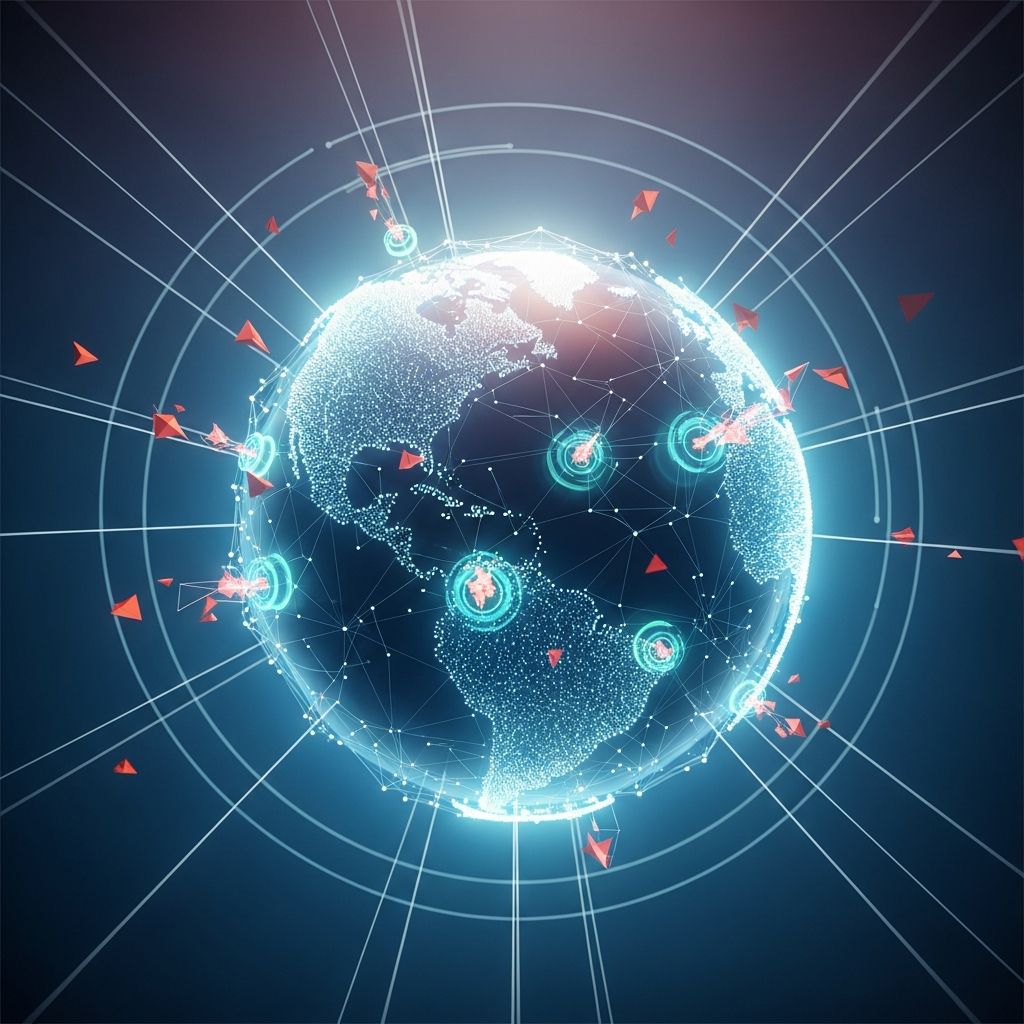
The Internet faces relentless cyber threats that can disrupt services for millions. From distributed denial-of-service (DDoS) floods to sophisticated botnets, attacks target core infrastructure, demanding responses that match their scale. Traditional incident handling often remains siloed within organizations, limiting effectiveness against borderless threats. This article delves into the evolution of coordinated defenses, drawing on key initiatives to foster collaboration among operators, researchers, and response teams worldwide.
The Growing Complexity of Cyber Threats
Modern cyber attacks exploit the Internet’s interconnected nature. DDoS assaults can overwhelm networks with traffic volumes exceeding terabits per second, while botnets commandeer millions of devices for coordinated strikes. These threats evolve rapidly, incorporating encryption to evade detection and leveraging IPv6 for anonymity.
Individual organizations struggle with resource constraints. A single entity might mitigate a local incident but lacks visibility into global patterns. This fragmentation hinders proactive defenses, allowing attackers to pivot unchecked. Effective countermeasures require pooling intelligence, standardizing data exchange, and automating responses at Internet scale.
Building Bridges Between Response Communities
Diverse groups—computer security incident response teams (CSIRTs), network operators, vendors, and researchers—each bring unique expertise. CSIRTs focus on analysis and containment, operators on traffic management, and vendors on tool development. Bridging these silos demands structured forums for dialogue.
Workshops like the Coordinating Attack Response at Internet Scale (CARIS) exemplify this approach. These gatherings unite stakeholders to map existing efforts, identify gaps, and prototype solutions. By documenting shared directories of response organizations, they enable quicker contacts during crises, reducing response times from hours to minutes.
- Key Benefits of Community Alignment:
- Enhanced threat intelligence sharing without compromising privacy.
- Standardized indicators of compromise (IoCs) for automated defenses.
- Joint exercises simulating large-scale attacks to test coordination.
Lessons from CARIS Workshops
The inaugural CARIS workshop, hosted by the Internet Society and Internet Architecture Board, sparked momentum. Held in Berlin, it produced RFC 8073, outlining paths for scalable responses. Discussions emphasized leveraging existing resources efficiently, prioritizing automation over manual interventions.
Subsequent CARIS2 in Cambridge advanced these ideas. Participants scrutinized protocol standardization, noting successes like Malware Information Sharing Platform (MISP) for IoC exchange. They advocated richer threat data formats, programmable for machine-to-machine sharing. IPv6-specific challenges emerged, including address tracking while safeguarding user privacy.
| Workshop | Date & Location | Key Focus Areas | Outputs |
|---|---|---|---|
| CARIS 1 | 2015, Berlin | Resource leveraging, global directories | RFC 8073 |
| CARIS 2 | 2019, Cambridge, MA | Automation, IPv6 privacy, MISP adoption | RFC 8953 |
These events underscore prevention through architectural improvements, such as encrypted traffic detection without decryption.
Core Tools and Platforms for Collaboration
Practical tools underpin scaled responses. MISP stands out as an open-source platform for structuring and distributing cyber threat intelligence. It supports standardized IoC formats, enabling feeds from diverse sources.
Other essentials include:
- Automated Mitigation: BGP Flowspec for rapid blackholing of attack traffic.
- Privacy-Preserving Sharing: Anonymized aggregates to inform defenses without exposing victims.
- Simulation Frameworks: Tools for modeling botnet behaviors at scale.
Adopting these requires consensus on formats. RFCs provide this foundation, ensuring interoperability across borders.
Challenges in Global Incident Coordination
Coordination falters amid hurdles like jurisdictional divides, language barriers, and trust deficits. Legal frameworks vary; what constitutes shareable data in one nation may violate privacy laws elsewhere.
Technical obstacles persist: encrypted payloads obscure signatures, and dynamic addressing complicates tracking. Resource disparities burden underfunded teams in developing regions.
Overcoming these demands:
- Universal directories of CSIRTs and operators.
- Training programs for cross-community engagement.
- Policy harmonization via standards bodies like IETF.
Future Directions for Resilient Networks
Looking ahead, automation via AI-driven analytics promises to scale defenses. Machine learning can correlate IoCs across feeds, predicting attacks preemptively.
Protocol enhancements, such as built-in rate-limiting and anomaly signaling, embed resilience. IPv6 deployment offers opportunities for privacy-focused designs, like temporary addresses thwarting persistent tracking.
Continued workshops and RFC evolution will refine these. Public-private partnerships, inspired by models like the Global Forum on Cyber Expertise, amplify reach.
Best Practices for Organizations
Entities can act now:
- Join MISP galaxies for plug-and-play intelligence.
- Participate in regional CSIRT forums.
- Implement out-of-band comms for compromised scenarios, per NIST guidelines.
- Conduct tabletop exercises with international peers.
These steps build local capacity while contributing to global resilience.
Frequently Asked Questions (FAQs)
What is CARIS?
CARIS workshops convene experts to advance coordinated cyber attack responses at Internet scale, producing influential RFCs.
Why is scaling response critical?
Attacks like massive DDoS exceed single-organization capacity; global coordination distributes the load effectively.
How does MISP aid coordination?
MISP standardizes threat data sharing, enabling automated ingestion by security tools worldwide.
What role does IETF play?
IETF publishes RFCs from CARIS, standardizing protocols for scalable defenses.
Can small organizations participate?
Yes, via open workshops, shared platforms like MISP, and regional networks.
References
- Coordinating Attack Response at Internet Scale (CARIS) Workshop Report — RFC Editor. 2017-02-22. https://datatracker.ietf.org/doc/rfc8073/
- Coordinating Attack Response at Internet Scale 2 (CARIS2) Workshop Report — RFC Editor. 2021-10-25. https://www.rfc-editor.org/rfc/rfc8953.html
- Computer Security Incident Handling Guide (SP 800-61 Revision 2) — National Institute of Standards and Technology (NIST). 2012-08-01. https://nvlpubs.nist.gov/nistpubs/specialpublications/nist.sp.800-61r2.pdf (Remains authoritative for core incident handling principles, per ongoing NIST references.)
Similar Articles





Read full bio of Sneha Tete