Scaling Cyber Defenses for Global Threats
Explore strategies to counter massive cyber attacks across the internet through collaboration, advanced tools, and scalable response frameworks.
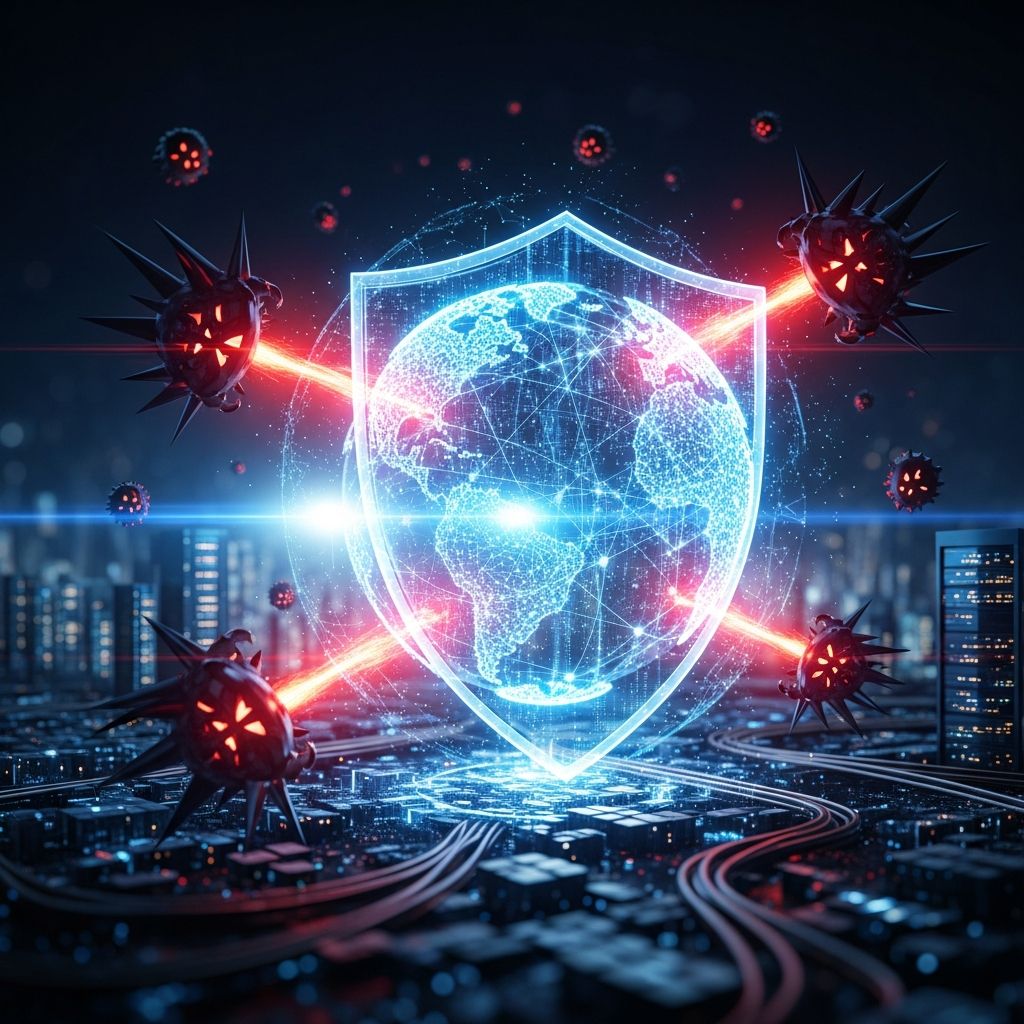
The digital landscape is under constant siege from increasingly sophisticated cyber threats that can overwhelm individual networks and disrupt entire regions. As attacks grow in size and complexity, traditional response mechanisms fall short. This article examines the imperative for internet-scale defenses, drawing on recent trends in DDoS assaults, scanning activities, and intelligent attacker behaviors to propose a multifaceted approach to protection.
The Evolving Landscape of Cyber Attacks
Cyber threats have ballooned in scale over the past decade. What began as gigabit-per-second disruptions in the early 2010s has escalated to terabit-per-second barrages capable of crippling major online services. These attacks exploit vulnerabilities in protocols, amplify through botnets, and leverage amplification techniques to multiply their impact.
Common vectors include distributed denial-of-service (DDoS) floods, pervasive scanning for weaknesses, phishing campaigns, and targeted intrusions. For instance, modern DDoS operations can generate millions of requests per second, saturating even high-capacity infrastructures. Net scanning, often a precursor to exploitation, probes billions of IP addresses hourly, mapping the internet for soft targets.
- DDoS Evolution: Attacks measured in Gbps have given way to Tbps-scale events, with record highs exceeding 71 million requests per second.
- Scanning Prevalence: Tools like ZMap enable rapid IPv4 sweeps, identifying exploitable services across the globe.
- Intrusion Tactics: Phishing and malware propagation target websites, leading to widespread compromise.
These threats demand responses that operate at the same velocity and breadth as the attacks themselves.
Building Capacity for Incident Management
Effective defense starts with skilled personnel equipped to handle incidents at scale. Capacity building initiatives focus on training across levels—from frontline responders to policymakers. Programs emphasize coordinated stakeholder engagement, including governments, ISPs, and private sectors.
Key components include:
- Workshops on threat detection and mitigation.
- Policy development for cross-border cooperation.
- Simulation exercises mimicking real-world scenarios.
Governments and intergovernmental bodies play a pivotal role. For example, frameworks from organizations like the Global Forum on Cyber Expertise (GFCE) promote standardized incident response protocols, ensuring nations can share intelligence and resources seamlessly.
Technological Innovations in Threat Detection
Automation and machine learning are game-changers in detecting anomalies at internet scale. Systems now analyze traffic patterns in real-time, distinguishing malicious floods from legitimate surges.
| Attack Type | Peak Size (2023-2024) | Mitigation Tech |
|---|---|---|
| DDoS (rps) | 71M+ | ML-based filtering |
| Scanning | Full IPv4 in <1hr | Shotgun probing |
| Phishing/Intrusion | Billions daily | Behavioral analytics |
Anycast networks distribute traffic globally, absorbing volumetric attacks. Performance monitoring counters detect subtle exploits like ROP chains, while defense-in-depth layers compensate for exponential attacker scaling.
Mathematical Insights into Attack-Defense Dynamics
Research models reveal that small increments in defense quality can counter vast attack volumes. If attackers deploy independent agents—enhanced by AI—exponential growth in attempts is offset by linear defense expansions. For every million-fold attack increase, just tens more layered protections suffice.
Equations from cybersecurity studies underscore this: the probability of breach diminishes rapidly with defense multiplicity. Linear scaling in defenders repels trillions of probes, a critical insight for resource allocation.
Collaborative Frameworks for Global Resilience
No single entity can defend the internet alone. Forums and workshops foster dialogue on attack response strategies. Initiatives like those from the Internet Society and regional CERTs emphasize shared threat intelligence and joint exercises.
Benefits of collaboration:
- Rapid information sharing on emerging threats.
- Harmonized mitigation tools across borders.
- Policy alignment for lawful interventions.
Events convening experts discuss real-time challenges, from pushback mechanisms against floods to endpoint forensics at enterprise scale.
Case Studies: Real-World Responses
Recent incidents highlight successes. Cloudflare’s mitigation of a 71M rps DDoS in 2023 showcased automated, network-wide absorption. Similarly, internet-wide scanning projects like ZMap aid defenders by mapping exposures proactively.
In Africa, AFCERT coordinates responses to regional threats, building local capacity while integrating global feeds. These examples prove scalable models work when implemented collectively.
Future Directions in Internet-Scale Security
Looking ahead, AI-driven defenses will evolve to match attacker intelligence. Expect greater emphasis on zero-trust architectures, quantum-resistant encryption, and automated ordinance for scanning countermeasures.
Policymakers must prioritize funding for training and infrastructure. International accords could standardize response playbooks, much like aviation’s global safety protocols.
Frequently Asked Questions (FAQs)
What is an internet-scale cyber attack?
An attack leveraging massive distributed resources to impact broad swaths of the internet, often exceeding Tbps in volume.
How do DDoS attacks scale over time?
From Gbps in 2010 to Tbps today, driven by larger botnets and amplification vectors.
Why is capacity building essential?
It equips teams with skills for coordinated, effective responses beyond isolated efforts.
Can defenses keep pace with AI-enhanced attacks?
Yes, through layered strategies where modest defense gains counter exponential threats.
What role does collaboration play?
It enables shared intelligence and tools, amplifying individual capabilities globally.
References
- Incident Response at Internet Scale — GFCE. 2020-06. https://thegfce.org/wp-content/uploads/2020/06/GFCE-Presentation-afcert.pdf
- Bigger and badder: how DDoS attack sizes have evolved over the last decade — Cloudflare Blog. 2024. https://blog.cloudflare.com/bigger-and-badder-how-ddos-attack-sizes-have-evolved-over-the-last-decade/
- Defending Against Intelligent Attackers at Large Scales — Center for Security and Emerging Technology, Georgetown University. 2025-04-29. https://cset.georgetown.edu/wp-content/uploads/Defending-Against-Intelligent-Attackers-at-Large-Scales.pdf
- Internet-Scale Threat Analysis: Scanning — Sparse Notes. 2023-10. https://sparsenotes.com/posts/2023/10/scanning/
- In-Depth Endpoint Forensics and Response at Scale — SANS Institute. 2026 (updated). https://www.sans.org/white-papers/in-depth-endpoint-forensics-response-at-scale
Similar Articles







Read full bio of Sneha Tete