Satellite Broadband: The Orbital Internet Revolution
How low-Earth orbit satellites are transforming global connectivity, bridging digital divides in remote regions worldwide.
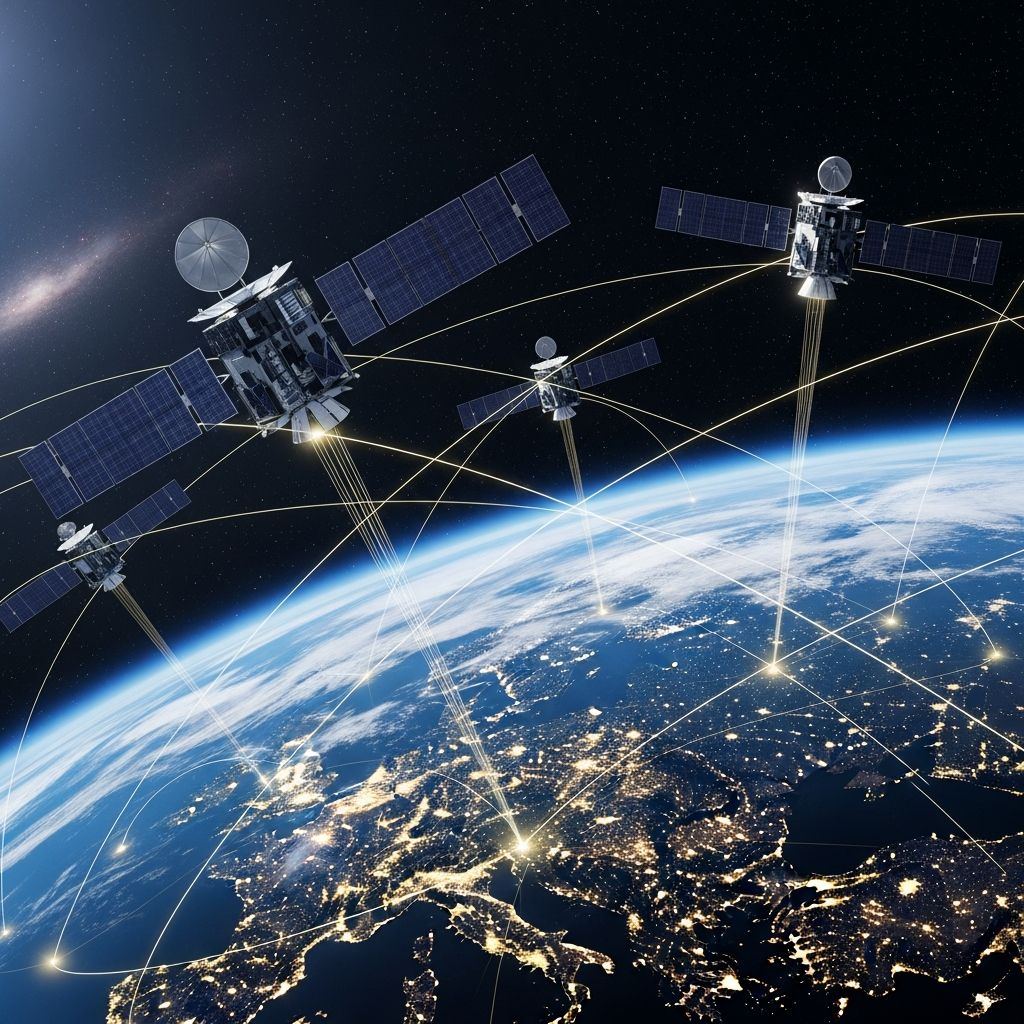
In an era where digital connectivity defines opportunity, satellite broadband emerges as a game-changer. Traditional fiber-optic cables and cellular towers struggle to reach vast swaths of the planet, leaving billions offline. Enter low-Earth orbit (LEO) satellites: compact, numerous spacecraft zipping around at altitudes of 300 to 1,200 kilometers, beaming internet directly to users. This isn’t science fiction—it’s the new reality powering homes, ships, and planes worldwide.
The Digital Divide and Why Satellites Matter
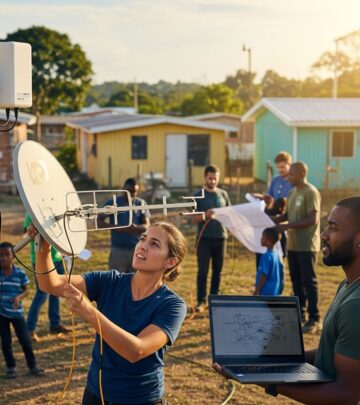
The global digital divide persists, with over 2.6 billion people lacking reliable internet as of recent UN reports. Rural villages, oceanic expanses, and mountainous terrains defy ground-based infrastructure due to high costs and logistical nightmares. Satellite broadband flips the script by leveraging space as the ultimate high ground.
LEO satellites outperform their geostationary predecessors, which hover at 35,000 kilometers and suffer from signal delays up to 600 milliseconds. LEO’s proximity slashes latency to under 50 milliseconds, rivaling fiber. This enables real-time applications like video calls, online gaming, and remote work—essential for modern life.
- Key Advantages: Universal coverage, rapid deployment, scalability.
- Challenges: High upfront costs, spectrum management, space debris risks.
Major Players Reshaping the Skies
A fierce competition unfolds among tech titans. SpaceX’s Starlink leads with over 6,000 satellites launched by 2025, serving 4 million users across 100+ countries. Speeds hit 220 Mbps download, with plans expanding to aviation and maritime.
Amazon’s Project Kuiper follows closely, targeting 3,236 satellites. In 2024, it fired off prototypes via United Launch Alliance rockets, aiming for beta service in 2025. Equipment costs around $400, undercutting Starlink’s $500 kit, promising affordability for emerging markets.
Other contenders include OneWeb (now Eutelsat), with 648 satellites delivering enterprise-grade service, and Telesat’s Lightspeed for government and aviation. China’s GuoWang and Russia’s Sphera add geopolitical layers to this orbital contest.
| Provider | Satellites Planned/Launched | Target Speeds | Key Markets |
|---|---|---|---|
| Starlink (SpaceX) | 12,000+ / 6,000+ | 100-500 Mbps | Consumer, Maritime, Aviation |
| Project Kuiper (Amazon) | 3,236 / Prototypes | 400 Mbps+ | Rural, Underserved Regions |
| OneWeb (Eutelsat) | 648 / Deployed | 150-300 Mbps | Enterprise, Government |
Technological Innovations Driving the Boom
Modern LEO systems pack phased-array antennas, laser inter-satellite links, and software-defined radios. Starlink’s satellites use optical lasers for data hopping between orbits, bypassing ground stations and boosting efficiency. Propulsion systems enable deorbiting to combat debris, adhering to FCC mandates.
Spectrum allocation proves crucial. Ku- and Ka-bands handle high bandwidth, while V-band explores terahertz potentials. Regulatory bodies like the ITU coordinate to prevent interference, ensuring harmonious coexistence.
Ground terminals—flat, pizza-box-sized dishes—auto-align with satellites via GPS and AI, simplifying setup. Power efficiency improvements lower energy use, vital for off-grid users relying on solar panels.
Real-World Impact: From Deserts to Oceans
In Texas, Starlink connects remote ranches where fiber costs millions per mile. Farmers monitor livestock via IoT sensors, boosting yields. Globally, it aids disaster response; post-Hurricane Maria, satellites restored communications in Puerto Rico.
Aviation benefits immensely. Starlink powers in-flight Wi-Fi on 300+ aircraft, delivering 350 Mbps per plane. Maritime vessels cross oceans with seamless streaming, transforming crew welfare and operations.
Education surges too. In rural India and Africa, satellite links enable virtual classrooms, narrowing urban-rural gaps. Healthcare telemedicine saves lives by connecting isolated clinics to specialists.
Challenges and Regulatory Hurdles
Despite promise, obstacles loom. Launch costs, though dropping via reusable rockets like Falcon 9, remain steep. SpaceX’s vertical integration gives an edge, but others partner with Blue Origin or Arianespace.
Astronomers protest light pollution from megaconstellations, prompting Starlink’s visorsat upgrades to dim brightness. Orbital congestion risks collisions; the Kessler syndrome haunts experts.
Governments impose rules. The FCC caps Starlink at 12,000 satellites, demanding debris mitigation. International treaties evolve to govern space traffic.
The Road Ahead: 6G and Beyond
By 2030, LEO networks could form a mesh with 5G/6G terrestrial systems, creating ubiquitous coverage. Non-terrestrial networks (NTN) integrate into 3GPP standards, allowing standard smartphones to connect directly.
AI optimizes routing, predicts demand, and manages handoffs. Edge computing on satellites processes data in orbit, slashing latency further. Costs plummet as scale kicks in—monthly fees may dip below $20.
Geopolitical tensions rise; nations eye sovereign constellations for security. Yet collaboration prevails, with interoperability standards fostering a unified global net.
FAQs
What is LEO satellite internet?
LEO satellite internet uses thousands of small satellites in low orbit to provide low-latency, high-speed broadband, unlike slower geostationary systems.
How does Starlink compare to fiber?
Starlink offers 50-500 Mbps with 20-40 ms latency, suitable for most uses but may lag fiber’s gigabit speeds in urban tests.
Is satellite internet reliable in bad weather?
Modern systems resist rain fade via high-power signals, though heavy storms can briefly impact Ka-band service.
Who regulates satellite constellations?
Bodies like FCC (US), ITU (global), and national agencies oversee licensing, spectrum, and orbital slots.
Will satellites solve the global digital divide?
They bridge gaps where infrastructure fails, but affordability and local policies determine full impact.
References
- Federal Communications Commission: SpaceX Gen2 NGSO FSS Authorization — FCC. 2021-12-21. https://docs.fcc.gov/public/attachments/FCC-21-138A1.pdf
- International Telecommunication Union: Radio Regulations — ITU. 2020-01-01. https://www.itu.int/pub/R-REG-RR-2020
- Texas 2036: The New Space Race for High-Speed Internet — Texas 2036. 2024-11-01. https://texas2036.org/posts/the-new-space-race-for-high-speed-internet/
- NASA Orbital Debris Quarterly News — NASA. 2025-04-01. https://orbitaldebris.jsc.nasa.gov/quarterly-news/
- 3GPP Release 17: Non-Terrestrial Networks — 3GPP. 2022-06-30. https://www.3gpp.org/release-17
Similar Articles








Read full bio of Sneha Tete