Sarantaporo’s Grassroots Internet Revolution
Discover how a remote Greek village defied isolation with a community-owned wireless network, bridging the digital divide through collective innovation.
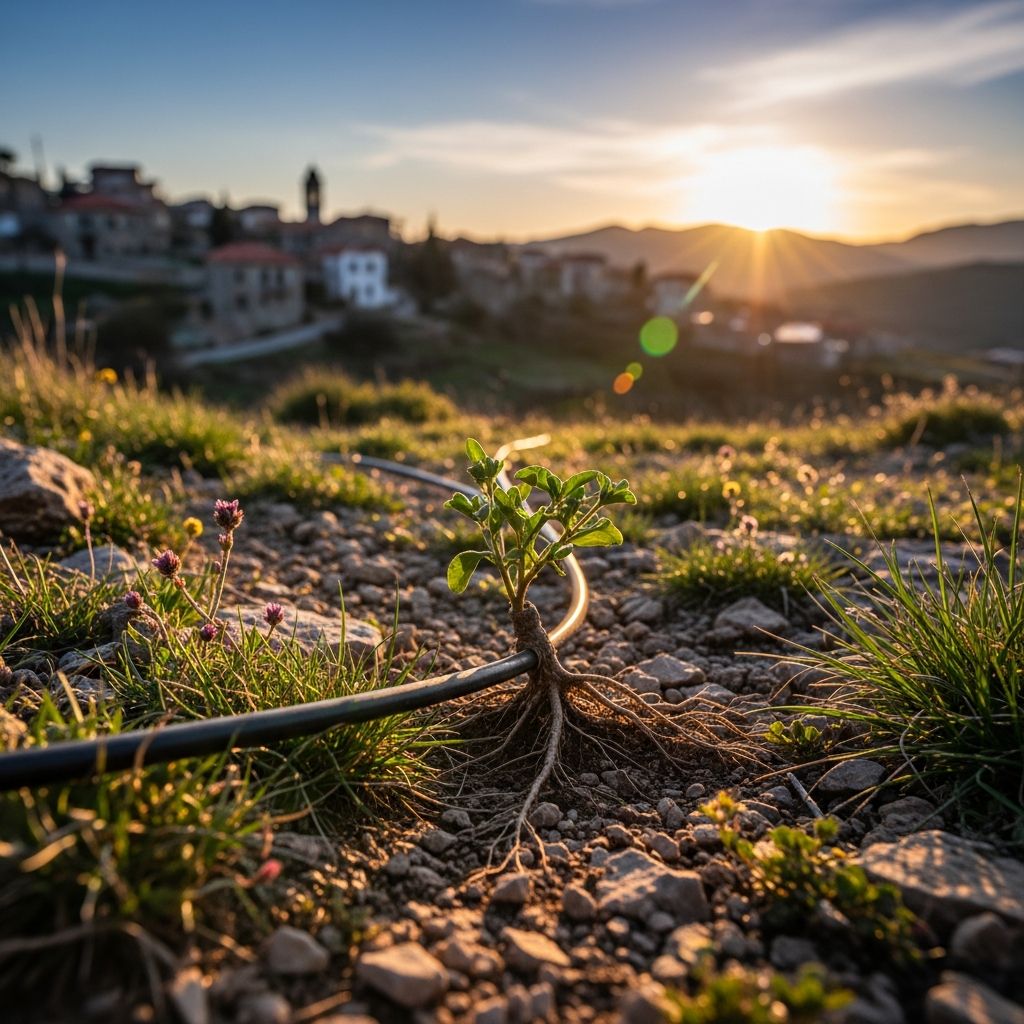
In the shadow of Mount Olympus, nestled in central Greece’s rugged terrain, lies Sarantaporo—a village long overlooked by commercial telecom giants and strained government budgets. Until 2010, residents endured digital isolation, unable to access essential online services like tax filing or connect with distant family. This changed when a group of determined locals launched Sarantaporo.gr, a pioneering wireless community network that has since illuminated 15 villages, proving that bottom-up innovation can conquer the digital divide.
The Digital Void in Rural Greece
Rural areas worldwide grapple with inadequate internet infrastructure. In Greece, economic turmoil exacerbated this issue. Major providers shunned low-density regions like Sarantaporo due to poor return on investment. Government efforts faltered amid austerity measures, leaving citizens disconnected despite mandates for digital interactions, such as using the TAXISnet platform for taxes.
Sarantaporo exemplifies this crisis: a sparse population scattered across mountains made fiber optic or cellular expansion unviable. Families couldn’t video call grandchildren abroad, farmers missed market updates, and youth sought opportunities elsewhere. The result? Stagnation and emigration, threatening cultural heritage.
Birth of a Community-Driven Solution
In 2010, a citizens’ initiative filled this void. Volunteers erected the first mesh network with about 15 routers, delivering free Wi-Fi to homes and visitors. This wasn’t charity; it was a commons—collectively owned infrastructure where participants contribute nodes, rooftops for antennas, or maintenance time.
By 2013, success spurred formalization as Sarantaporo.gr Non-Profit Organization. Their vision: a vibrant, sustainable countryside retaining youth through digital empowerment. Mission: Eliminate the digital divide, granting equal access to the online economy and civic life.
- Key Milestones:
- 2010: Initial network in Sarantaporo village.
- 2011-2013: Expansion to 14 neighboring villages.
- 2013: NPO establishment with university partnerships.
- Present: High-speed Wi-Fi for thousands, plus local services.
Technical Foundations: Mesh Networking Unleashed
At its core, Sarantaporo.gr employs wireless mesh topology. Unlike hierarchical cellular towers, mesh networks interconnect user devices (nodes) dynamically. Each router relays data, self-healing around failures for resilient coverage over vast, hilly areas.
| Mesh Network Benefits | Traditional ISP Model |
|---|---|
| Decentralized, community-owned | Corporate-controlled, profit-driven |
| Low-cost deployment using off-the-shelf hardware | High infrastructure investment |
| Scalable via user contributions | Fixed expansion timelines |
| Adapts to terrain and relationships | Rigid tower placements |
Nodes link via long-range antennas, backhauling to upstream providers. Open-source firmware like OpenWRT enables customization. This model inverts traditional telecom: technology serves human networks, not vice versa.
Building Human Capital Through Training
Technology alone falters without skills. Sarantaporo.gr prioritizes education as a second pillar. Programs span beginner computer literacy for elders to advanced routing for technicians.
A “train-the-trainers” ethos ensures longevity: locals learn to teach neighbors, creating self-replicating expertise. Partnerships with the University of Applied Sciences of Thessaly provide grants, equipment, and curricula. Over 50 active volunteers now sustain operations, motivated by tangible impacts like e-prescriptions or remote work.
“When technology adapts to human relationships, communities thrive.” — Sarantaporo.gr Principle
Sustainability: From Volunteers to Self-Reliance
What sustains this network? A blend of ethos, funding, and governance. Volunteers handle 90% of labor, from installations to troubleshooting. Diverse revenue includes grants (e.g., APNIC, EU projects), minimal user fees for heavy usage, and donations via crowdfunding like Goteo.
Community ownership fosters accountability. Assemblies decide expansions; transparent budgets build trust. This shifts mindsets from passive consumers to active stewards, ensuring resilience against economic shocks.
Real-World Impacts: Transforming Lives
- Economic Boost: Farmers access commodity prices; artisans sell online.
- Social Connectivity: Video calls bridge generations; e-health reduces travel.
- Educational Access: Students stream classes; locals upskill via MOOCs.
- Civic Engagement: Online government portals enable participation.
- Cultural Preservation: Youth stay, sharing heritage digitally.
One resident shared: “My grandchildren visit more now—they message anytime.” Networks also host local services like VoIP and file sharing.
Challenges and Adaptations
No initiative is flawless. Early hurdles included spectrum interference and weather-damaged gear. Solutions? Community spectrum monitoring and rugged hardware. Funding volatility prompted diversification. Regulatory navigation in Greece required advocacy for community networks.
Scalability tests arise as demand grows. Response: Modular expansions and peer networks like netCommons for knowledge sharing.
A Global Blueprint for Digital Commons
Sarantaporo.gr inspires worldwide. Similar efforts thrive in Spain’s Guifi.net (over 30,000 nodes) and India’s rural meshes. Lessons: Prioritize locals, blend tech with training, and embed in culture. As UN reports note, community networks bridge 2.6 billion unconnected people.1
ITU data underscores rural gaps: 44% offline vs. 4% urban.2 Sarantaporo counters this, modeling inclusive internet.
Future Horizons: Scaling the Vision
Plans include fiber backhauls, 5G experimentation, and smart village apps (e.g., sensors for agriculture). International collaborations amplify reach. The dream: A networked Greek province retaining talent.
Frequently Asked Questions (FAQs)
- How do I join Sarantaporo.gr?
- Contribute a node (router on your roof), volunteer time, or donate. Visit sarantaporo.gr.
- Is the network free?
- Basic access is open; premium bandwidth has affordable fees supporting maintenance.
- Can this model work elsewhere?
- Yes—adapt to local terrain, culture, and regs. Start small with meshes.
- What hardware is used?
- Affordable routers (e.g., Ubiquiti, TP-Link) with OpenWRT firmware.
- How is security handled?
- Encryption, VLANs, and community-monitored firewalls protect users.
References
- Measuring digital development: Facts and figures 2023 — ITU (International Telecommunication Union). 2023-12-07. https://www.itu.int/itu-d/reports/statistics/2023/10/10/ff23-digital-development/
- Community Connectivity: Building the Internet from Scratch — Internet Society / ITU. 2018-01-01. https://www.internetsociety.org/wp-content/uploads/2018/01/CommunityConnectivity-FullReport_EN.pdf
- Empowering local communities to build, maintain and expand their community network — APNIC Blog. 2018-04-20. https://blog.apnic.net/2018/04/20/empowering-local-communities-to-build-maintain-and-expand-their-community-network/
- Sarantaporo.gr Community Network — Sarantaporo.gr Official Site. 2023. https://www.sarantaporo.gr/en/community-network
- Europe Community Network: Sarantaporo Greece — 1WorldConnected.org. 2018. https://1worldconnected.org/project/europe_communitynetwork_sarantaporogreece/europe_communitynetwork_sarantaporogreece.pdf
Similar Articles







Read full bio of medha deb