Safeguarding Encryption in a Digital World
Why weakening encryption endangers us all: Explore the critical role of strong security in protecting privacy amid rising threats.
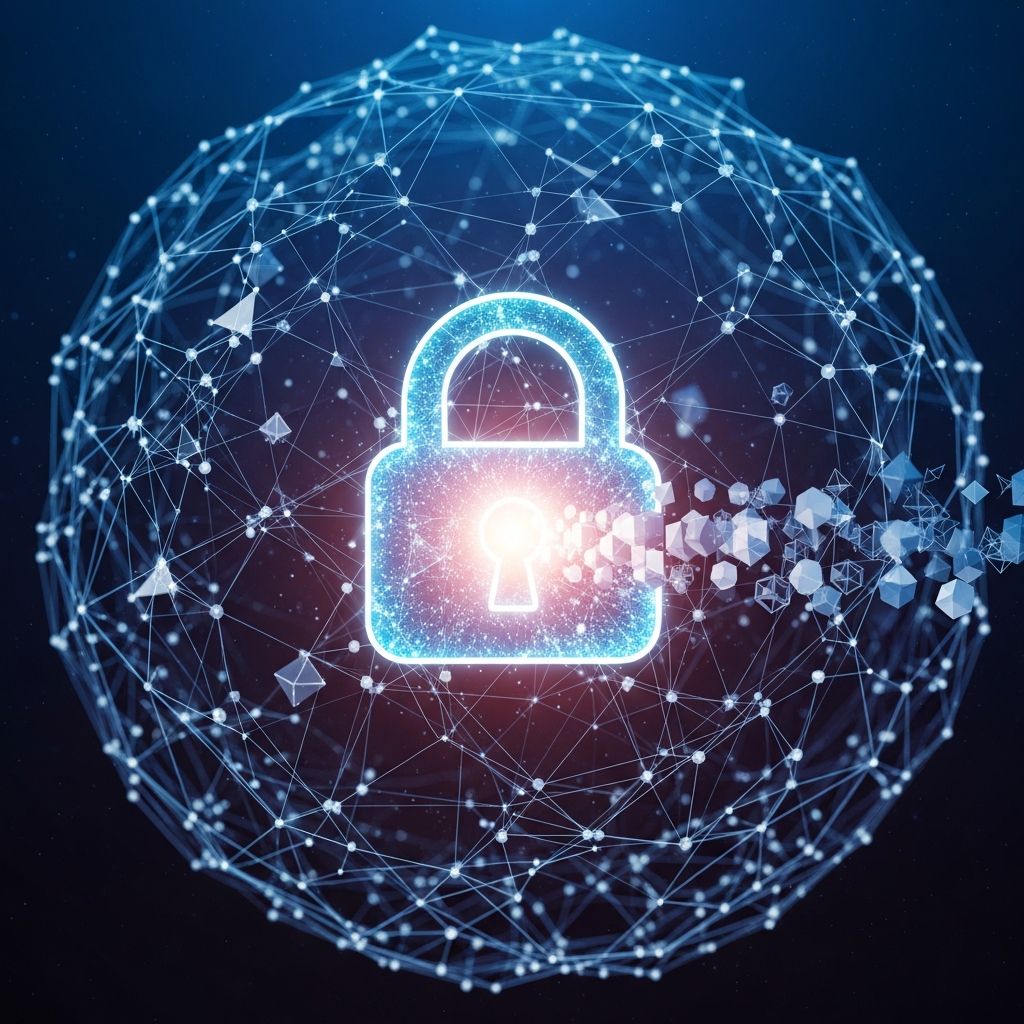
In an era where our lives are increasingly intertwined with the internet, the security of our digital communications has never been more critical. From personal messages to financial transactions, much of our daily activity relies on the invisible shield of encryption. This technology scrambles data into unreadable code, accessible only to authorized recipients with the correct key. Yet, as cyber threats proliferate, some policymakers propose measures that could erode this protection, potentially exposing billions to harm. This article delves into the foundations of encryption, the dangers of weakening it, global policy trends, and empowering actions individuals can take to preserve this cornerstone of digital trust.
The Fundamental Role of Encryption in Modern Life
Encryption serves as the bedrock of secure online interactions. At its core, it transforms plain text into ciphertext using complex algorithms, ensuring that even if data is intercepted, it remains meaningless without decryption keys. End-to-end encryption (E2EE), in particular, stands out by protecting data from sender to receiver, excluding intermediaries like service providers or network operators.
Consider everyday applications: messaging apps like Signal or WhatsApp use E2EE to shield conversations from eavesdroppers. Banking apps rely on it for transaction safety, while healthcare platforms secure patient records. According to the National Institute of Standards and Technology (NIST), robust encryption standards like AES-256 are vital for maintaining confidentiality in these systems.1 Without it, sensitive information becomes vulnerable to hackers, identity thieves, and state-sponsored actors.
- Confidentiality: Prevents unauthorized access to data in transit or at rest.
- Integrity: Ensures data hasn’t been tampered with during transmission.
- Authentication: Verifies the identity of communicating parties.
These pillars underpin not just individual privacy but also economic stability. A 2023 report from the World Economic Forum highlights that cyber incidents cost the global economy over $8 trillion annually, with weak encryption exacerbating vulnerabilities.2
Government Pushback: Balancing Security and Surveillance
Governments worldwide grapple with curbing illegal activities like terrorism and child exploitation online. In response, some advocate for “backdoors” or mandated decryption capabilities in encrypted services. Proponents argue this enables lawful access to criminal communications, citing cases where encryption allegedly hindered investigations.
However, such approaches carry profound risks. Introducing deliberate weaknesses creates exploitable flaws that adversaries can weaponize. The 2016 FBI-Apple dispute over unlocking an iPhone exemplified this tension: forcing a backdoor could have compromised millions of devices globally. More recently, the EU’s proposed Chat Control initiative has sparked debate by suggesting client-side scanning of encrypted messages for illegal content.3
| Approach | Description | Risks |
|---|---|---|
| Backdoors | Built-in access points for authorities | Exploitable by hackers; universal vulnerability |
| Client-Side Scanning | Automated checks before encryption | Privacy invasion; false positives; scope creep |
| Key Escrow | Government holds decryption keys | Single point of failure; key theft risks |
These methods undermine the E2EE model, where only endpoints hold decryption power. Once compromised, the system’s integrity collapses, affecting innocent users disproportionately.
Real-World Consequences of Weakened Encryption
History offers stark lessons. The 2010s saw the Crypto Wars, where U.S. export controls on encryption stifled innovation and left systems vulnerable. In 2020, Australia’s Assistance and Access Act allowed agencies to compel tech firms to decrypt data, leading to concerns over “ghost” vulnerabilities—hidden flaws unknown even to providers.
Recent breaches underscore the peril. The 2024 Change Healthcare ransomware attack exposed millions of records due to inadequate encryption, costing over $2.3 billion in damages, per the U.S. Department of Health and Human Services (HHS).4 Had E2EE been absolute, such fallout might have been mitigated.
Moreover, weakening encryption disproportionately harms vulnerable groups. Journalists in repressive regimes, activists organizing protests, and domestic violence survivors rely on secure channels to communicate safely. A 2022 Amnesty International report documented how surveillance tools bypassed encryption in authoritarian states, silencing dissent.5
Technical Flaws in Proposed Solutions
Critics of strong encryption often overlook cryptographic realities. No “golden key” exists that authorities can use without risking abuse. Quantum computing looms as a future threat, but current post-quantum algorithms, endorsed by NIST, aim to future-proof encryption without backdoors.1
Client-side scanning, for instance, requires pre-encryption analysis, effectively nullifying privacy. False positives could flag benign content—like medical images—leading to unwarranted scrutiny. Bulk scanning also scales poorly, consuming vast resources while inviting mission creep to non-criminal data.
Global Landscape: A Patchwork of Policies
Encryption debates rage internationally. The UK’s Online Safety Bill mandates “safety by design,” interpreted by some as anti-encryption. India’s IT Rules 2021 require traceability in messaging, challenging E2EE. Meanwhile, the U.S. EARN IT Act proposals seek liability shifts to pressure platforms into weakening protections.
Positive counter-trends exist: The Electronic Frontier Foundation (EFF) and others advocate for encryption-preserving laws. In 2023, the UN Human Rights Council affirmed encryption as integral to free expression.6
Empowering Individuals: Steps to Protect Your Privacy
While policy battles unfold, personal actions matter. Start by adopting E2EE tools:
- Use apps like Signal, which defaults to E2EE and offers disappearing messages.
- Enable full-disk encryption on devices (e.g., FileVault for macOS, BitLocker for Windows).
- Employ password managers with zero-knowledge architecture, like Bitwarden.
Advocate effectively:
- Contact Lawmakers: Urge support for pro-encryption bills via templates from organizations like the Internet Society.
- Support Coalitions: Join campaigns such as #KeepItOn or EncryptAllTheThings.
- Educate Networks: Share resources on encryption’s value with peers and communities.
- Demand Transparency: Choose providers disclosing security audits.
Businesses should audit encryption implementations, prioritizing open standards over proprietary solutions.
Frequently Asked Questions (FAQs)
What is end-to-end encryption?
E2EE ensures only the sender and recipient can decrypt messages, with no intermediates accessing plaintext.
Does encryption prevent all crimes?
No, but it protects the innocent while law enforcement uses metadata, warrants, and other tools for investigations.
Can governments legally break encryption?
Laws vary; many require judicial oversight, but backdoor mandates threaten universal security.
Is quantum computing a bigger threat than backdoors?
Potentially, but proactive standards mitigate it without current compromises.
The Path Forward: Prioritizing Collective Security
Strong encryption isn’t a luxury—it’s a necessity for a free, safe internet. Sacrificing it for selective access endangers everyone, as flaws spread indiscriminately. By understanding these stakes, advocating wisely, and adopting secure practices, we can fortify our digital future. Policymakers must recognize that true security arises from unbreakable protections, not fragile exceptions. Together, we uphold the right to private, secure communication in an interconnected world.
References
- Post-Quantum Cryptography Standardization — National Institute of Standards and Technology (NIST). 2024-08-13. https://csrc.nist.gov/projects/post-quantum-cryptography
- The Global Cybersecurity Outlook 2023 — World Economic Forum. 2023-01-14. https://www.weforum.org/publications/global-cysecurity-outlook-2023/
- Chat Control Proposal — European Commission. 2024-04-10. https://digital-strategy.ec.europa.eu/en/policies/chat-control
- Change Healthcare Cyber Response — U.S. Department of Health and Human Services (HHS). 2024-06-20. https://www.hhs.gov/about/news/2024/06/20/change-healthcare-cybersecurity-incident.html
- Surveillance Giants Report — Amnesty International. 2022-11-28. https://www.amnesty.org/en/documents/pol30/7848/2022/en/
- Resolution on Encryption and Privacy — United Nations Human Rights Council. 2023-10-06. https://www.ohchr.org/en/hr-bodies/hrc/resolutions
Similar Articles







Read full bio of medha deb