RFC 8200: IPv6 Achieves Internet Standard
Explore how RFC 8200 elevates IPv6 to full Internet Standard status, unlocking vast addressing and paving the way for future internet growth.

The internet’s foundational protocols evolve to meet growing demands, and few milestones match the standardization of IPv6 through RFC 8200. Released by the Internet Engineering Task Force (IETF) in July 2017, this document obsoletes the earlier RFC 2460, cementing IPv6 as the definitive successor to IPv4. With the world’s devices exploding in number—from smartphones to IoT sensors—IPv4’s 32-bit addresses have reached exhaustion. IPv6’s 128-bit architecture promises virtually unlimited scalability, alongside optimizations for performance and security.
The Drive Toward IPv6 Standardization
Internet standards progress through stages: Proposed, Draft, and finally Internet Standard, the highest level of maturity. IPv6 lingered in Draft status for nearly two decades since RFC 2460 in 1998, despite widespread experimentation. The upgrade to RFC 8200 addressed minor clarifications and errata accumulated over years, ensuring robustness for production networks.
This achievement reflects collaborative efforts by engineers worldwide. Bodies like the Internet Society championed deployment, while regional registries allocated IPv6 space. By 2017, adoption hit critical mass: over 20% global penetration, led by mobile carriers and content providers. Standardization signaled to enterprises and governments: IPv6 is production-ready.
Core Innovations in IPv6 Design
RFC 8200 outlines IPv6’s blueprint, emphasizing four pillars: expanded addressing, header efficiency, extensibility, and security foundations.
- Addressing Revolution: IPv6 uses 128 bits, yielding 3.4 × 10^38 addresses—enough for every device on Earth to have trillions. Hierarchical structure supports stateless autoconfiguration, eliminating DHCP dependency in many cases.
- Header Streamlining: Dropped fields like checksum and fragmentation reduce parsing overhead. Fixed 40-byte base header with optional extensions processes faster on routers.
- Extensibility: Chained extension headers allow modular features without bloating the base. Flow labels enable quality-of-service handling for real-time apps like video streaming.
- Security Integration: Native support for IPsec provides authentication and encryption, unlike IPv4’s add-on approach.
These changes aren’t mere tweaks; they future-proof the protocol for terabit networks and quantum-era threats.
Dissecting the IPv6 Packet Structure
At IPv6’s heart is its packet format, detailed in RFC 8200 Section 3. The base header spans 40 bytes:
| Field | Size (bits) | Purpose |
|---|---|---|
| Version | 4 | Always 6, identifies IPv6 |
| Traffic Class | 8 | Priority and congestion control |
| Flow Label | 20 | Labels packet sequences for special handling |
| Payload Length | 16 | Size of data following header |
| Next Header | 8 | Indicates following header type (extension or transport) |
| Hop Limit | 8 | TTL equivalent, prevents loops |
| Source Address | 128 | Sender’s IPv6 address |
| Destination Address | 128 | Recipient’s IPv6 address |
Extension headers chain via Next Header fields, recommended order per RFC 8200 Section 4.1: Hop-by-Hop first, then Routing, Fragment, and so on, ending with Destination Options or upper-layer protocols like TCP/UDP.
Addressing Types and Autoconfiguration
IPv6 introduces sophisticated address types:
- Unicast: One-to-one communication. Global unicast starts with 2000::/3.
- Multicast: One-to-many, with scopes (interface-local to global) for efficient routing.
- Anycast: Identical to unicast but routes to nearest node in a group, ideal for load balancing.
Stateless Address Autoconfiguration (SLAAC) lets devices self-assign addresses using Router Advertisements, combining router prefix with interface ID (often EUI-64 from MAC). This simplifies zero-touch provisioning in large networks.
Fragmentation and Path MTU Discovery
Unlike IPv4, IPv6 routers don’t fragment; senders must use Path MTU Discovery. RFC 8200 details fragmentation via a dedicated header in the Fragmentable Part of packets. Original packets split into fragments fitting path MTU, each with offset and identification for reassembly at destination.
Security Enhancements via IPsec
IPv6 mandates IPsec support, covering Authentication Header (AH) for integrity and Encapsulating Security Payload (ESP) for confidentiality. These extension headers protect against spoofing and eavesdropping natively.
Global Adoption and Impact Post-RFC 8200
By 2026, IPv6 usage exceeds 40% worldwide, per APNIC stats. ISPs like Comcast and mobile giants like T-Mobile run dual-stack. Cloud providers (AWS, Azure) default to IPv6. Challenges persist: legacy IPv4 dependencies, middlebox issues. Yet, RFC 8200’s polish accelerates transition.
Benefits abound: No NAT complexities, direct end-to-end connectivity, geolocation accuracy via larger address space.
Transition Mechanisms for Smooth Migration
Dual-stack runs IPv4/IPv6 parallel. Tunneling (6to4, Teredo) encapsulates IPv6 over IPv4. Translation (NAT64) bridges islands. RFC 8200 underpins these, ensuring interoperability.
Future Directions and Protocol Evolution
IPv6 enables Segment Routing (SRv6) for traffic engineering, evolving multicast, and IoT optimizations. Standards bodies eye post-8200 errata, but the core remains solid.
Frequently Asked Questions
What does RFC 8200 change from RFC 2460?
It incorporates errata, clarifies ambiguities like flow label usage, and confirms IPv6 as Internet Standard.
Is IPv6 fully replacing IPv4?
Not immediately; dual-stack prevails, but IPv6 dominates new allocations.
Why 128 bits for IPv6 addresses?
To support hierarchical routing, trillions per site, and growth to billions of devices.
Does IPv6 improve speed?
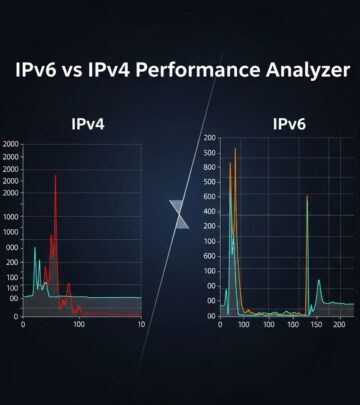
Yes, via simplified headers and no router fragmentation.
How to enable IPv6 on my network?
Check OS support (all modern do), get prefix from ISP, enable SLAAC or DHCPv6.
References
- Internet Protocol, Version 6 (IPv6) Specification — IETF. 2017-07-14. https://datatracker.ietf.org/doc/html/rfc8200
- Internet Protocol Version 6 (IPv6) — U.S. Department of Veterans Affairs. 2023-05-09 (last updated). https://www.oit.va.gov/Services/TRM/StandardPage.aspx?tid=5427
- Information on RFC 8200 — RFC Editor. 2017-07. https://www.rfc-editor.org/info/rfc8200
- RFC 8200: Internet Protocol, Version 6 (IPv6) Specification — ACM Digital Library. 2017-07. https://dl.acm.org/doi/book/10.17487/RFC8200
Similar Articles








Read full bio of medha deb