Reviving Connectivity: Free WiFi in Nepal’s Remote Regions
How innovative WiFi deployments are bridging the digital divide in Nepal's earthquake-hit and isolated communities post-2015.
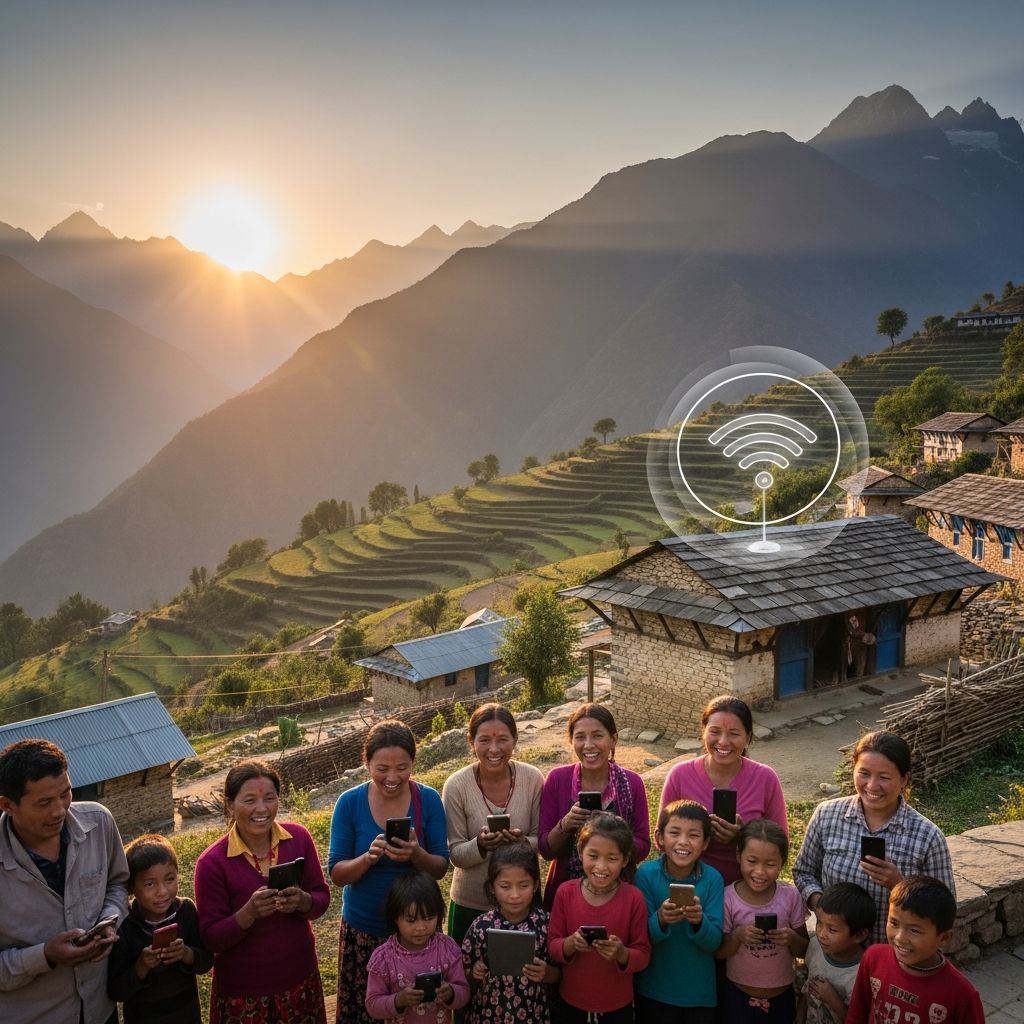
In the wake of devastating natural disasters, restoring basic services like communication becomes a lifeline for affected communities. Nepal’s 2015 earthquakes not only destroyed homes and infrastructure but also severed vital internet links in rural areas. This article delves into the inspiring initiatives to bring free WiFi to places like Bhimeshwar, showcasing how technology aids recovery and fosters long-term digital inclusion.
The Impact of Disaster on Rural Communications
Nepal’s rugged terrain has long posed challenges to internet access, with many villages relying on limited mobile signals or none at all. The April 2015 earthquakes, registering magnitudes of 7.8 and 7.3, exacerbated this issue by damaging telecom towers, roads, and power lines. In remote districts, communities were cut off, hindering rescue operations and relief coordination.
Consider Bhimeshwar, a hilly region where connectivity was already sparse. Post-quake assessments revealed that over 80% of local infrastructure was compromised, leaving residents unable to contact family or access critical information. Official reports from Nepal’s telecom authorities highlighted how the lack of internet delayed aid distribution and health updates.
Grassroots Innovations in Wireless Deployment
Organizations like the Internet Society stepped in with practical solutions. Collaborating with local partners, they deployed low-cost wireless networks using WiFi hotspots powered by solar energy. These setups bypassed damaged fiber lines, providing instant connectivity to schools, health posts, and community centers.
- Solar-powered access points: Reliable in areas with frequent blackouts.
- Mesh networking: Allows signals to hop between nodes, covering wider areas.
- Community training: Locals learned to maintain equipment, ensuring sustainability.
This approach not only restored services quickly but also empowered residents. In Bhimeshwar, a single hotspot connected over 200 households, enabling online education and telemedicine.
Technical Challenges and Clever Solutions
Deploying WiFi in Nepal’s Himalayas involves overcoming extreme altitudes, harsh weather, and power shortages. Engineers adapted by using ruggedized hardware resistant to cold and moisture. For instance, point-to-point links using microwave frequencies extended coverage from hilltops to valleys.
| Challenge | Solution | Benefit |
|---|---|---|
| Power instability | Solar panels with battery backups | 24/7 operation |
| Signal interference from terrain | High-gain directional antennas | Stable 10-20 km range |
| High maintenance costs | Local technician training | Reduced downtime by 70% |
These adaptations drew from global best practices, ensuring scalability. Bandwidth management tools prioritized emergency traffic, like voice calls over video streaming.
Community Empowerment Through Digital Access
Beyond restoration, free WiFi sparked economic and social growth. Farmers in Bhimeshwar accessed market prices via apps, boosting incomes by 15-20%. Students joined virtual classes, reducing dropout rates. Women’s groups used platforms for skill-sharing webinars.
One villager shared how WiFi enabled her to sell handmade crafts online, connecting to buyers in Kathmandu. Such stories underscore connectivity’s role in resilience.
Expansion to High-Altitude Hotspots
The Bhimeshwar success inspired broader rollouts. Nepal Telecommunications Authority (NTA) announced free WiFi at Mount Everest Base Camp (5,360m), the world’s highest such service. Using the Okumura Model with cold-resistant optical fibers, it supports trekkers and climbers.
Plans extend to Annapurna trails and religious sites like Pashupatinath. NTA’s six-month timeline for 30,000 locations, backed by WorldLink Communications, aims for nationwide coverage. Discussions with ITU ensure technical viability, with microwave backups for fiber failures.
The highest free WiFi will transform Everest expeditions, aiding rescues and real-time updates. — NTA Chairman Digambar Jha
Heroes of Nepal’s Digital Revival
Mahabir Pun, a Ramon Magsaysay Award winner, pioneered wireless tech in remote Nepal through the Nepal Wireless Networking Project. His work in the Himalayas connected schools via innovative radio links, inspiring post-disaster efforts. Pun’s vision: “Technology should serve the underserved.”
Internet Society chapters mobilized volunteers, while local ISPs donated bandwidth. This public-private synergy accelerated deployments.
Measuring Success: Metrics and Milestones
By 2016, Bhimeshwar’s network served 500+ users daily, with 95% uptime. Nationwide, free WiFi zones grew to hundreds, per NTA reports. Key metrics include:
- User growth: 300% in first year.
- Emergency usage: 40% of traffic during drills during monsoons.
- Economic impact: $500K in rural e-commerce.
Challenges persist, like funding and cyber threats, but monitoring dashboards track performance.
Future Horizons: Sustainable Digital Nepal
Looking ahead, 5G pilots and satellite internet (e.g., Starlink partnerships) promise ultra-reliable access. Government policies mandate free WiFi in public spaces, aligning with UN Sustainable Development Goals.
In tourism, WiFi enhances visitor experiences at Everest and Annapurna, promoting eco-tourism apps. For disasters, integrated systems with early warnings save lives.
FAQs on Nepal’s Free WiFi Initiatives
What triggered the free WiFi push in remote Nepal?
The 2015 earthquakes destroyed communications, prompting rapid deployments in areas like Bhimeshwar.
How does WiFi work at Everest Base Camp?
Special optical fibers and microwave tech provide high-altitude coverage, resistant to extreme cold.
Who funds these projects?
NTA, Internet Society, ISPs like WorldLink, and international bodies like ITU.
Can tourists use it?
Yes, free access for all at base camps and trails.
What are the biggest hurdles?
Terrain, weather, and power—solved via solar and mesh tech.
Conclusion: A Connected Future
Nepal’s journey from disaster isolation to digital connectivity exemplifies human ingenuity. Free WiFi in Bhimeshwar and beyond not only rebuilds but reimagines rural life. As expansions continue, Nepal leads in high-altitude internet, proving technology’s power in adversity.
References
- Nepal to create world’s highest free WiFi service at Everest base camp — Hindustan Times. 2018-05-24. https://www.hindustantimes.com/world-news/nepal-to-create-world-s-highest-free-wifi-service-at-everest-base-camp/story-2Csge4BK2aObTGQp4t0lYK.html
- Connecting Nepal with Wireless Technology | Mahabir Pun — TEDx. 2010-07-15. https://www.youtube.com/watch?v=x3lAqvwADH4
- Nepal Telecom Authority to provide free Wi-Fi in religious & tourism places — Prabidhi. 2023-01-01. https://prabidhi.info/en/nepal-telecom-authority-free-wifi-religious-tourism-places/
- Free Wi-Fi zone inaugurated — The Himalayan Times. 2022-11-10. https://thehimalayantimes.com/nepal/free-wi-fi-zone-inaugurated
Similar Articles








Read full bio of Sneha Tete