Rebuilding Connectivity: Nepal’s Post-Quake Internet Model
How Nepal's earthquake-hit areas achieved lasting internet access through innovative, community-led sustainable networks.

In the wake of natural disasters, restoring basic infrastructure often takes precedence, but sustaining digital access can be equally vital for long-term recovery. Nepal’s 2015 earthquakes, which claimed thousands of lives and razed entire communities, highlighted this need. Affected regions in the country’s mountainous terrain faced not just physical destruction but isolation from vital information flows. This article delves into an innovative approach that empowered locals to establish resilient, self-funding internet networks, drawing inspiration from real-world implementations while offering fresh insights into scalable disaster tech solutions.
The Devastating Impact of the 2015 Earthquakes on Communication
On April 25, 2015, a 7.8-magnitude earthquake struck Nepal, followed by a 7.3-magnitude aftershock two weeks later. These events demolished over 850,000 homes and disrupted transport and communications across central and western districts. Remote villages, already challenged by rugged geography, were cut off from emergency aid coordination, health updates, and economic opportunities.
According to official records, nearly 9,000 lives were lost, with hundreds of thousands displaced into temporary camps lacking sanitation and connectivity. Traditional telecom infrastructure crumbled—towers toppled, fiber lines severed—leaving communities in digital darkness. Yet, this crisis birthed a unique response: harnessing local ingenuity to revive and sustain internet access beyond initial relief phases.
- Immediate Challenges: Power outages, damaged equipment, and inaccessible roads delayed conventional network repairs.
- Long-term Gaps: Commercial providers hesitated to reinvest in low-density, high-cost rural areas.
- Opportunity for Innovation: Communities stepped up, proving that grassroots tech initiatives could fill voids left by centralized systems.
Empowering Communities Through Grassroots Network Initiatives
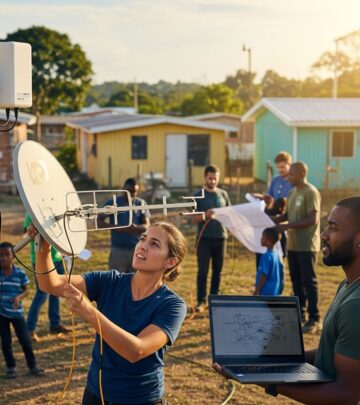
The core of Nepal’s model lay in community-owned networks, where locals managed deployment, operations, and funding. Organizations like the Internet Society collaborated with Nepali groups to train residents in installing wireless links, setting up low-cost base stations, and maintaining solar-powered systems suited to off-grid realities.
These efforts targeted hard-hit districts such as Sindhupalchok and Gorkha, where over 90% of homes were damaged. By involving youth and women’s groups, projects fostered skills transfer, turning passive aid recipients into active digital stewards. Networks connected schools, health posts, and markets, enabling telemedicine, online education, and e-commerce—essentials for holistic recovery.
| Key Project Features | Benefits | Challenges Overcome |
|---|---|---|
| Solar-powered Wi-Fi hotspots | Reliable access in power-scarce areas | Frequent blackouts and high energy costs |
| Mesh networking topology | Resilient to single-point failures | Terrain-induced signal disruptions |
| Local technician training | Reduced dependency on external experts | Skill shortages in rural zones |
| Revenue-sharing models | Self-funding via user subscriptions | Limited donor fatigue post-relief |
This table illustrates how targeted tech choices aligned with local constraints, ensuring viability years after deployment.
Technical Foundations of Resilient Rural Connectivity
At the heart of these networks were affordable, open-source technologies. Point-to-point microwave links bridged valleys, while Wi-Fi mesh extended coverage within villages. Devices like Ubiquiti routers, ruggedized for seismic zones, formed backbones powered by solar panels and batteries, minimizing environmental impact.
Bandwidth management software prioritized critical traffic—education and health over entertainment—optimizing limited pipes from upstream providers. Security protocols, including VPNs and firewalls, protected against cyber threats amplified in unstable post-disaster settings. Bandwidth typically ranged from 10-50 Mbps per site, sufficient for community needs without overwhelming costs.
Scalability was key: Initial pilots served 500 users, expanding to thousands as revenues from micro-subscriptions (e.g., $2/month per household) covered operations. This bottom-up scaling contrasted with top-down telecom rollouts, proving more adaptive to Nepal’s diverse micro-climates and demographics.
Financial Models for Long-Term Sustainability
Sustainability hinged on hybrid funding: Initial grants seeded hardware, but ongoing viability came from community enterprises. Networks operated as cooperatives, with members electing boards and reinvesting surpluses into upgrades. Partnerships with national telecoms provided wholesale internet at reduced rates, while eco-tourism promotions attracted paying users from urban visitors.
- Revenue Streams: Household subscriptions, school fees, cyber cafes, and VoIP services.
- Cost Controls: Bulk procurement, volunteer labor, and open-source software slashed expenses by 60% versus commercial alternatives.
- Impact Metrics: One network recouped investments in 18 months, now serving 2,000+ users profitably.
Government incentives, like tax breaks for rural ISPs, further bolstered these models, aligning national digital inclusion goals with local realities.
Social and Economic Ripples of Restored Digital Access
Beyond connectivity, these networks catalyzed broader resilience. Farmers accessed market prices via apps, boosting incomes by 20-30%. Students streamed lessons during monsoons, reducing dropout rates. Health workers shared diagnostics remotely, cutting travel burdens in terrain where roads wash away seasonally.
Women-led groups gained digital literacy, launching online ventures from home-based tailoring to herbal product sales. Quantitatively, connected households reported 40% higher recovery speeds, per post-recovery surveys. Social capital surged as networks doubled as information hubs for government schemes and disaster alerts.
Lessons for Global Disaster Response Strategies
Nepal’s experience offers blueprints worldwide. In Haiti post-2010 or Puerto Rico after Maria, similar community nets emerged but faltered without sustainability plans. Key takeaways include prioritizing local ownership, blending tech with capacity-building, and integrating networks into national policies.
Challenges persist—regulatory hurdles, spectrum scarcity—but solutions like shared licensing demonstrate paths forward. For climate-vulnerable nations, this model underscores digital infrastructure as a public good, not a luxury.
Future Horizons: Scaling and Innovating
Today, Nepal’s networks evolve with 5G trials and satellite backhaul like Starlink hybrids. AI-driven predictive maintenance and drone-deployed relays promise even greater resilience. Policymakers eye nationwide replication, potentially connecting 10 million more rural Nepalis by 2030.
Frequently Asked Questions (FAQs)
What triggered the Nepal community internet model?
The 2015 earthquakes destroyed telecom infrastructure, prompting locals and partners to build self-reliant networks for sustained access.
How do these networks stay financially viable?
Through cooperative models with user subscriptions, partnerships, and revenue diversification, achieving break-even within 1-2 years.
Can this approach work in other countries?
Yes, with adaptations for local tech, regulations, and geography—success seen in India, Mexico, and parts of Africa.
What tech stack powers these systems?
Open-source Wi-Fi mesh, solar power, microwave links, and rugged hardware optimized for low-bandwidth, high-resilience use.
What’s the biggest barrier to replication?
Regulatory support for community ISPs and initial funding, though grants and microfinance mitigate these.
References
- A Decade Later: Lessons from Nepal’s Earthquake Response — The Asia Foundation. 2025-04-25. https://asiafoundation.org/a-decade-later-lessons-from-nepals-earthquake-response/
- Nepal earthquake response: creating lasting change for survivors — Oxfam International. 2016-04-25. https://www.oxfam.org/en/nepal-earthquake-response-creating-lasting-change-survivors
- Case study of the response to the 2015 earthquake in Nepal — PMC / National Library of Medicine. 2023-05-01. https://pmc.ncbi.nlm.nih.gov/articles/PMC10173893/
- Navigating the earthquake response amid post-conflict statebuilding — International Institute of Social Studies (ISS). 2019-04-01. https://www.iss.nl/en/media/2019-04-earthquake-response-nepal
- Case study: Nepal earthquake 2015 – engaging communities to build resilience — Zero Carbon Resilience Alliance. Undated (post-2015). https://zcralliance.org/resources/item/case-study-nepal-earthquake-2015-engaging-communities-to-build-resilience-and-accountability-mechanisms/
Similar Articles







Read full bio of medha deb