Quad9: Revolutionizing Secure DNS Resolution
Explore how Quad9's public DNS resolver enhances online safety by blocking threats while prioritizing user privacy worldwide.
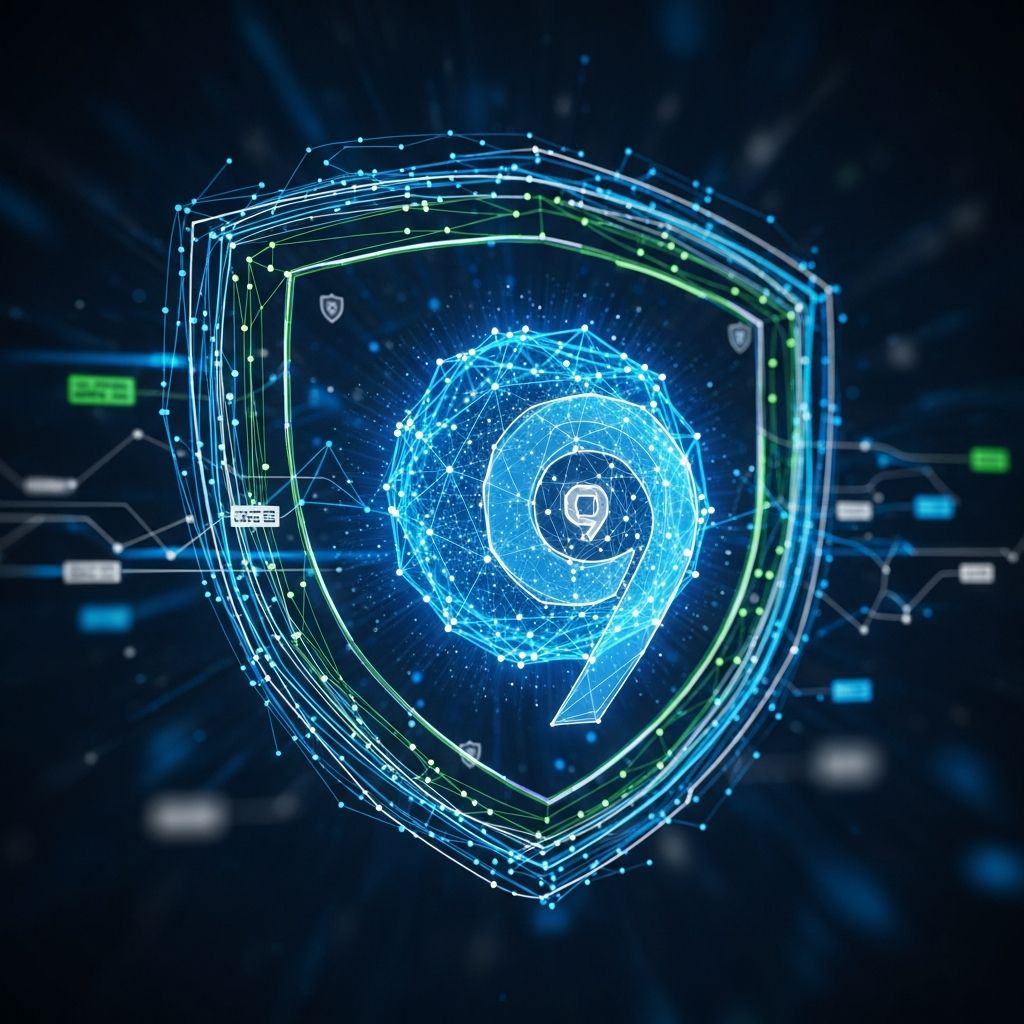
In an era where cyber threats proliferate across the internet, reliable Domain Name System (DNS) services have become essential for everyday users and organizations alike. Quad9 stands out as a pioneering public DNS resolver designed to fortify online security without compromising speed or privacy. Launched through a collaboration between leading tech firms and cybersecurity advocates, this service redirects harmful queries, safeguarding devices from malware, phishing, and botnets. This comprehensive guide delves into Quad9’s architecture, operational mechanics, and strategic advantages, offering insights for anyone seeking to bolster their digital defenses.
Understanding the Role of Public DNS Resolvers
At its core, DNS functions as the internet’s phonebook, translating human-readable domain names into machine-readable IP addresses. Public DNS resolvers, like those offered by major providers, allow users to bypass potentially unreliable ISP-provided services. Traditional options have paved the way, but evolving threats demand more sophisticated solutions. Quad9 emerges in this landscape as a free, recursive resolver that not only resolves queries efficiently but also actively mitigates risks.
Unlike basic resolvers that simply forward requests, Quad9 integrates real-time threat intelligence. This proactive stance addresses a critical vulnerability: malicious domains that lure users into downloading harmful software or surrendering sensitive data. By defaulting to secure configurations, Quad9 ensures that billions of daily queries traverse a fortified network, reducing exposure for individuals, families, and enterprises.
Quad9’s Collaborative Foundations and Mission
Quad9’s inception traces back to a partnership among IBM, Packet Clearing House (PCH), and the Global Cyber Alliance (GCA). This alliance pooled expertise in computing power, global networking, and threat analytics to create a service accessible to all. Governed by the Quad9 Foundation—a Swiss nonprofit— the platform adheres to stringent privacy laws, extending protections to users globally regardless of location.
- Nonprofit Governance: Ensures decisions prioritize public good over commercial interests.
- Swiss Jurisdiction: Offers robust data protection under laws that limit surveillance and emphasize user rights.
- Transparency Commitments: Regular disclosures on blocking policies and performance metrics build trust.
This foundation enables Quad9 to scale operations without the baggage of advertising-driven models seen in some competitors, focusing instead on cybersecurity efficacy.
Core Mechanisms for Threat Blocking
Quad9’s primary defense lies in its blacklist, curated from feeds provided by over a dozen cybersecurity powerhouses. When a user attempts to access a flagged domain, the resolver responds with an NXDOMAIN error—effectively stating the domain does not exist. This sinkholing technique prevents connections without alerting attackers, preserving stealthy protection.
Daily, Quad9 processes millions of queries, blocking up to two million threats. Its system aggregates intelligence on malware hosts, phishing sites, and command-and-control servers for botnets. Users benefit from this layered defense, which evolves continuously as new threats emerge.
| Threat Type | Blocking Method | Daily Impact |
|---|---|---|
| Malware Domains | NXDOMAIN Response | ~1.2M Blocks |
| Phishing Sites | Real-Time Feed Check | ~500K Blocks |
| Botnet C&C | Anycast Sinkholing | ~300K Blocks |
This table illustrates the distribution of blocks, highlighting Quad9’s broad-spectrum coverage.
Service Variants: Secure vs. Unsecured Options
Flexibility defines Quad9’s appeal. It offers distinct resolver flavors to suit varied needs:
- Secure Resolver (9.9.9.9): Activates malware blocking, DNSSEC validation, and QNAME minimization for enhanced privacy. Ideal for most users.
- Unsecured Resolver (9.9.9.10): Provides standard resolution without filtering, perfect for testing or environments requiring full access.
- Encrypted Variants: Support DNS over TLS (port 853), DNS over HTTPS (port 443), and DNSCrypt (port 8443) via hostnames like dns.quad9.net.
IPv6 compatibility ensures future-proofing, with prefixes like 2620:fe::/48 routed globally. These options allow precise configuration, from consumer routers to enterprise firewalls.
Global Infrastructure and Performance Edge
Leveraging PCH’s extensive footprint—spanning 181 Internet Exchange Points—Quad9 employs anycast routing. This directs queries to the nearest server, minimizing latency. At launch, it boasted 70 points of presence across 40 countries, expanding rapidly to over 160 locations.
Autonomous System (AS) 19281 announces dedicated prefixes: IPv4 ranges (9.9.9.0/24, 149.112.112.0/24, 149.112.149.0/24) and IPv6. This setup yields sub-30ms response times in many regions, outperforming non-anycast alternatives.
- Low Latency: Anycast ensures optimal paths.
- High Availability: Redundant PoPs prevent single points of failure.
- Scalability: Handles surging traffic during global threat spikes.
Privacy Protections and Compliance Standards
Quad9 minimizes data retention, logging no personally identifiable information. QNAME minimization limits shared query details, reducing surveillance risks. DNSSEC validation verifies response authenticity, thwarting spoofing attacks.
Under Swiss law, user data enjoys strong safeguards. No selling of logs occurs, contrasting with ad-supported resolvers. This privacy-by-design approach appeals to privacy-conscious users, from activists to businesses handling sensitive data.
Practical Setup and Troubleshooting Tips
Configuring Quad9 is straightforward across platforms:
- Desktop OS: Update network settings to primary DNS 9.9.9.9, secondary 149.112.112.112.
- Mobile Devices: Use private DNS mode with dns.quad9.net for encryption.
- Routers: Input IPs in WAN DNS fields; reboot to apply.
Common issues include firewall blocks on port 853—switch to unsecured for testing. Verify via dnsleaktest.com to confirm resolution.
Comparative Landscape: Quad9 vs. Peers
Quad9 differentiates through its nonprofit status and threat focus. Google Public DNS prioritizes speed sans blocking; Cloudflare emphasizes encryption. Quad9 uniquely blends security, privacy, and no-logging.
| Feature | Quad9 | Google DNS | Cloudflare |
|---|---|---|---|
| Malware Blocking | Yes | No | Optional |
| DNSSEC | Yes | Yes | Yes |
| No Logs Policy | Strict | Partial | Strict |
| Anycast PoPs | 160+ | Global | Global |
Future Directions and Community Impact
Quad9 continues expanding, integrating emerging protocols like Oblivious DNS and enhancing threat feeds with AI-driven analytics. Community contributions via threat submissions strengthen its lists. For small businesses, it offers cost-free filtering; for developers, APIs enable custom integrations.
By democratizing advanced security, Quad9 empowers non-technical users, potentially curbing widespread infections and fostering a safer web ecosystem.
Frequently Asked Questions (FAQs)
Is Quad9 completely free?
Yes, Quad9 is a nonprofit service with no fees or usage limits.
Does it slow down my internet?
No, anycast routing ensures comparable or better speeds than ISP DNS.
Can I use it for business networks?
Absolutely; it’s scalable for enterprises with volume-based plans available.
What if I need to access a blocked site?
Switch to 9.9.9.10 for unfiltered resolution.
Is my data safe from governments?
Swiss privacy laws provide strong protections with minimal logging.
References
- Quad9 Service Addresses and Features — Quad9 Foundation. 2023-05-01. https://quad9.net/service/service-addresses-and-features/
- About Quad9 — Quad9 Foundation. 2024-02-15. https://quad9.net/about/
- Quad9 FAQ — Quad9 Foundation. 2024-01-10. https://quad9.net/support/faq/
- Internet Number Resources: AS19281 — RIPE NCC (Regional Internet Registry). 2026-04-01. https://www.ripe.net/db/whois/as19281
- DNS Privacy Considerations — IETF (RFC 7816). 2016-05-01 (authoritative standard). https://datatracker.ietf.org/doc/html/rfc7816
Similar Articles





Read full bio of Sneha Tete