Open Interconnect Consortium IoT Launch
Discover the 2013 launch of the Open Interconnect Consortium, a pivotal effort to standardize IoT connectivity and drive device interoperability worldwide.
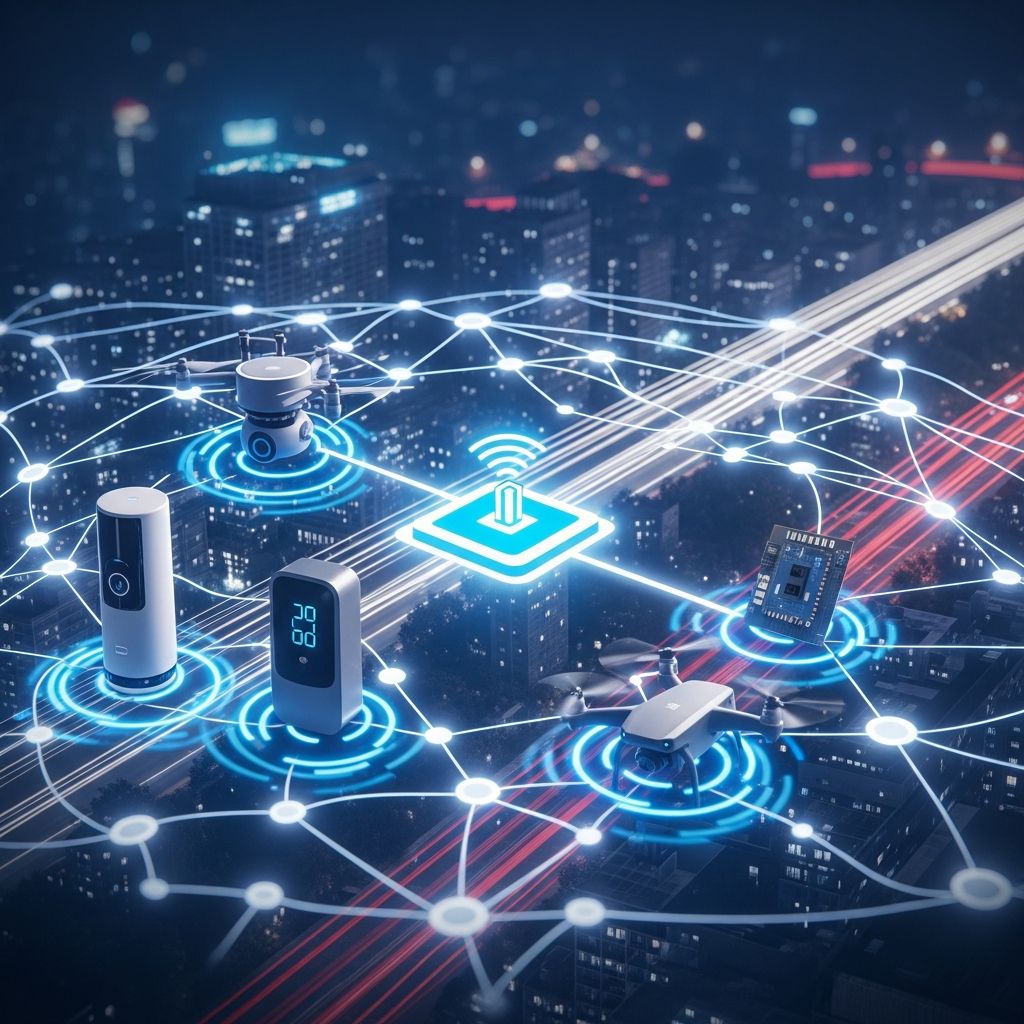
Open Interconnect Consortium: Pioneering IoT Connectivity Standards
The rapid expansion of the Internet of Things (IoT) in the early 2010s promised a world where everyday objects—from household appliances to industrial machinery—could communicate intelligently. However, fragmented standards threatened this vision, leading to the birth of the Open Interconnect Consortium (OIC) in 2013. This initiative brought together leading technology firms to establish universal protocols, fostering a connected ecosystem that could scale to billions of devices. By focusing on open-source solutions and rigorous certification, OIC addressed critical challenges in wireless connectivity, security, and cross-platform compatibility.
The Genesis of a Unified IoT Framework
In an era when smart devices were proliferating without cohesive communication methods, industry pioneers recognized the need for collaboration. The OIC emerged as a response to this fragmentation, aiming to create a common language for IoT devices. Founding members included semiconductor giants, consumer electronics leaders, and software innovators, all committed to developing specifications that transcended individual company ecosystems.
Key objectives from the outset included defining connectivity requirements for diverse devices, such as smartphones, wearables, home automation systems, and enterprise sensors. Projections at the time estimated over 20 billion IoT devices by 2020, underscoring the urgency. The consortium’s approach emphasized industry-standard technologies like Wi-Fi, Bluetooth, and emerging protocols, ensuring broad applicability without vendor lock-in.
- Development of a comprehensive specification for device-to-device communication.
- Release of open-source implementations to encourage widespread adoption.
- Establishment of a certification program to verify compliance and interoperability.
This structured strategy not only accelerated innovation but also built consumer trust through verified compatibility.
Founding Members and Their Strategic Roles
The OIC’s strength lay in its diverse membership, comprising companies with expertise across the tech stack. Semiconductor firms provided hardware-level insights, while device manufacturers focused on practical use cases. For instance, leaders in chip design contributed to low-power protocols essential for battery-operated sensors, and software specialists ensured seamless integration with operating systems like Android, iOS, and Linux.
| Member Category | Key Contributions | Example Use Cases |
|---|---|---|
| Semiconductor Providers | Optimized wireless chipsets for IoT | Wearables, smart sensors |
| Device Manufacturers | Real-world testing and feedback | Home appliances, automotive |
| Software Developers | Open-source frameworks | Cloud integration, edge computing |
These collaborations extended invitations to additional stakeholders, including appliance makers and service providers, broadening the consortium’s influence.
Core Technologies and Initial Focus Areas
OIC’s technical foundation prioritized security, reliable discovery, and efficient data exchange. Initial efforts targeted smart home and office environments, where devices like thermostats, lights, and security cameras needed to interact flawlessly. The framework supported multiple wireless standards, enabling hybrid networks that adapted to varying power and bandwidth constraints.
Open-source code releases began with foundational libraries for device onboarding and management, allowing developers to build compatible applications rapidly. This democratized IoT development, reducing barriers for startups and ensuring a level playing field.
- Support for Wi-Fi Direct, Zigbee, and Bluetooth Low Energy.
- Robust security features like encryption and authentication.
- Offline operation capabilities for resilient connectivity.
By embracing existing standards, OIC avoided reinventing the wheel, instead enhancing them for IoT-specific demands.
Evolution and Mergers in the IoT Standards Landscape
The OIC did not operate in isolation. Shortly after its formation, it navigated a crowded field of alliances, including the AllSeen Alliance. By 2016, strategic mergers reshaped the ecosystem: OIC combined with AllSeen to form the Open Connectivity Foundation (OCF), unifying efforts under a single banner. This consolidation integrated technologies like AllJoyn and IoTivity, amplifying reach with members such as Microsoft, Qualcomm, and LG Electronics.
Further alliances, like partnerships with the Industrial Internet Consortium (IIC), extended OIC’s impact to industrial applications. These developments validated the original vision, evolving it into a global standard for IoT interoperability.
Impact on Smart Homes and Beyond
In smart homes, OIC standards enabled scenarios where a single voice command could adjust lighting, climate, and entertainment systems from different brands. Certification logos assured users of plug-and-play reliability, boosting market confidence. Beyond residences, applications spanned healthcare monitoring, automotive telematics, and smart cities, where billions of nodes required fault-tolerant communication.
Economically, these standards reduced development costs by 30-50% through reusable components, according to industry analyses. Security enhancements mitigated risks like unauthorized access, a perennial IoT concern.
Challenges Overcome and Lessons Learned
Early hurdles included harmonizing competing protocols and achieving consensus among rivals. OIC’s non-profit structure and membership tiers—based on participation levels—facilitated inclusivity. Certification processes evolved into rigorous testing suites, ensuring devices met performance benchmarks under real-world stresses.
Looking back, OIC’s launch marked a turning point, influencing modern frameworks like Matter, which builds on its interoperability principles.
Future Implications for IoT Ecosystems
Today, OIC’s legacy endures in OCF’s ongoing work, with specifications supporting 5G integration and AI-driven edge processing. As IoT scales to 75 billion devices by 2025 (per recent forecasts), unified standards remain vital for innovation. The consortium’s model of open collaboration sets a blueprint for emerging technologies like 6G and spatial computing.
FAQ: Key Questions on OIC and IoT Standards
- What was the primary goal of the Open Interconnect Consortium?
- To define common connectivity frameworks ensuring IoT devices from different manufacturers could interoperate seamlessly.
- Which companies founded OIC?
- Atmel, Broadcom, Dell, Intel, Samsung, and Wind River led the initiative.
- How did OIC evolve over time?
- It merged with the AllSeen Alliance in 2016 to form the Open Connectivity Foundation (OCF).
- Why is IoT certification important?
- It verifies security, compatibility, and performance, giving consumers confidence in device ecosystems.
- Are OIC standards still relevant today?
- Yes, they form the basis for modern IoT protocols like those in OCF and influence standards such as Matter.
References
- Industry Leaders to Establish Open Interconnect Consortium to Advance Interoperability for Internet of Things — Wind River. 2014-07-08. https://www.windriver.com/news/press/news-13021
- This Mega Tech Consortium Wants to Connect All Our Devices — Fortune. 2016-10-10. https://fortune.com/2016/10/10/open-connectivity-foundation-wants-to-connect-all-devices/
- Another day, another Internet of Things consortium — New Atlas. 2014 (approx.). https://newatlas.com/open-interconnect-consortium-oic/32862/
- Industry Leaders to Establish Open Interconnect Consortium — Samsung Newsroom. 2014 (approx.). https://news.samsung.com/global/industry-leaders-to-establish-open-interconnect-consortium-to-advance-interoperability-for-internet-of-things
- About Us — Industrial Internet Consortium. Accessed 2026. https://www.iiconsortium.org/about-us/
Similar Articles







Read full bio of Sneha Tete