Open Fibre Data Standard
Unlocking better broadband planning with standardized fibre data sharing worldwide.
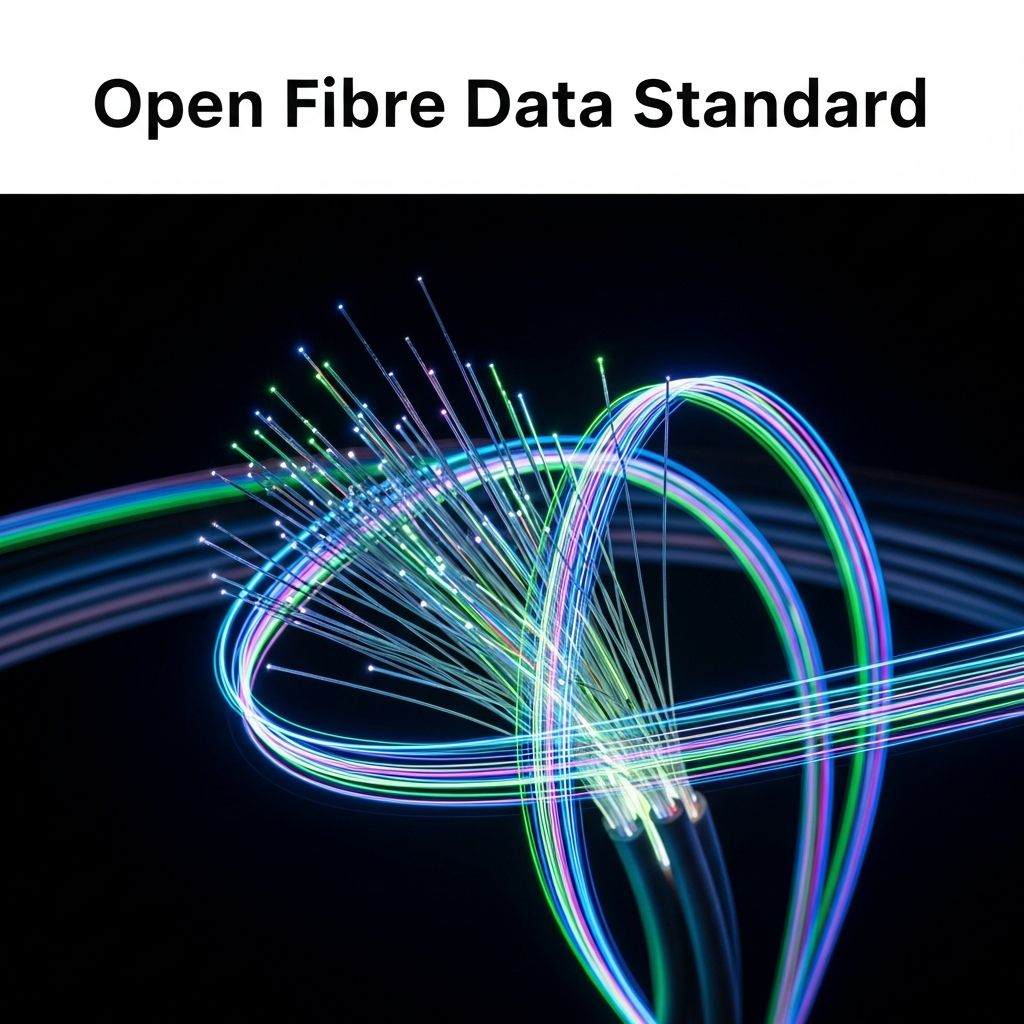
Open Fibre Data Standard: Transforming Global Connectivity
The digital age relies heavily on robust fibre optic networks, yet a critical challenge persists: fragmented and inconsistent data about these vital infrastructures. Enter the Open Fibre Data Standard (OFDS), an innovative framework designed to unify how fibre networks are documented and shared. This standard empowers stakeholders—from policymakers to private investors—to make data-driven choices that accelerate broadband deployment and strengthen network resilience.
Why Fibre Data Standardization Matters Today
In many regions, especially emerging markets, the lack of comprehensive fibre maps hinders progress. Governments struggle to pinpoint infrastructure gaps, investors hesitate due to uncertainty, and operators face duplicated efforts. OFDS addresses this by establishing a universal language for describing terrestrial fibre assets. It covers everything from cable routes to ownership details, ensuring data is interoperable across tools like GIS systems.
Consider the scale: fibre optics form the backbone of high-speed internet, supporting 5G, cloud services, and IoT. Without standardized data, redundancy assessments are guesswork, leading to fragile networks vulnerable to outages. OFDS changes this by promoting open access to structured information, fostering collaboration and efficiency.
Core Components of the OFDS Framework
At its heart, OFDS defines precise data elements and formats. It categorizes information into spatial, technical, and administrative buckets:
- Spatial Data: Geographic details like cable paths, node positions (e.g., Points of Presence or PoPs), and endpoint coordinates. This enables precise mapping and visualization.
- Technical Data: Specifications such as fibre count per cable, capacity ratings, ITU-compliant categories, and power infrastructure ties.
- Administrative Data: Ownership structures, operational status, dark fibre availability, contracts, and funding sources.
The standard supports multiple output formats—JSON, GeoJSON, CSV—making it versatile for developers, analysts, and regulators. Tooling includes validation scripts and publishing guides, lowering the barrier for adoption.
Key Advantages for Stakeholders
OFDS delivers tangible value across the ecosystem. For governments and regulators, it offers a holistic view of national infrastructure, revealing not just coverage voids but also vulnerability hotspots where over-reliance on single routes exists.
Investors benefit from risk-reduced decision-making. Aggregated OFDS datasets allow modeling of return on investment, competition analysis, and synergy opportunities with existing builds.
Telecom operators gain efficiency in planning expansions, negotiating dark fibre leases, and integrating with mapping platforms. Researchers and NGOs can leverage the data for studies on digital divides.
| Stakeholder | Primary Benefit | Example Use Case |
|---|---|---|
| Governments | Infrastructure gap analysis | National broadband strategy development |
| Investors | Risk assessment | ROI modeling for new deployments |
| Operators | Network planning | Dark fibre lease identification |
| Researchers | Data aggregation | Digital equity studies |
The Collaborative Origins and Evolution
Launched in 2022, OFDS emerged from a multistakeholder alliance including the Internet Society, World Bank, ITU, Mozilla, and regional players like Liquid Intelligent Technologies and CSquared. This partnership pooled expertise in open data, telecom policy, and infrastructure mapping.
Development involved iterative releases: alpha and beta phases gathered feedback from global pilots, leading to version 0.3 by 2025. Real-world testing in Africa highlighted needs like handling diverse cable types—from aerial to underground—and multi-operator data fusion.
Looking ahead, 2025 efforts focus on governance. A dedicated multistakeholder body will oversee updates, with a central web hub for resources, schemas, and tools. Workshops in key regions aim to boost adoption.
Real-World Applications and Success Stories
Early adopters demonstrate OFDS’s potential. In select African nations, regulators mandated OFDS-compliant reporting, yielding merged maps that exposed redundant routes and underserved zones. One pilot integrated OFDS with open GIS layers, creating interactive dashboards for public use.
Globally, parallels exist with standards like GTFS for transit data. Just as GTFS revolutionized public transport apps, OFDS could spawn fibre visualization tools, investment platforms, and regulatory dashboards.
Challenges remain: data privacy, commercial sensitivities, and legacy systems. OFDS mitigates these via anonymization options and phased implementation guidance.
Technical Deep Dive: Implementing OFDS
For technical users, OFDS provides a JSON schema with core entities: Nodes (locations with attributes like type and capacity), Spans (connections between nodes, detailing route, fibres, and status), and Networks (overarching ownership and contracts).
Example schema snippet (simplified):
{ "type": "FeatureCollection", "features": [ { "type": "Feature", "geometry": { "type": "Point", "coordinates": [lon, lat] }, "properties": { "nodeType": "PoP", "owner": "OrgID" } } ]}Validation tools ensure compliance, while APIs facilitate aggregation. Integration with PostGIS or QGIS is straightforward, enabling advanced analytics like shortest path resilience scoring.
Future Roadmap and Global Expansion
OFDS’s trajectory includes last-mile extensions, submarine fibre links, and AI-driven analytics. Version 1.0 targets 2026, with interoperability to 5G and satellite datasets.
Adoption strategies emphasize incentives: regulatory mandates, subsidies for compliant publishers, and open-source toolkits. International bodies like ITU could embed OFDS in broadband frameworks.
Frequently Asked Questions
What exactly is OFDS?
OFDS is an open standard for structuring and publishing data on terrestrial fibre optic networks, promoting transparency and interoperability.
Who should adopt OFDS?
Regulators, operators, investors, governments, and researchers handling fibre infrastructure data.
Is OFDS data publicly available?
It supports open publication but allows controlled access for sensitive commercial info.
How does OFDS improve network resilience?
By enabling redundancy mapping, it identifies single points of failure across multi-operator datasets.
Where can I access OFDS resources?
Visit the official hub at ofds.info for schemas, tools, and documentation.
Conclusion: Paving the Way for Universal Connectivity
The Open Fibre Data Standard stands as a beacon for equitable internet growth. By demystifying fibre infrastructure, it bridges data silos, ignites investment, and fortifies networks against future demands. As adoption spreads, OFDS will be instrumental in closing digital divides, ensuring every community benefits from high-speed connectivity. Stakeholders worldwide are encouraged to engage, contribute, and implement this transformative tool.
References
- The Open Fibre Data Standard — Internet Society. 2025-04-01. https://www.internetsociety.org/blog/2025/04/the-open-fibre-data-standard/
- Open Fibre Data Standard – PIMF — Internet Society Pulse. 2025-02-25. https://pulse.internetsociety.org/documents/11/Open_Fibre_Data_Standard_-_PIMF.pdf
- Open Fibre Data Standard: Understanding the True Extent of the Internet — Mozilla Netpolicy Blog. 2023-03-28. https://blog.mozilla.org/netpolicy/2023/03/28/open-fibre-data-standard-understanding-the-true-extent-of-the-internet/
- Internet Society wants to improve terrestrial fibre maps — The Register. 2025-02-24. https://www.theregister.com/2025/02/24/isoc_ofds_network_maps/
- Home — Open Fibre Data Standard — OFDS.info. Accessed 2026. https://ofds.info/en/
Similar Articles







Read full bio of Sneha Tete