NLnet Grants: Fueling DNSSEC Innovation
Discover how NLnet Foundation empowers open source projects to advance DNSSEC and secure the internet's foundation in 2025-2026.
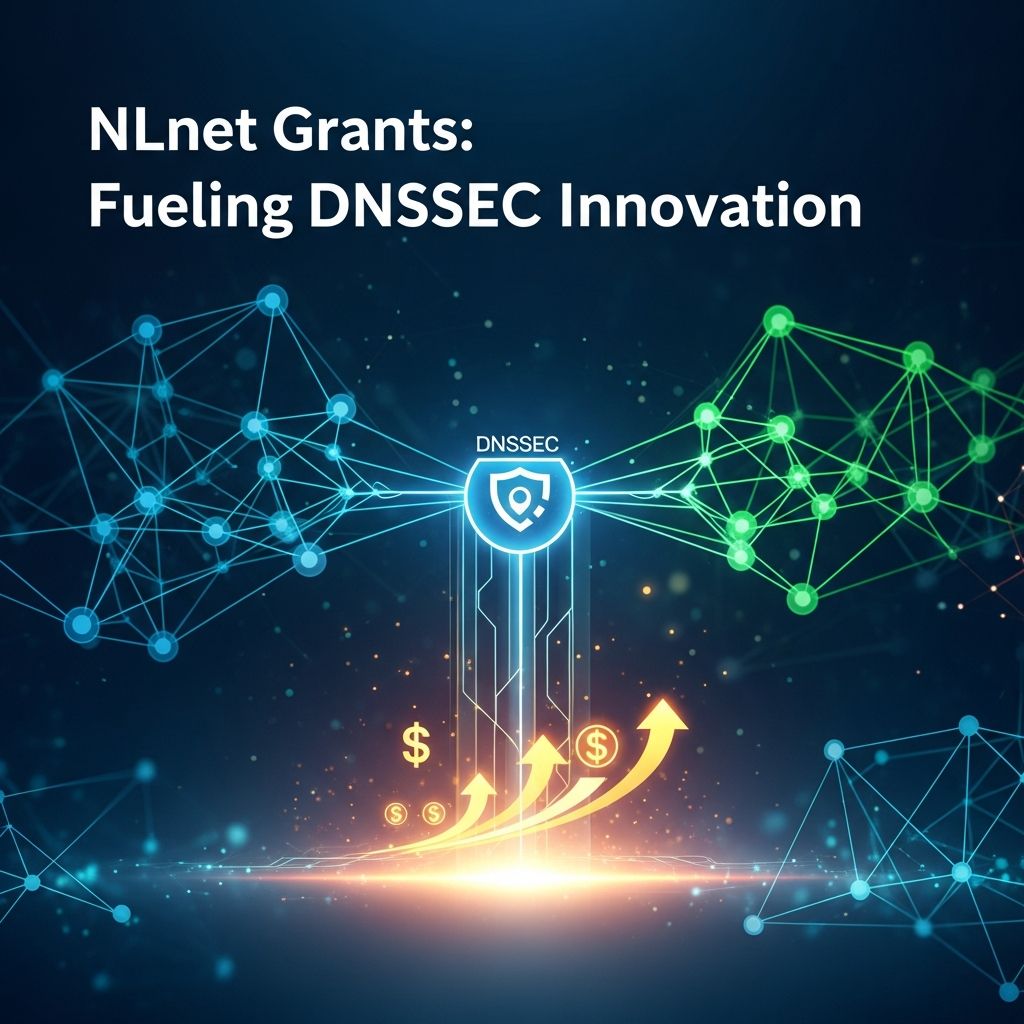
The Domain Name System (DNS) is the internet’s phonebook, translating human-readable domain names into machine-readable IP addresses. But without proper safeguards, it remains vulnerable to attacks like cache poisoning and spoofing. Enter DNSSEC (DNS Security Extensions), a suite of protocols that adds cryptographic authentication to DNS responses, ensuring data integrity and authenticity. As cyber threats evolve, funding innovative open source projects becomes crucial to widespread adoption.
NLnet Foundation, a Netherlands-based nonprofit, has long championed such efforts. Originally spotlighting DNSSEC-specific funding, NLnet now channels resources through Next Generation Internet (NGI) theme funds. These grants empower developers to build resilient, privacy-focused tools. With deadlines approaching, this guide unpacks current opportunities, eligibility, and strategies for success.
Understanding DNSSEC and Its Critical Role Today
DNSSEC digitally signs DNS records using public-key cryptography, preventing tampering during resolution. According to ICANN’s 2024 deployment report, over 1,800 TLDs support DNSSEC, validating billions of queries daily. Yet, end-user adoption lags: only 20% of browsers and resolvers fully validate signatures due to complexity and performance overhead.
Recent incidents underscore urgency. In 2023, a DNS hijacking affected major cloud providers, rerouting traffic to malicious servers. NLnet’s initiatives address this by funding libraries, resolvers, and tools that integrate seamlessly. Their DNSSEC Fund, though retired, paved the way; current NGI programs continue the legacy with broader scopes like privacy and decentralization.
- Key Benefits: Mitigates man-in-the-middle attacks, protects against DDoS amplification, enables secure delegations.
- Challenges: Key management, validation overhead, incomplete chains.
NLnet Foundation: A Pillar of Open Internet Funding
Founded in 1997, NLnet supports libre software hardening Europe’s digital infrastructure. Backed by EU’s NGI program, it has awarded over €50 million since 2018 across 500+ projects. Focus areas evolve with needs: from DNSSEC to user-operated internet and ethical mobile stacks.
Grants range from €5,000 to €50,000 for first-time applicants, scaling higher for proven teams. Emphasis on open standards, WCAG compliance, and security audits ensures lasting impact. Success stories include Knot Resolver enhancements and DNS-over-TLS implementations now in production.
| Fund Name | Focus Areas | Grant Size | Deadline |
|---|---|---|---|
| NGI0 Commons | Public internet, user-operated systems | Up to €50k initial | Dec 1, 2025 |
| NGI Taler | Privacy-preserving payments | Up to €50k initial | Dec 1, 2025 |
| NGI Mobifree | Ethical mobile software | Up to €50k initial | Dec 1, 2025 |
| NGI Fediversity | Future hosting stacks | Up to €50k initial | Dec 1, 2025 |
Active Funding Calls for 2025-2026
As of October 2025, four NGI funds are open. NGI0 Commons prioritizes reclaiming internet’s public nature, funding federated services and anti-centralization tools. NGI Taler advances anonymous digital cash, integrating with DNSSEC-secured resolvers. NGI Mobifree targets de-Googled Android alternatives, while NGI Fediversity builds sovereign hosting via IPFS and ActivityPub.
Proposals must demonstrate real-world impact, technical merit, and open licensing (e.g., GPL, Apache). DNSSEC-related ideas fit under Commons or core infrastructure themes, such as validating resolvers or automated key rollovers.
How to Craft a Winning NLnet Proposal
- Research Fit: Align with theme funds; review NLnet’s areas.
- Keep It Concise: 2 pages max, covering problem, solution, milestones, budget.
- Prove Feasibility: Include prototypes, team bios, prior open source contributions.
- Emphasize Openness: Commit to libre releases, standards compliance.
- Budget Wisely: Developer time (60-80%), audits (10-20%), hardware (minimal).
Submit via online form by noon CET. Expect lightweight review; decisions in 4-6 weeks. First grants cap at €50k; larger follow successful deliveries.
Spotlight: Transformative NLnet-Funded Projects
NLnet’s portfolio boasts high-impact work. The DNSSEC Fund (pre-2020) funded Unbound validator upgrades, now serving 40% of signed zones. Recent NGI grants supported 57 Commons projects in 2026, including decentralized DNS alternatives.
Emerging: NLnet Labs’ Cascade, successor to OpenDNSSEC (EOL 2027). Alpha in Oct 2025, it promises efficient signing with modern crypto. Nominet DNS Fund complements, backing Cascade and resolver tools.
Future Horizons: DNSSEC in the NGI Era
By 2026, NLnet aims for ubiquitous validation via funded libraries. Integration with DoT/DoH, post-quantum keys, and AI-driven anomaly detection loom large. Applicants should eye hybrid threats, where DNSSEC pairs with blockchain oracles for unbreakable chains.
Challenges persist: validator overhead (sub-1ms targets), ecosystem fragmentation. NLnet’s guide stresses audits and WCAG for inclusivity.
FAQs: NLnet Grant Essentials
- Who can apply?
- Open source projects, individuals, nonprofits worldwide; EU focus preferred.
- What if my project exceeds €50k?
- Start small; prove delivery for phased funding.
- Is DNSSEC still prioritized?
- Via NGI Commons; propose infrastructure hardening.
- Next deadlines?
- Dec 1, 2025 (noon CET); June 1, 2026.
- Success rate?
- ~20-30%; strong proposals with prototypes win.
NLnet grants aren’t just funding—they’re catalysts for a secure, open internet. With Dec 1, 2025, approaching, developers: propose now.
References
- Apply for funding before December 1st 2025 — NLnet Foundation. 2025-10-01. https://nlnet.nl/news/2025/20251001-call.html
- DNS Security Fund — NLnet Foundation. Accessed 2025. https://nlnet.nl/dnssec/
- End-of-Life Roadmap for OpenDNSSEC — NLnet Labs. 2025-10-03. https://www.nlnetlabs.nl/news/2025/Oct/03/opendnssec-eol-announcement/
- Apply for a grant — NLnet Foundation. Accessed 2025. https://nlnet.nl/propose/
- Guide for Applicants — NLnet Foundation. Accessed 2025. https://nlnet.nl/useroperated/guideforapplicants/
- Areas of special interest — NLnet Foundation. Accessed 2025. https://nlnet.nl/themes/
Similar Articles





Read full bio of Sneha Tete