New IXPs Boost Internet in Central America
Discover how emerging Internet Exchange Points are transforming connectivity and driving digital growth across Central America and the Caribbean.
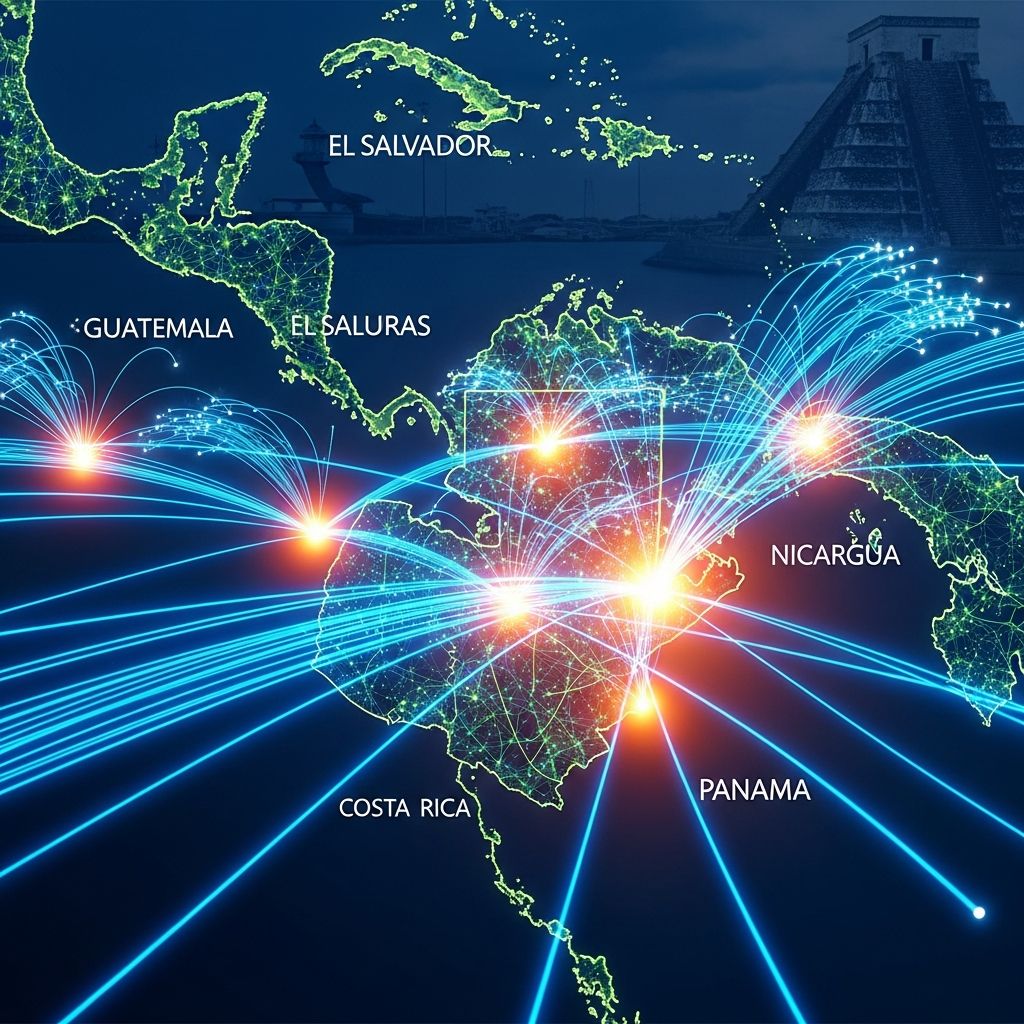
The rapid expansion of digital services demands robust internet infrastructure, particularly in developing regions. In Central America and the Caribbean, Internet Exchange Points (IXPs) are emerging as game-changers. These neutral facilities enable local networks to interconnect directly, bypassing expensive international routes. This development promises lower latency, reduced costs, and improved access to online resources for millions.
Understanding Internet Exchange Points
IXPs serve as physical locations where multiple internet service providers (ISPs), content providers, and enterprises connect their networks. Instead of routing local traffic through distant international backbones, participants exchange data locally. This peering process minimizes delays and expenses associated with transit providers.
Core benefits include enhanced performance for streaming, gaming, and cloud services. For businesses, it means faster data transfers and reliable operations. In education and healthcare, quicker access to online tools supports remote learning and telemedicine.
- Latency Reduction: Local peering cuts round-trip times from hundreds of milliseconds to mere fractions.
- Cost Savings: ISPs avoid high fees for international bandwidth.
- Traffic Growth: Encourages more local content hosting and consumption.
Recent Launches Transforming Regional Connectivity
Over the past few years, several IXPs have launched or expanded operations in key locations. These initiatives address longstanding gaps in internet infrastructure, where reliance on foreign routes has stifled growth.
In Guatemala, IXP.GT marks a milestone by uniting major local providers. Similarly, the Dominican Republic’s IX.DO facilitates efficient traffic exchange among carriers serving a population hungry for digital services. Yucatán, Mexico, introduced IXSY, targeting the southeastern region’s unique needs, while other hubs like those in Grenada and Haiti demonstrate sustained momentum.
| IXP Name | Location | Launch Year | Key Participants |
|---|---|---|---|
| IXP.GT | Guatemala | 2022 | Local ISPs, universities |
| IXSY | Yucatán, Mexico | 2022 | Regional carriers, content networks |
| IX.DO | Dominican Republic | 2022 | Major telecoms, enterprises |
| GDL-IX | Guadalajara, Mexico | 2023 | HostDime tenants, carriers |
These exchanges have quickly gained traction, with traffic volumes surging as more networks join. For instance, Caribbean IXPs report consistent growth in local peering since their inception, reflecting rising demand for domestic applications.
Technical Foundations and Growth Drivers
Modern IXPs rely on high-capacity switches from trusted vendors like Cisco and Extreme Networks. Layer 2 switching ensures efficient, low-latency interconnections. Remote peering options via tunnels further expand reach without physical presence.
Statistics from regional surveys highlight the scale: Latin America and the Caribbean host nearly 100 IXP sites. Larger ones, such as those in São Paulo and Buenos Aires, handle massive traffic peaks, providing a blueprint for newcomers.
Key drivers include:
- Government Support: Policies promoting local infrastructure investment.
- ISP Collaboration: Shifting from competition to cooperative peering.
- Cloud Expansion: Demands from AWS, Google Cloud, and others for edge connectivity.
Economic and Social Impacts
IXPs catalyze economic development by lowering barriers to digital participation. Businesses save on bandwidth costs, reinvesting in services. E-commerce flourishes with faster load times, boosting regional trade.
In the Caribbean, where international transit dominates, IXPs reduce latency from around 140ms to 3-5ms for local traffic. This improvement enhances VoIP, video conferencing, and online gaming—critical for remote work and entertainment.
Socially, IXPs bridge the digital divide. Rural users benefit from cheaper, faster internet, enabling access to education platforms and health resources. During crises like the COVID-19 pandemic, IXPs supported spikes in local traffic for government services and e-learning.
Establishing IXPs creates a virtuous cycle: better connectivity spurs content creation, which in turn drives more peering and investment.
Challenges and Solutions in Deployment
Despite progress, hurdles persist. Dominant ISPs sometimes resist peering, fearing revenue loss from transit. Limited awareness and technical expertise also slow adoption.
Solutions involve multi-stakeholder workshops, regulatory nudges, and funding from organizations like the Internet Society. Capacity-building programs train engineers on IXP operations, ensuring sustainability.
Inhibitors like high upfront costs are mitigated through shared models and grants. Successful cases, such as Grenada’s IXP, show that even small nations can achieve viability with community buy-in.
Future Prospects and Expansion Plans
Looking ahead, more IXPs are on the horizon. Barbados, St. Lucia, and Suriname are advancing working groups. Guadalajara’s GDL-IX, hosted by HostDime, will extend to a new Tier IV data center, serving 90% of Mexico’s population more efficiently.
Regional hubs like the Caribbean IXP Hub coordinate efforts, promoting best practices. Integration with submarine cables and 5G networks will amplify impacts, positioning the region for a thriving internet economy.
Frequently Asked Questions (FAQs)
What is an IXP?
An IXP is a neutral hub where networks exchange internet traffic directly, improving speed and reducing costs.
Why are IXPs important for Central America?
They cut reliance on costly international paths, enhancing local services and economic growth.
How do IXPs reduce latency?
By enabling direct local connections, eliminating long-distance routing hops.
Which countries have new IXPs?
Recent launches include Guatemala, Dominican Republic, Yucatán (Mexico), and expansions in the Caribbean.
What challenges do new IXPs face?
Resistance from incumbents and the need for technical training, addressed through collaborations.
Conclusion
The rollout of new IXPs signals a bright future for internet access in Central America and the Caribbean. By fostering local peering, these facilities unlock potential for innovation, commerce, and inclusion. As adoption grows, the region edges closer to a fully connected digital landscape.
References
- Survey on IXPs in Latin America and the Caribbean, 2021 — LAC-IX. 2022-08. https://lac-ix.org/wp-content/uploads/2022/10/REPORT-LAC-IX-AUGUST-2022-PUBLIC-VERSION.pdf
- IXPs and Caribbean Internet Development White Paper — Caribbean Telecommunications Union (CTU). 2021-02. https://ctu.int/wp-content/uploads/2021/02/IXPs_and_Caribean_Internet_Development_White_Paper_DRAFT1.pdf
- Growing Local Traffic – IXPs and Local Content — ARIN. 2020-05-01. https://www.arin.net/participate/meetings/outreach/caribbean/covid-webinars/20200501/
- HostDime Mexico to House GDL-IX — HostDime. 2023. https://www.hostdime.com/blog/gdl-ix/
- Caribbean IXP Hub — CaribIXPs. 2022-12-09. https://www.caribixps.com/caribixp-hub/
Similar Articles








Read full bio of medha deb