Network Evolution: How NaaS Adoption Transforms SD-WAN
Explore how managed services reshape enterprise networking infrastructure
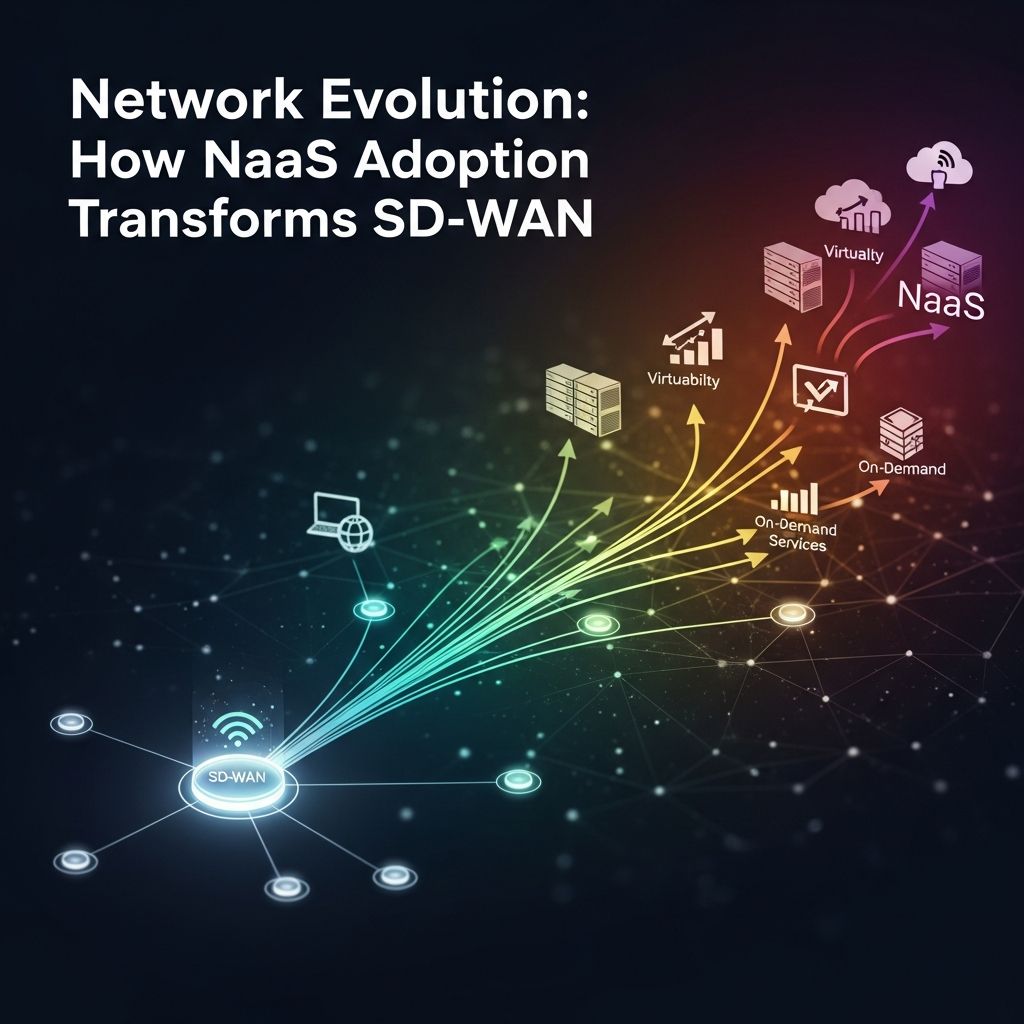
The enterprise networking landscape is undergoing a fundamental transformation. For over a decade, Software-Defined Wide Area Networks (SD-WAN) have served as a cornerstone technology for organizations seeking to optimize connectivity, reduce costs, and improve application performance. However, as business requirements evolve and cloud adoption accelerates, a new consumption model is emerging that promises to reshape how organizations think about network infrastructure entirely. Network-as-a-Service (NaaS) represents a paradigm shift in networking delivery, moving enterprises away from managing individual point solutions toward comprehensive, subscription-based platform models.
Understanding the Network Service Evolution
The journey of modern enterprise networking reflects broader trends in IT infrastructure consumption. When SD-WAN first emerged during the early 2010s, it introduced a revolutionary approach to Wide Area Network management. By replacing expensive, rigid Multiprotocol Label Switching (MPLS) connections with software-controlled routing logic, SD-WAN delivered significant cost savings while providing superior application performance visibility and control. Organizations could finally manage their network infrastructure through intelligent software rather than being locked into expensive carrier-provisioned circuits.
The COVID-19 pandemic accelerated SD-WAN adoption even further. As enterprises grappled with the sudden need to support distributed workforces spanning home offices, branch locations, and corporate facilities, SD-WAN’s flexibility became indispensable. The technology enabled organizations to rapidly scale connectivity without the traditional constraints of physical infrastructure provisioning.
Yet as business environments continue to change, organizations increasingly recognize that point solutions like standalone SD-WAN cannot fully address the complexity of modern network requirements. The shift represents not an abandonment of SD-WAN technology, but rather its integration into a more holistic consumption model.
Defining Network-as-a-Service and Its Core Promise
Network-as-a-Service extends beyond traditional software-defined networking concepts by offering a comprehensive subscription-based cloud delivery model. Under the NaaS paradigm, enterprises essentially lease their complete network infrastructure ecosystem from specialized providers rather than purchasing and managing individual components themselves. This encompasses hardware resources, software platforms, management tools, security services, and professional support—all bundled into a single consumption agreement.
The fundamental appeal of NaaS lies in its ability to address multiple enterprise pain points simultaneously:
- Operational Simplification: Organizations eliminate the burden of managing complex network infrastructure deployments across geographically dispersed locations
- Cost Predictability: Subscription-based pricing models replace unpredictable capital expenditures with transparent operational expenses
- Scalability Without Friction: Adding new locations, users, or services becomes a matter of adjusting subscription parameters rather than implementing complex infrastructure changes
- Security Integration: Network security services become embedded within the platform rather than bolted on as separate systems
- Professional Management: Specialized provider expertise handles configuration, optimization, and ongoing support
Market Signals and Enterprise Readiness Assessment
Recent industry research provides compelling evidence of market momentum behind NaaS adoption. Extensive surveys of network administrators and architects reveal that nearly 90 percent express active interest in implementing NaaS solutions. This level of interest reflects broad recognition within the enterprise technology community that traditional networking models are reaching their operational limits.
However, survey data also reveals important nuances about the path forward. While interest remains high, actual adoption proceeds more cautiously than some enthusiasts anticipated. Organizations express legitimate concerns about the cost implications of transitioning to managed service models, along with apprehension about losing direct control over critical infrastructure. Smaller and mid-sized enterprises (SMEs) particularly hesitate, worrying about vendor lock-in and the complexity of migrating existing network investments to new platforms.
Industry analysts project that despite current hesitation, the market dynamics will shift dramatically over the coming years. Forecasts suggest that by 2030, more than 90 percent of enterprises will consume at least one-quarter of their network services through NaaS delivery models. This projection doesn’t imply sudden wholesale migration but rather a gradual transition as NaaS vendors mature their offerings, pricing becomes more competitive, and organizational confidence grows.
The Coexistence and Integration of SD-WAN Within NaaS
A critical misconception holds that NaaS represents a replacement technology that will render SD-WAN obsolete. In reality, the relationship proves far more complementary. Most comprehensive NaaS platforms explicitly incorporate managed SD-WAN services as core components. Organizations adopting NaaS don’t abandon SD-WAN capabilities—they consume those capabilities through a different service delivery mechanism.
This distinction matters significantly for enterprise planning. Rather than facing an either-or decision between SD-WAN and NaaS, organizations typically face a choice about how they prefer to consume SD-WAN functionality. The traditional approach involves deploying and managing SD-WAN infrastructure directly—handling software installations, appliance management, security updates, and day-to-day operations internally. Alternatively, organizations can leverage SD-WAN through a NaaS provider’s managed platform, surrendering day-to-day management responsibilities in exchange for professional oversight and integrated services.
The primary difference lies in consumption model rather than underlying technology. Organizations implementing NaaS typically gain several advantages over DIY SD-WAN approaches:
- Elimination of in-house management complexity and expertise requirements
- Access to broader networking services integrated within a unified platform
- Professional vendor support and optimization services
- Simplified scalability as business needs evolve
- Reduced need for specialized network engineering staff
Security Framework Convergence and SASE Adoption
The evolution toward NaaS consumption coincides with broader recognition that network connectivity and security represent inseparable requirements rather than independent concerns. Secure Access Service Edge (SASE) frameworks have gained significant momentum as organizations recognize that security policies must be enforced at the network edge rather than at centralized data centers.
SASE architectures converge SD-WAN technology with security services including zero-trust network access, cloud-based firewalling, and threat prevention. Within the NaaS context, SASE represents a natural integration point—providers bundle network connectivity, security services, and management tools into comprehensive platforms that address both network and security requirements simultaneously.
Industry analysis has recognized SASE as a dominant trend affecting infrastructure and operations strategies. As organizations recognize the limitations of bolting security onto network infrastructure as an afterthought, SASE-based NaaS offerings increasingly appeal to enterprises seeking coordinated network and security solutions.
Market Expansion and Segment-Specific Growth Patterns
The SD-WAN and NaaS market landscape demonstrates distinct growth trajectories across different enterprise segments. Small and medium-sized businesses represent particularly dynamic growth areas, as these organizations frequently lack dedicated network engineering teams and struggle with the complexity of managing sophisticated network infrastructure independently.
For SMEs, NaaS offerings address multiple challenges simultaneously. Subscription-based pricing eliminates large capital expenditure requirements. Managed services eliminate the need to maintain specialized network expertise in-house. Simplified interfaces and cloud-based management reduce operational complexity. These advantages combine to make NaaS increasingly attractive to smaller organizations that previously faced network infrastructure limitations due to budgetary and staffing constraints.
Larger enterprises follow somewhat different adoption patterns. While these organizations often have robust network engineering capabilities, they increasingly recognize that managing multiple independent point solutions creates operational friction and security vulnerabilities. For larger enterprises, NaaS appeal often lies in consolidating fragmented networking infrastructure into unified platforms that reduce overall management overhead.
Deployment Architecture Considerations
As organizations evaluate NaaS options, deployment architecture decisions significantly impact implementation success. Cloud-based deployment models have emerged as increasingly dominant, representing the primary preference for new network infrastructure investments. Cloud-managed SD-WAN platforms offer inherent advantages including simplified configuration across distributed locations, faster software updates, and improved integration with public cloud providers including Amazon Web Services, Microsoft Azure, and Google Cloud.
However, certain enterprise requirements still favor on-premises deployment approaches. Organizations operating in highly regulated industries, those managing latency-sensitive applications, or those with specific data residency requirements may continue deploying network infrastructure within their direct control. Hybrid approaches that combine cloud-managed platforms with on-premises components represent an increasingly common middle ground, allowing organizations to maintain direct control over critical systems while leveraging cloud benefits for other applications.
The market reflects these varied requirements, with organizations maintaining diverse deployment preferences rather than converging on a single model. This diversity suggests that NaaS providers must offer flexibility across multiple deployment options to address the full spectrum of enterprise requirements.
Forward-Looking Implications for Enterprise Strategy
The transition toward NaaS consumption models carries profound implications for how enterprises approach network infrastructure planning. Organizations must reconsider traditional assumptions about capital expenditure requirements, internal staffing models, and the appropriate locus of network management responsibility.
For many organizations, the transition will occur gradually rather than through wholesale migrations. Existing SD-WAN investments will continue operating while new requirements increasingly point toward NaaS solutions. This creates transitional periods where hybrid approaches coexist, requiring organizations to manage multiple networking paradigms simultaneously.
Success in this environment requires that network leaders develop new procurement frameworks, vendor management approaches, and governance models suited to subscription-based services. Organizations accustomed to treating network infrastructure as capital assets must adapt to operational expense models. IT teams focused on managing appliances and configurations must evolve toward evaluating services and managing vendor relationships.
Frequently Asked Questions
Will SD-WAN disappear as NaaS adoption increases?
No. SD-WAN technology remains fundamental to most NaaS offerings. Rather than replacing SD-WAN, NaaS changes the consumption model—organizations will access SD-WAN capabilities through managed service platforms rather than managing infrastructure independently.
What distinguishes NaaS from traditional managed network services?
NaaS provides comprehensive, integrated platforms combining connectivity, security, and management services. Traditional managed services often focused on specific components. NaaS embraces a holistic, subscription-based approach across all network functions.
How quickly should organizations transition to NaaS?
Adoption timelines vary based on organizational complexity, existing investments, and strategic priorities. Gradual transitions allowing coexistence of existing and new systems often prove more manageable than attempting wholesale migrations.
What factors should drive NaaS vendor selection?
Key evaluation criteria include platform maturity, integration capabilities with existing systems, pricing transparency, service level agreements, security certifications, and vendor support quality.
Do all organizations benefit equally from NaaS adoption?
NaaS proves particularly beneficial for organizations lacking specialized network expertise, those managing geographically distributed operations, and those seeking to reduce infrastructure management complexity. Organizations with unique requirements may find NaaS less suitable without customization.
Summary and Strategic Outlook
The networking industry stands at an inflection point where established technologies like SD-WAN integrate into broader, more comprehensive consumption models. NaaS represents not a disruptive replacement but rather an evolutionary step that builds upon SD-WAN foundations while addressing the operational limitations of point solution approaches.
Organizations evaluating their networking strategies should recognize that SD-WAN and NaaS exist on a continuum rather than representing binary choices. The question for most enterprises is not whether to adopt NaaS, but rather when and how to incorporate managed network services into their infrastructure strategy.
As NaaS markets mature and vendor offerings become increasingly sophisticated, adoption will accelerate beyond current levels. Organizations that begin evaluating NaaS options now, experimenting with pilot implementations, and developing vendor relationships will be best positioned to smoothly transition toward these consumption models when business requirements demand it. The networking landscape will likely feature both SD-WAN and NaaS coexisting for the foreseeable future, with the balance gradually shifting toward managed service consumption as market maturity increases and organizational confidence grows.
References
- 2023 State of Network Edge Survey — Graphiant and Eleven Research. 2023. https://www.graphiant.com/resources/reports/state-of-network-edge-survey
- SD-WAN Market Forecast and Analysis — Gartner Magic Quadrant for SD-WAN. 2023. https://www.gartner.com/doc/reprints
- SD-WAN Market Size, Growth, and Trends 2026-2033 — Persistence Market Research. 2024. https://www.persistencemarketresearch.com/market-research/sd-wan-market.asp
- Software-Defined Wide Area Network Market Report — Future Market Insights. 2024. https://www.futuremarketinsights.com/reports/software-defined-wide-area-network-sd-wan-market
- SD-WAN vs. NaaS: Differences and Integration — Palo Alto Networks Cyberpedia. 2024. https://www.paloaltonetworks.com/cyberpedia/sdwan-vs-naas
- Top SD-WAN Trends and Advancements for 2025 — IPC Technologies. 2025. https://www.ipctech.com/sd-wan-trends-for-2025/
- Enterprise Network Infrastructure Trends Report — ABI Research. 2023. https://www.abiresearch.com
Similar Articles








Read full bio of Sneha Tete