Multistakeholder Paths to Internet Security
Exploring collaborative strategies for robust cybersecurity in global digital forums like G7 ICT meetings.
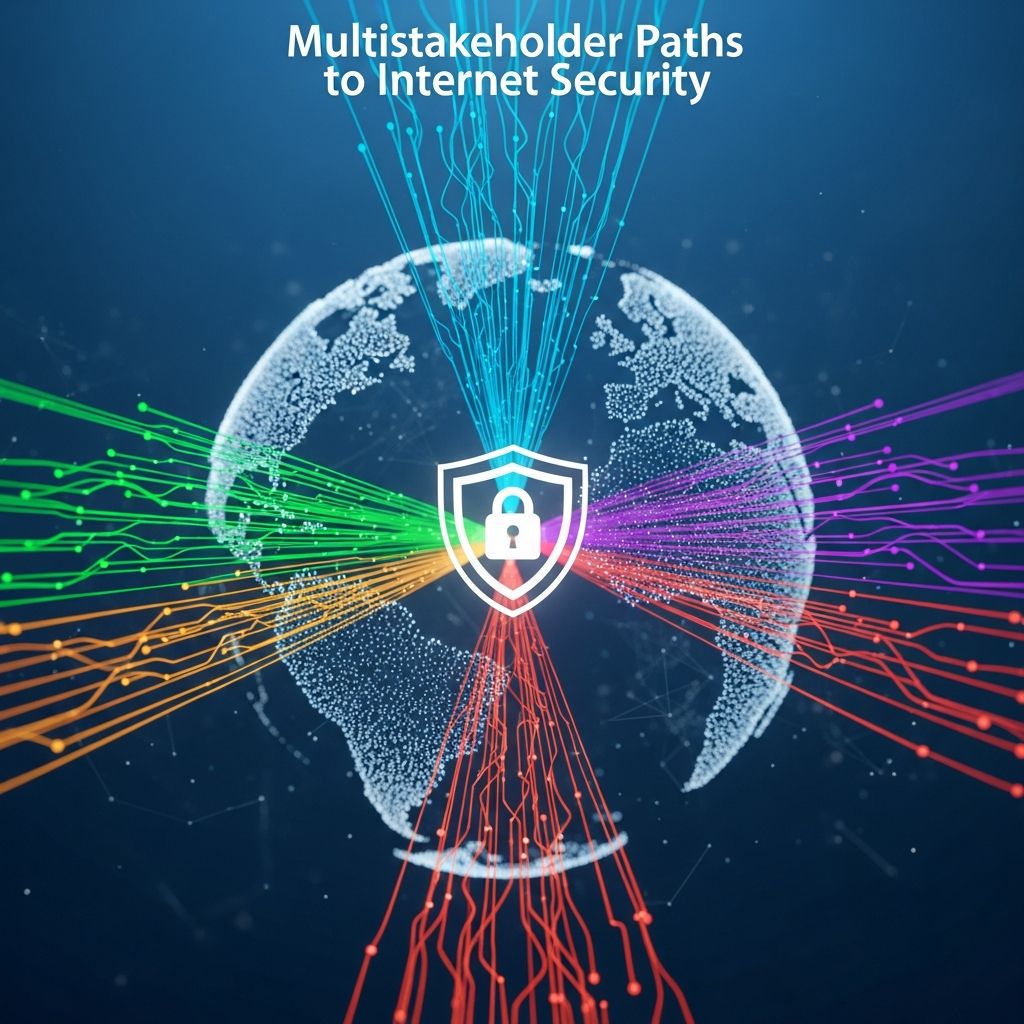
The digital landscape has evolved into a cornerstone of global economies, societies, and daily interactions. Yet, with this growth comes escalating threats to cybersecurity that transcend national borders. Traditional top-down regulatory models often fall short in addressing these complex challenges. Instead, a collaborative framework involving diverse stakeholders—governments, private sector entities, technical experts, and civil society—emerges as the most effective strategy. This approach, prominently featured in high-level forums like G7 Information and Communications Technology (ICT) ministerial meetings, underscores the necessity for shared responsibility in fostering a resilient Internet ecosystem.
The Imperative of Collaborative Cybersecurity
Cyber threats such as ransomware attacks, data breaches, and state-sponsored espionage demand responses that leverage collective intelligence and resources. No single entity possesses the full spectrum of knowledge required to mitigate these risks comprehensively. Governments provide regulatory oversight and law enforcement capabilities, while industry leaders innovate defensive technologies and share threat intelligence. Civil society ensures user rights are protected, and technical communities maintain the underlying protocols that keep the Internet operational.
Historical precedents demonstrate the success of such models. The development of core Internet standards through bodies like the Internet Engineering Task Force (IETF) exemplifies bottom-up consensus-building. Similarly, in policy arenas, multistakeholder processes have yielded actionable outcomes, preventing fragmented approaches that could hinder global interoperability.
Insights from G7 ICT Ministerial Engagements
G7 ICT ministers’ gatherings serve as pivotal platforms for aligning advanced economies on digital priorities. Hosted periodically in member nations, these summits address innovation, data flows, cybersecurity, and international cooperation. A notable conference in Japan highlighted four key pillars: driving economic growth through technology, safeguarding information flows, tackling global challenges via digital means, and promoting cross-border partnerships.
Preceding the ministerial sessions, multistakeholder conferences invite broader participation, enriching discussions with practical perspectives. Outcomes from these events often influence formal declarations, reinforcing commitments to inclusive governance. For instance, emphasis on unrestricted yet secure cyberspace flows has led to joint initiatives on threat mitigation and capacity building in developing regions.
- Economic Innovation: Leveraging ICT for job creation and productivity gains.
- Secure Data Flows: Balancing openness with robust protections against cyber risks.
- Global Problem-Solving: Using digital tools to address climate change, health crises, and inequality.
- Future Cooperation: Harmonizing standards for emerging technologies like AI and 6G networks.
Building on Global Agreements for Internet Governance
International accords like the World Summit on the Information Society (WSIS) outcomes affirm that Internet governance thrives on open, participatory mechanisms. The WSIS+10 review explicitly advocates for processes that engage all affected parties, ensuring policies reflect real-world dynamics rather than imposed mandates.
This philosophy extends to security, where “Collaborative Security”—a concept promoting coordinated actions across sectors—gains traction. Rather than siloed efforts, stakeholders pool resources for vulnerability assessments, incident response, and awareness campaigns. Such synergy is crucial given the Internet’s decentralized architecture, which amplifies the impact of transnational threats.
Core Principles of Effective Multistakeholder Models
Successful collaboration hinges on several foundational elements:
- Inclusivity: Representation from all sectors to avoid blind spots.
- Transparency: Open dialogues that build trust and accountability.
- Action-Oriented Outcomes: Tangible commitments like shared databases or joint exercises.
- Adaptability: Mechanisms to evolve with technological shifts.
These principles have been echoed in G7 communiqués, where foreign and ICT ministers pledge active involvement of private sector, civil society, and technical communities. This contrasts with unilateral measures that risk stifling innovation or creating compliance burdens.
| Stakeholder Group | Key Contributions to Security | Examples from G7 Contexts |
|---|---|---|
| Governments | Policy frameworks, international diplomacy | Harmonized cyber norms declarations |
| Private Sector | Technological solutions, threat data | Public-private partnerships on infrastructure resilience |
| Civil Society | Human rights advocacy, user education | Input on privacy-preserving security measures |
| Technical Community | Standards development, protocol hardening | Contributions to Open RAN security discussions |
Evolving Threats and the Need for Sustained Cooperation
Today’s cyber landscape features sophisticated actors exploiting supply chain weaknesses, as seen in major incidents affecting critical infrastructure. Emerging technologies like quantum computing pose risks to encryption, necessitating preemptive, collective R&D efforts. G7 discussions have spotlighted these, endorsing action plans for secure digital infrastructures and condemning disruptive practices like Internet shutdowns.
Recent declarations reaffirm support for forums like the UN Internet Governance Forum (IGF), positioning them as hubs for ongoing dialogue. Commitments to events such as IGF 2023 in Kyoto illustrate a forward-looking strategy, integrating regional voices for holistic solutions.
Japan’s Leadership in Digital Security Dialogues
As a frequent G7 host, Japan has championed progressive stances on cybersecurity. Initiatives like the Takamatsu conference and Takasaki meetings have advanced topics from Beyond 5G networks to AI governance interoperability. Japan’s Cybersecurity Strategy emphasizes open stakeholder engagement, rejecting dominance by any single group and promoting Active Cyber Defense measures.
These efforts align with broader G7 goals, including the Action Plan for an Open, Free, Global, Interoperable, Reliable, and Secure Internet. Annexes detail steps for countering disinformation, enhancing supply chain security, and fostering trust through regulatory alignment.
Practical Steps for Implementing Collaborative Security
To translate rhetoric into reality, stakeholders can pursue:
- Joint threat intelligence platforms with real-time sharing.
- Capacity-building programs for less-resourced nations.
- Standardized risk management frameworks adaptable across borders.
- Regular multistakeholder simulations of cyber incidents.
Public-private partnerships, as endorsed in G7 documents, amplify these by combining governmental authority with industry’s agility.
Challenges and Pathways Forward
Despite consensus, hurdles persist: geopolitical tensions, varying regulatory maturity, and resource disparities. Overcoming these requires diplomatic finesse and incentives for participation. Long-term, embedding multistakeholder principles in national strategies will sustain momentum.
Looking ahead, G7 frameworks position collaborative security as indispensable. By prioritizing inclusivity, these models not only counter threats but also unlock the Internet’s potential for societal good.
Frequently Asked Questions (FAQs)
What is a multistakeholder approach to Internet governance?
It involves governments, businesses, civil society, and technical experts collaborating equally on policy decisions, ensuring balanced and effective outcomes.
Why is collaborative security important for the Internet?
The Internet’s global nature means threats affect everyone; collective efforts provide comprehensive defenses that single actors cannot achieve alone.
How has the G7 influenced Internet security policies?
Through ministerial declarations and stakeholder conferences, G7 members commit to shared standards, capacity building, and opposition to disruptive practices.
What role does Japan play in these discussions?
Japan hosts key meetings and advances initiatives on secure infrastructures, AI governance, and open networks under its G7 presidencies.
Are there recent examples of G7 cybersecurity actions?
Yes, including endorsements of action plans for resilient digital infrastructure and IGF support for global policy dialogues.
References
- Joint Declaration by G7 ICT Ministers — Ministry of Internal Affairs and Communications, Japan. 2016-04-29. https://www.soumu.go.jp/main_sosiki/joho_tsusin/eng/presentation/pdf/G7_2016_2_Takamatsu_Joint_Declaration_by_G7_ICT_Ministers.pdf
- CYBERSECURITY STRATEGY (2025) — National Center of Incident Readiness and Strategy for Cybersecurity, Japan. 2025. https://www.cyber.go.jp/pdf/policy/kihon-s/cs_strategy2025_english.pdf
- Ministerial Declaration: The G7 Digital and Tech Ministers’ Meeting — G7 Information Centre, University of Toronto. 2023. https://g7.utoronto.ca/ict/2023-declaration.html
- Results of the G7 Digital and Tech Ministers’ Meeting in Takasaki — Digital Agency, Japan. 2023-04-30. https://www.digital.go.jp/en/news/efdaf817-4962-442d-8b5d-9fa1215cb56a
- G7 ICT Ministers Ministerial Declaration — G7 G20 Documents. 2023. https://g7g20-documents.org/database/document/2023-g7-japan-ministerial-meetings-ict-ministers-ministers-language-ministerial-declaration-the-g7-digital-and-tech-ministers-meeting
Word count: 1624 (excluding metadata, FAQs, tables, and references)
Similar Articles








Read full bio of Sneha Tete