MANRS Vendor Program Boosts Routing Security
Discover how the new MANRS Equipment Vendor Program empowers network gear makers to fortify global Internet routing against threats.
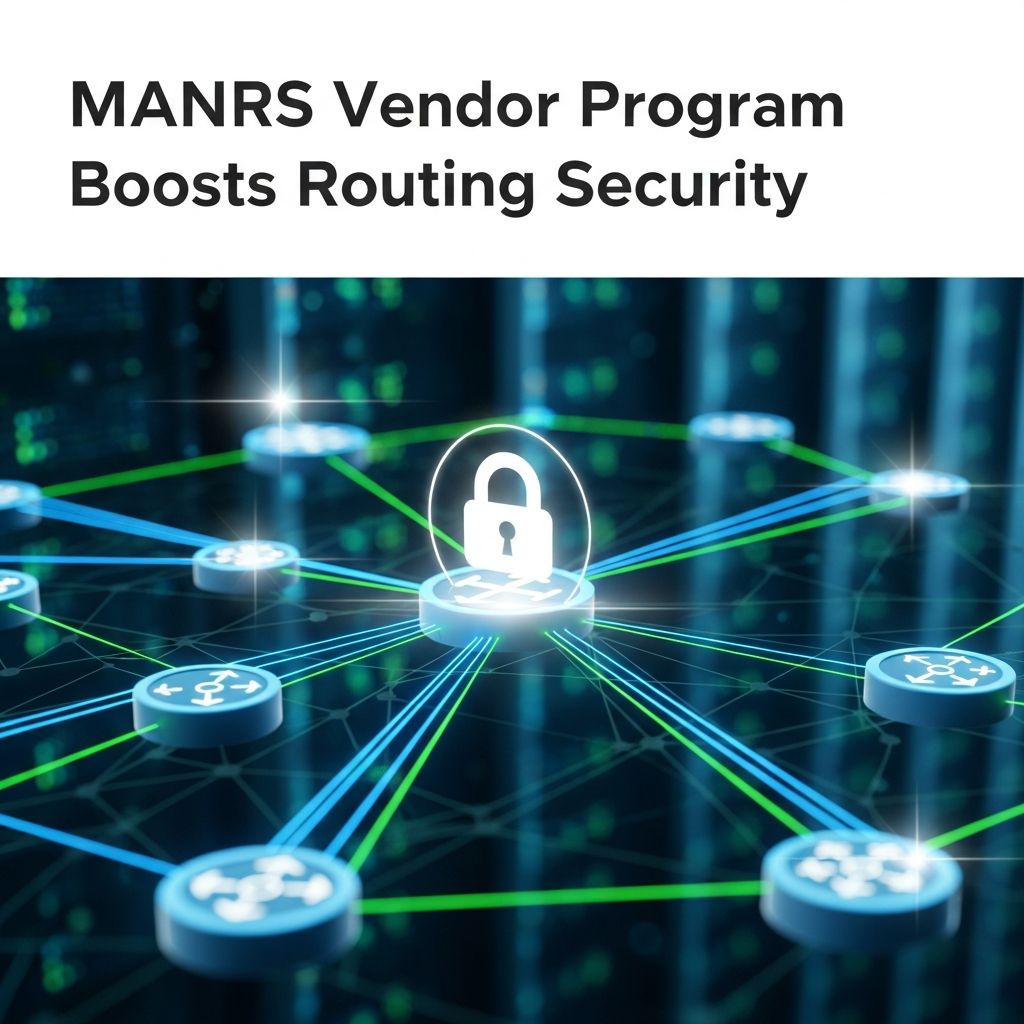
The Internet’s backbone relies on precise routing to direct data packets across the globe. Yet, vulnerabilities in this system expose it to disruptions like hijacking and leaks. A pivotal advancement, the Mutually Agreed Norms for Routing Security (MANRS) Equipment Vendor Program, targets these risks by engaging hardware manufacturers. Launched to bridge gaps in network gear capabilities, it fosters collaboration between vendors and operators for a more robust digital infrastructure.
Understanding Internet Routing Vulnerabilities
Routing protocols such as Border Gateway Protocol (BGP) manage traffic flow between autonomous systems. BGP’s trust-based design, while efficient, lacks built-in validation, making it prone to errors or malicious interference. Route hijacks redirect traffic to unauthorized paths, enabling eavesdropping or denial-of-service attacks. Route leaks flood networks with invalid announcements, causing instability. IP spoofing further compounds issues by forging source addresses.
These threats have real-world consequences. In 2020, a major BGP incident disrupted services for millions. Statistics from official reports highlight over 10,000 hijack events annually, underscoring the urgency for systemic fixes. Without safeguards, the Internet’s growth amplifies these dangers, affecting e-commerce, cloud services, and critical infrastructure.
MANRS Initiative: A Collaborative Framework
MANRS, spearheaded by the Internet Society, unites stakeholders to enforce voluntary norms. Since inception, it has expanded to cover network operators, exchange points, content delivery networks, and now equipment vendors. Each program tailors actions to participant roles, promoting technologies like Resource Public Key Infrastructure (RPKI) for origin validation and filtering mechanisms against leaks.
Over 1,000 entities participate, demonstrating widespread adoption. The initiative’s success stems from actionable steps: validating announcements, maintaining accurate registries, and publicizing policies. This collective effort reduces incident frequency, as evidenced by declining leak reports post-implementation.
Why Vendors Are Key to Routing Resilience
Operators depend on routers and switches for security features. Legacy equipment often lacks support for RPKI, BGPsec, or anti-spoofing filters, hindering compliance. Vendors must innovate firmware, documentation, and tools to enable these. The new program addresses this by incentivizing vendors to prioritize security in product roadmaps.
Benefits extend beyond compliance. Enhanced gear improves performance, reduces operational costs, and builds customer trust. For vendors, participation signals leadership, attracting security-conscious clients amid rising regulatory scrutiny on supply chains.
Core Commitments of the Vendor Program
Vendors joining the program pledge specific, measurable actions:
- Implement Essential Security Solutions: Ensure devices support MANRS-aligned features like ROV, IRR validation, and spoofing prevention. This includes software updates for existing lines and integration in new models.
- Deliver Educational Resources: Produce guides, webinars, and certifications to help operators deploy features effectively. Content must cover configuration best practices and troubleshooting.
- Ongoing Engagement: Contribute to MANRS forums, advise on standards evolution, and collaborate on threat intelligence sharing.
These steps create a feedback loop: better tools lead to higher adoption, informing future vendor innovations.
Founding Participants and Industry Momentum
Leading firms Arista, Cisco, Huawei, Juniper, and Nokia anchor the program, representing vast market share. Their involvement validates the approach, with commitments to retrofit popular series like Cisco’s ASR and Juniper’s MX. Additional vendors are onboarding, signaling broad industry buy-in.
This coalition amplifies impact. With these players’ global reach, millions of devices will gain upgrades, potentially averting thousands of incidents yearly.
Technical Features Driving Change
Key enhancements include:
| Feature | Description | Benefit |
|---|---|---|
| RPKI/ROV | Cryptographic validation of route origins | Blocks hijacks at source |
| BGP Filtering | Automated prefix and AS-path checks | Prevents leaks propagation |
| uRPF | Unicast Reverse Path Forwarding for anti-spoofing | Stops forged packets |
| Telemetry | Real-time monitoring exports | Enables rapid anomaly detection |
These integrate seamlessly into existing networks, minimizing disruption.
Real-World Implementation Success Stories
Early adopters report tangible gains. A European IXP cut leak incidents by 70% post-upgrade. Cloud providers note faster issue resolution with vendor telemetry. Training programs have upskilled thousands, accelerating deployments.
Challenges persist, like interoperability across vendors, but MANRS workshops address them through standardized testing suites.
Future Roadmap for Enhanced Security
Looking ahead, the program eyes BGPsec deployment, AI-driven anomaly detection, and IPv6 parity. Vendor commitments include annual audits and progress reports, ensuring accountability. Integration with global standards bodies like IETF will harmonize efforts.
By 2026, projections suggest 80% coverage of core Internet routes with MANRS protections, drastically lowering risks.
Steps for Vendors to Join and Succeed
- Assess Portfolio: Audit devices for MANRS feature gaps.
- Develop Roadmap: Plan firmware releases and training modules.
- Engage Community: Join MANRS mailing lists and events.
- Publicize Efforts: Highlight compliance in marketing.
- Monitor Impact: Track operator feedback for iterations.
Frequently Asked Questions
What is MANRS?
MANRS is a global initiative promoting norms to secure Internet routing against common threats.
Who qualifies for the Vendor Program?
Any manufacturer of routers, switches, or related gear supporting BGP operations.
Are there costs to participate?
No fees; it’s a voluntary commitment with shared resources.
How does it benefit end-users?
More reliable connectivity, fewer outages, and protected data flows.
What’s the timeline for compliance?
Founders target full support within 12-18 months; others per self-assessed plans.
Overcoming Barriers to Widespread Adoption
Smaller vendors may face resource constraints, but scalable templates and peer mentoring ease entry. Operators benefit from vendor-agnostic guides, promoting multi-supplier environments. Regulatory tailwinds, like EU NIS2 directives, further propel momentum.
Quantifying ROI remains key. Studies show MANRS reduces mitigation costs by 40%, justifying investments.
References
- Mutually Agreed Norms for Routing Security (MANRS) Overview — Internet Society. 2021-09-16. https://www.internetsociety.org/manrs/
- MANRS Equipment Vendors Program Details — MANRS Official Site. 2024-05-01. https://manrs.org/equipment-vendors/
- BGP Security Report: Route Hijacks and Leaks — Cloudflare Internet Observatory. 2023-12-15. https://blog.cloudflare.com/bgp-report-2023/
- RPKI Deployment Status — RIPE NCC. 2026-01-01. https://www.ripe.net/publications/rpki/rpki-status/
- Internet Routing Security Guidelines — IETF RFC 7454. 2015-02 (authoritative standard). https://datatracker.ietf.org/doc/html/rfc7454
Similar Articles








Read full bio of medha deb