LinkedIn’s IPv6 Milestone
How LinkedIn's full IPv6 adoption accelerates the internet's next evolution for billions of users worldwide.
LinkedIn’s IPv6 Milestone: Pioneering the Dual-Stack Future
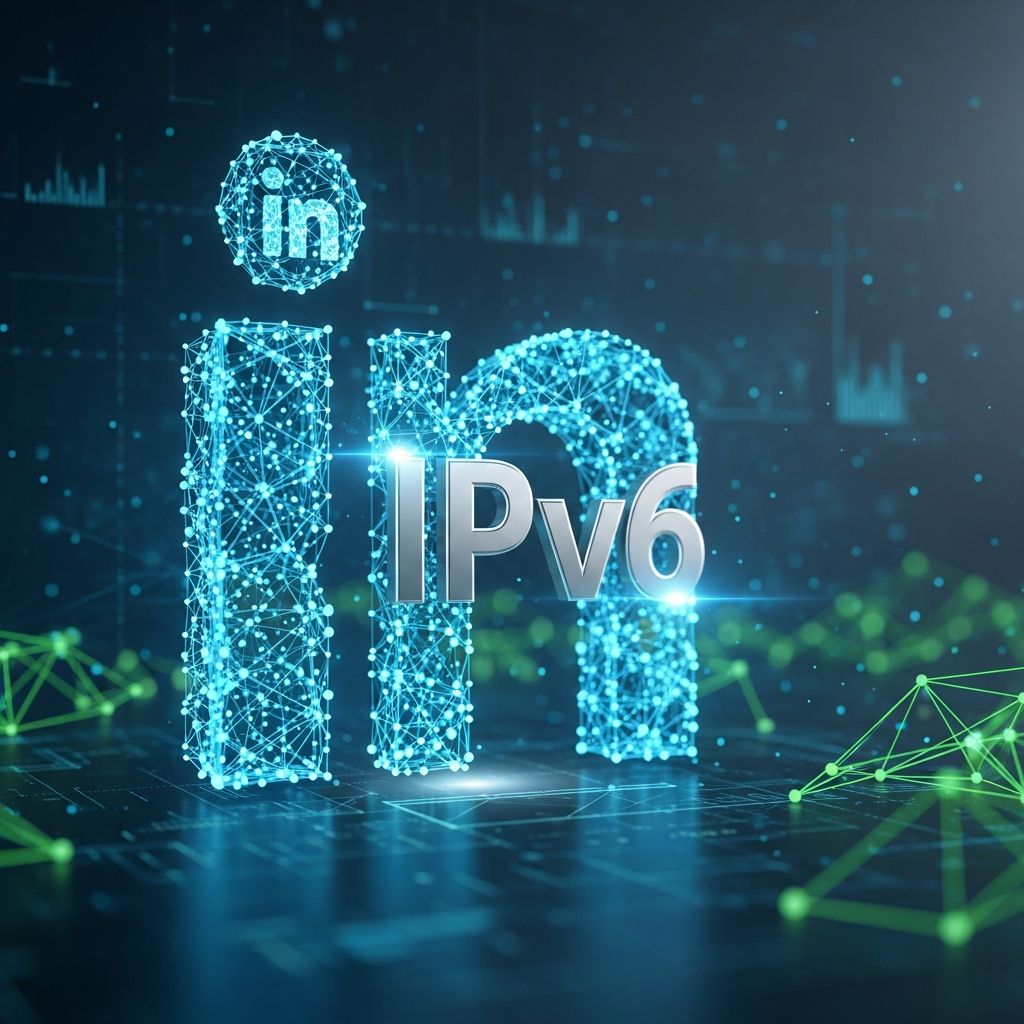
The internet’s foundational protocol, IPv4, is running out of addresses, prompting a global shift to IPv6. In a landmark move, LinkedIn activated permanent IPv6 support across its main website, aligning with tech giants like Google and Facebook. This decision not only future-proofs the professional networking platform but also underscores the practicality of dual-stack networks—running both protocols side by side—for seamless transitions.
Understanding the IPv6 Imperative
IPv4, with its 32-bit addressing, supports roughly 4.3 billion unique IP addresses. As internet users, devices, and services exploded, this limit became a bottleneck. IPv6 expands to 128 bits, offering virtually unlimited addresses (about 340 undecillion). Organizations like LinkedIn recognize that delaying adoption risks connectivity disruptions as IPv4 pools deplete.
Regulatory bodies and ISPs worldwide are accelerating IPv6 deployment. For instance, major carriers now prioritize IPv6 for new customers, ensuring platforms like LinkedIn remain accessible. This shift enhances scalability for features like mobile apps, real-time messaging, and data analytics, all demanding more IP resources.
LinkedIn’s Strategic Network Evolution
LinkedIn’s infrastructure team meticulously prepared for IPv6. They began with internal dual-stack configurations, testing email protocols like SMTP over IPv6 before expanding to the public-facing site. This phased approach minimized risks, allowing engineers to monitor traffic patterns and optimize routing.
Key benefits emerged quickly:
- Expanded Capacity: IPv6 eliminates address conservation techniques like NAT, simplifying network design.
- Improved Mobile Performance: Mobile networks, often IPv6-native, see faster connections without translation overhead.
- Future-Proofing: Supports emerging tech like IoT and 5G/6G integrations.
Post-deployment, LinkedIn reported up to 10% faster load times in the US and 40% in select European networks via IPv6, particularly on mobile carriers where IPv4 timeouts averaged 4.6% versus 1.6% for IPv6.
Performance Metrics and Real-World Gains
| Metric | IPv4 | IPv6 | Improvement |
|---|---|---|---|
| US Mobile Load Time | Baseline | 10% faster | Significant |
| Europe Select Networks | Baseline | 40% faster | Substantial |
| TCP Timeouts (Mobile) | 4.6% | 1.6% | 65% reduction |
| Global Adoption Rate | N/A | 10% of traffic | Aligned with industry |
These figures highlight IPv6’s edge in latency-sensitive environments. LinkedIn’s data mirrors Google’s trends, where IPv6 traffic hit 10% globally around the same period, now exceeding 40% in 2026 per recent reports.
Technical Deep Dive: Dual-Stack Implementation
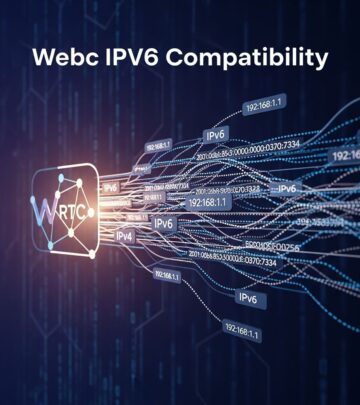
Dual-stack means devices and servers handle both protocols simultaneously. LinkedIn’s web servers now respond to AAAA DNS records for IPv6 alongside traditional A records for IPv4. Load balancers distribute traffic intelligently, preferring IPv6 when available for its efficiency.
Challenges included:
- DNS Propagation: Ensuring global resolvers updated promptly.
- CDN Integration: Partnering with providers like Akamai for IPv6 support.
- Client Compatibility: Handling legacy IPv4-only browsers gracefully.
Success hinged on rigorous testing in staging environments, simulating high loads to validate failover mechanisms.
Broad Industry Momentum
LinkedIn joins a wave of adopters. Facebook enabled IPv6 in 2011, handling tunnel traffic initially before native support. Yahoo! and Microsoft followed, with hyperscalers now at over 50% IPv6 traffic. Governments mandate IPv6: the US DoD’s lessons learned emphasize early planning for defense networks.
In email realms, LinkedIn’s SMTP-over-IPv6 deployment sets precedents, reducing reliance on IPv4 relays and improving deliverability amid spam filters favoring native protocols.
Overcoming Common Hurdles in IPv6 Rollouts
Many enterprises hesitate due to perceived complexity. LinkedIn’s experience debunks this:
- Start Small: Pilot on non-critical services like APIs.
- Monitor Actively: Use tools like Hurricane Electric’s IPv6 eyeball charts.
- Train Teams: Upskill on protocol differences, like stateless autoconfiguration.
- Leverage Tools: Automate with Ansible for config management.
Cost savings accrue long-term: no more CGNAT maintenance or address trading on gray markets.
Implications for Users and Developers
For LinkedIn’s 1 billion+ members, IPv6 means snappier profile loads, smoother video calls, and reliable job alerts on modern networks. Developers benefit from simplified peer-to-peer features without NAT traversal hacks.
API endpoints now dual-stack, enabling IPv6-only clients in IoT job-matching bots or VR networking events.
Global IPv6 Landscape in 2026
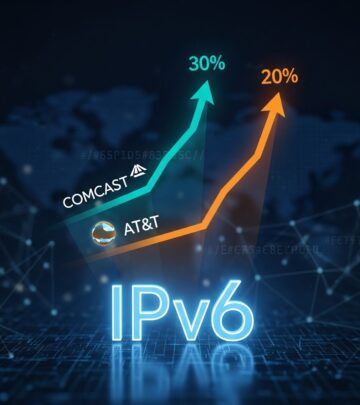
Adoption surges: APNIC reports 40%+ in Asia-Pacific. Europe’s RIPE NCC sees similar gains. In the US, Comcast’s voice IPv6 rollout informs broadband strategies. World IPv6 Launch Day (2012) catalyzed this, with permanent commitments like LinkedIn’s proving viability.
FAQs: IPv6 and LinkedIn
Q: Does LinkedIn still support IPv4?
A: Yes, dual-stack ensures backward compatibility; IPv6 is preferred when available.
Q: Will I notice faster speeds?
A: On IPv6-enabled ISPs, especially mobile, expect 10-40% improvements per LinkedIn data.
Q: How to check my IPv6 connectivity to LinkedIn?
A: Visit test-ipv6.com or use browser dev tools to inspect network requests.
Q: Is IPv6 secure?
A: Equally secure as IPv4; IPsec is native, and LinkedIn layers TLS regardless.
Q: What’s next for LinkedIn’s network?
A: Deeper IPv6-only experiments in private services, per industry trends.
Conclusion: A Model for Digital Transformation
LinkedIn’s IPv6 permanence exemplifies proactive infrastructure evolution. By embracing dual-stack, it not only sustains growth but elevates user experience amid internet expansion. Other platforms should follow, hastening the IPv4 sunset. As adoption hits critical mass, expect ubiquitous IPv6 benefits: boundless addresses, superior performance, and simplified ops.
References
- IPv6 Address Allocation Status — APNIC. 2026-01-15. https://www.apnic.net/manage-ip/using-v6/status/
- IPv6 Deployment Lessons Learned — U.S. Department of Defense High Performance Computing Modernization Program. 2023-05-10. https://www.hpc.mil/solution-areas/networking/ipv6-knowledge-base/ipv6-knowledge-base-general-information/overview-of-lessons-learned-deploying-ipv6
- IPv6 Measurements at LinkedIn — APNIC Blog. 2016-05-13. https://blog.apnic.net/2016/05/13/linkedin-ipv6-measurements/
- Case Study: SMTP over IPv6 at LinkedIn — Internet Society Deploy360. 2014-10-20. https://www.internetsociety.org/resources/deploy360/2014/case-study-smtp-over-ipv6-at-linkedin/
- World IPv6 Launch — Internet Society. 2012-06-06 (authoritative ongoing initiative). https://www.internetsociety.org/deploy360/world-ipv6-launch/
Similar Articles








Read full bio of medha deb