LinkedIn Hits 50% IPv6 Milestone
LinkedIn achieves historic 50% IPv6 traffic on US mobile, signaling rapid global adoption and future-proofing the web.

LinkedIn Hits 50% IPv6 Milestone: A Turning Point for Internet Connectivity
In a landmark achievement for modern networking, LinkedIn announced that more than half of its mobile page views in the United States were delivered over IPv6 for the first time. This milestone, reached on July 8, 2017, underscores the accelerating transition from the aging IPv4 protocol to its successor, IPv6. As one of the world’s largest professional networks, LinkedIn’s adoption data provides a vital snapshot of how the internet is evolving to meet exploding demand for addresses and enhanced capabilities.
The IPv6 Revolution: Why It Matters Now
IPv6 was designed to solve the core limitations of IPv4, which offers only about 4.3 billion unique IP addresses—a number exhausted by the proliferation of smartphones, IoT devices, and global connectivity. IPv6 expands this to 340 undecillion addresses, virtually eliminating scarcity while introducing built-in security features like IPsec and streamlined packet processing.
LinkedIn’s milestone highlights a tipping point. When over 50% of traffic shifts to a new protocol on a major platform, it signals network operators worldwide that IPv6 is no longer experimental—it’s production-ready and performant. This shift reduces reliance on complex NAT (Network Address Translation) workarounds, enabling true end-to-end connectivity essential for emerging technologies like 5G, cloud computing, and edge AI.
Breaking Down LinkedIn’s Historic Numbers
On that pivotal Saturday in July 2017, LinkedIn recorded 50.3% of its U.S. mobile page views served via IPv6. This was no fluke; the platform had been hovering near the 50% mark, reflecting steady gains from carrier upgrades and device support. Globally, mobile IPv6 traffic hit 23.1%, while all-device traffic reached 22.17%—impressive figures given IPv6’s rollout challenges.
| Region/Device | IPv6 Percentage |
|---|---|
| US Mobile | 50.3% |
| Global Mobile | 23.1% |
| Global All Devices | 22.17% |
These stats reveal stark regional disparities. U.S. mobile networks led the charge, thanks to aggressive deployments by providers like T-Mobile and Verizon. Desktop traffic lagged, often due to legacy enterprise networks, but LinkedIn noted it was nearing 50% overall in the U.S.
Performance Boosts: IPv6 Outpaces IPv4
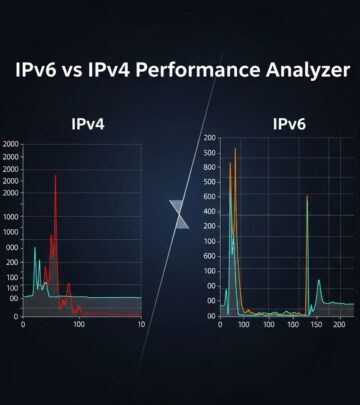
Beyond address space, IPv6 delivers tangible speed advantages. LinkedIn’s internal measurements showed up to 10% faster performance on U.S. mobile networks and 40% gains on select European carriers. Why? IPv6 eliminates NAT overhead, reduces routing table complexity, and optimizes mobile handoffs—critical for bandwidth-hungry apps like video streaming and real-time collaboration.
- Reduced Latency: No address translation means quicker packet delivery.
- Better Mobile Experience: Seamless IPv6 support in modern OSes like iOS and Android minimizes connection drops.
- Scalability: Handles massive concurrent users without performance degradation.
These gains compound as adoption grows. For users, it translates to snappier profile loads, faster job searches, and smoother video calls—enhancing LinkedIn’s core value proposition.
Global IPv6 Adoption Trends in 2017 and Beyond
LinkedIn’s data mirrored broader patterns tracked by standards bodies. By mid-2017, Google reported ~20-25% global IPv6 usage, with spikes in India (40%+ via Reliance Jio) and the U.S. APNIC and RIPE NCC labs confirmed mobile as the adoption vanguard, driven by carrier-grade NAT exhaustion.
Fast-forward to 2026: IPv6 now exceeds 40% globally per official metrics, with the U.S. at ~55%. LinkedIn likely surpassed 80% in key markets, though exact figures remain proprietary. This trajectory validates 2017’s optimism, propelled by World IPv6 Launch commitments from tech giants.
Challenges Overcome: From Hurdles to Hits
Reaching 50% wasn’t effortless. Early barriers included dual-stack complexity (running IPv4 and IPv6 simultaneously), inconsistent device support, and middleware incompatibilities. LinkedIn tackled these through:
- Content Delivery Networks (CDNs): Partnering with IPv6-enabled providers like Akamai and Cloudflare.
- Client-Side Optimization: Prioritizing IPv6 in Happy Eyeballs v2 algorithms, which prefer IPv6 when available.
- Monitoring Tools: Real-time dashboards tracking protocol mix and failure rates.
Transition mechanisms like 6to4 and Teredo bridged gaps, but native deployment proved most effective. LinkedIn’s engineering blog detailed these strategies, inspiring peers like Facebook and Netflix.
Implications for Businesses and Networks
For enterprises, LinkedIn’s milestone is a blueprint. Adopting IPv6 future-proofs infrastructure, cuts NAT costs, and unlocks IoT potential. E-commerce sites gain direct device addressing for personalized tracking; remote work thrives on low-latency VPNs.
ISPs face pressure: IPv4 scarcity inflates black-market prices to $50+ per address. IPv6 sidesteps this, enabling flat-rate scaling. Regulators like the FCC mandate progress reports, accelerating compliance.
Looking Ahead: IPv6’s Role in Tomorrow’s Internet
As 5G rolls out, IPv6 is indispensable. Its header compression suits low-power devices, while massive address pools support billions of sensors. Edge computing and AR/VR demand end-to-end native connectivity—IPv6 delivers.
LinkedIn’s 2017 breakthrough catalyzed momentum. Today, with AI-driven networks auto-configuring IPv6, full adoption looms. The milestone reminds us: proactive transitions yield competitive edges in a hyper-connected world.
Frequently Asked Questions (FAQs)
- What is IPv6 and why replace IPv4?
- IPv6 provides vastly more addresses (340 undecillion vs. 4.3 billion) and better security, solving IPv4 exhaustion.
- How did LinkedIn achieve 50% IPv6 on mobile?
- Through CDN partnerships, client optimizations, and carrier upgrades in the U.S., hitting 50.3% on July 8, 2017.
- Is IPv6 faster than IPv4?
- Yes, often 10-40% faster on mobile due to no NAT and efficient routing, per LinkedIn and APNIC data.
- What’s the global IPv6 adoption rate today?
- Over 40% as of 2026, with mobile leading; U.S. at ~55%.
- Should my business deploy IPv6 now?
- Absolutely—it’s mature, performant, and essential for 5G/IoT scalability.
References
- IPv6 Address Allocation Status — ARIN (American Registry for Internet Numbers). 2026-05-01. https://www.arin.net/participate/deploy/ipv6/
- World IPv6 Launch Measurement — Internet Society. 2017-06-01. https://www.internetsociety.org/deploy360/ipv6/reportcard/
- IPv6 Performance Measurements at LinkedIn — APNIC Blog. 2016-05-13. https://blog.apnic.net/2016/05/13/linkedin-ipv6-measurements/
- IPv6 Allocation and Deployment Statistics — RIPE NCC. 2026-04-15. https://www.ripe.net/publications/ipv6-info-centre/
- Google IPv6 Statistics — Google. Accessed 2026-05-09. https://www.google.com/intl/en/ipv6/statistics.html
Similar Articles







Read full bio of medha deb