Key Enablers for Digital Economy Growth
Explore the foundational technologies and policies driving the global digital economy forward in an interconnected world.
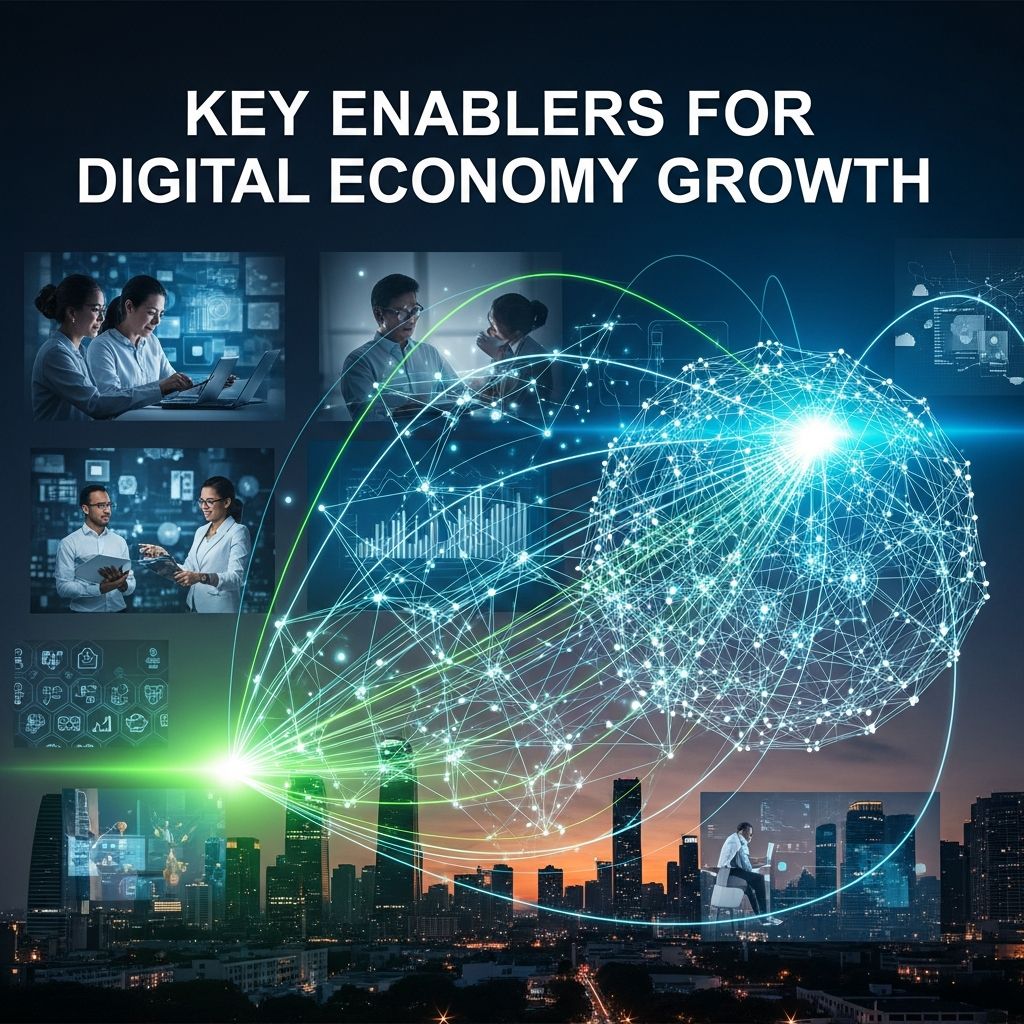
The digital economy has become the backbone of modern commerce, innovation, and societal progress. As nations worldwide strive to harness its potential, understanding the foundational elements that propel it forward is crucial. From advanced networking protocols to stringent security frameworks, these enablers ensure seamless connectivity, trust, and scalability. This article delves into the core drivers, informed by international discussions like those from the OECD, exploring how they address contemporary challenges and pave the way for sustainable development.
Foundational Network Protocols: The Role of IPv6
At the heart of any thriving digital ecosystem lies robust internet infrastructure. IPv6, the latest iteration of the Internet Protocol, stands out as a pivotal enabler. Unlike its predecessor IPv4, which is constrained by a limited address pool, IPv6 offers virtually unlimited IP addresses, accommodating the explosive growth of connected devices.
Recent data underscores its importance. Global IPv6 deployment has surged, enabling the Internet of Things (IoT) and edge computing. Without this transition, the digital economy would face address exhaustion, stifling innovation in smart cities, autonomous vehicles, and remote healthcare.
- Scalability: Supports billions of devices without NAT complexities.
- Performance: Built-in features like simplified packet headers enhance speed and efficiency.
- Security: Mandatory IPsec integration bolsters end-to-end protection.
Governments and enterprises must prioritize IPv6 migration strategies, including spectrum allocation and incentives for ISPs. Creative initiatives, such as public-private partnerships, have accelerated adoption in regions lagging behind.
Cybersecurity as the Bedrock of Trust
In an era where cyber threats evolve rapidly, digital security is non-negotiable. The digital economy thrives on user confidence; breaches erode it swiftly. Key measures include encryption standards, zero-trust architectures, and real-time threat intelligence sharing.
International bodies emphasize prioritizing security from the design phase. For instance, embedding trust through privacy-enhancing technologies (PETs) ensures data protection amid growing cross-border flows. Challenges persist, however, due to knowledge asymmetries—many users and small businesses lack awareness of risks.
| Cyber Threat | Impact on Digital Economy | Mitigation Strategy |
|---|---|---|
| Ransomware | Disrupts operations, costs billions annually | Multi-factor authentication, regular backups |
| Phishing | Compromises credentials, enables fraud | AI-driven detection, user education |
| DDoS Attacks | Halts services, affects e-commerce | Cloud-based scrubbing, traffic analysis |
Policy frameworks must evolve to foster global cooperation, harmonizing standards while respecting sovereignty. Recent G20 declarations highlight security as a catalyst for inclusive growth.
Internet of Things: Connectivity Unleashed
IoT represents a quantum leap, intertwining physical and digital realms. From industrial sensors to wearable health monitors, IoT devices generate vast data streams fueling analytics and automation. Yet, its full potential hinges on reliable, secure networks.
Enablers like 5G and beyond provide the low-latency bandwidth essential for real-time applications. Spectrum harmonization across borders is vital, preventing fragmentation that could hinder global IoT ecosystems. Moreover, edge computing reduces latency, processing data closer to the source.
In developing economies, DPI (Digital Public Infrastructure) initiatives bridge gaps, enabling MSMEs to leverage IoT for efficiency gains. Challenges include interoperability standards and energy efficiency for sustainable deployment.
Navigating Cross-Border Data Flows
Data is the lifeblood of the digital economy, with cross-border flows underpinning trade and collaboration. Online platforms facilitate this, connecting markets but raising policy dilemmas around privacy, competition, and jurisdiction.
OECD analyses identify platforms, data flows, and security as intertwined enablers. Policymakers grapple with balancing innovation and regulation—data localization mandates can stifle growth, while open flows demand robust safeguards. PETs emerge as a solution, allowing secure sharing without compromising privacy.
- Global Trade Boost: Data flows add trillions to GDP.
- Regulatory Hurdles: Varying laws create compliance burdens.
- Innovation Driver: Enables AI training on diverse datasets.
Multilateral forums advocate consistent approaches, promoting interoperability and capacity building for low- and middle-income countries.
Skills and Inclusion: Human Capital Imperative
Technology alone isn’t enough; skilled workforces amplify its impact. Digital literacy programs must scale to empower underserved populations, fostering entrepreneurship in MSMEs. G7 and G20 commitments underscore equitable access, from broadband to advanced training.
Initiatives like the One Future Alliance aim to synergize efforts in DPI, blending public-private funding. Closing skills gaps accelerates adoption of enablers like AI and quantum tech.
Policy Recommendations for Global Leaders
To unlock the digital economy’s promise, coordinated action is essential:
- Accelerate IPv6 and 5G rollouts via incentives.
- Harmonize cybersecurity standards internationally.
- Promote DPI for inclusive IoT deployment.
- Facilitate trusted data flows with PETs.
- Invest in digital skilling ecosystems.
These steps, drawn from high-level ministerial outcomes, position economies for resilience amid geopolitical shifts.
Future Outlook: Emerging Horizons
Looking ahead, quantum computing and AI will redefine enablers. Resilient supply chains and ethical governance will be paramount. By 2030, seamless integration could add $15 trillion to global GDP, per projections.
Frequently Asked Questions
What is the main benefit of IPv6 for the digital economy?
IPv6 provides an expansive address space, supporting massive IoT growth without address shortages.
How does cybersecurity impact digital trust?
Strong security builds confidence, essential for e-commerce and data sharing.
Why are cross-border data flows crucial?
They enable global trade, innovation, and services in a borderless digital world.
What role does IoT play in economic growth?
IoT drives efficiency, new services, and data-driven decisions across sectors.
How can governments promote digital inclusion?
Through DPI investments, skills training, and universal broadband access.
References
- Digital enablers of the global economy — OECD. 2022-11-01. https://www.oecd.org/en/publications/2022/11/digital-enablers-of-the-global-economy_e4fb65ba.html
- G20 Digital Economy Ministers’ Meeting, Outcome Document — G20. 2023-08-19. https://worldjpn.net/documents/texts/G20/20230819.D1E.html
- G7 2025 Industry, Digital and Technology Ministerial Declaration — G7. 2025. https://g7.utoronto.ca/ict/2025-declaration.html
- OECD Digital Economy Outlook 2024 (Volume 2) — OECD. 2024. https://www.oecd.org/en/publications/oecd-digital-economy-outlook-2024-volume-2_3adf705b-en/full-report/digital-technologies-and-the-environment_c0701b0b.html
- Digital Economy Ministers Chairs Statement (2025) — G20 South Africa. 2025. https://g7g20-documents.org/database/document/2025-g20-south-africa-sherpa-track-digital-economy-ministers-ministers-language-digital-economy-ministers-chairs-statement
Similar Articles







Read full bio of medha deb