Understanding IPv6 Transition and Global Protocol Migration
Explore the shift from IPv4 to IPv6 and how organizations worldwide adapted
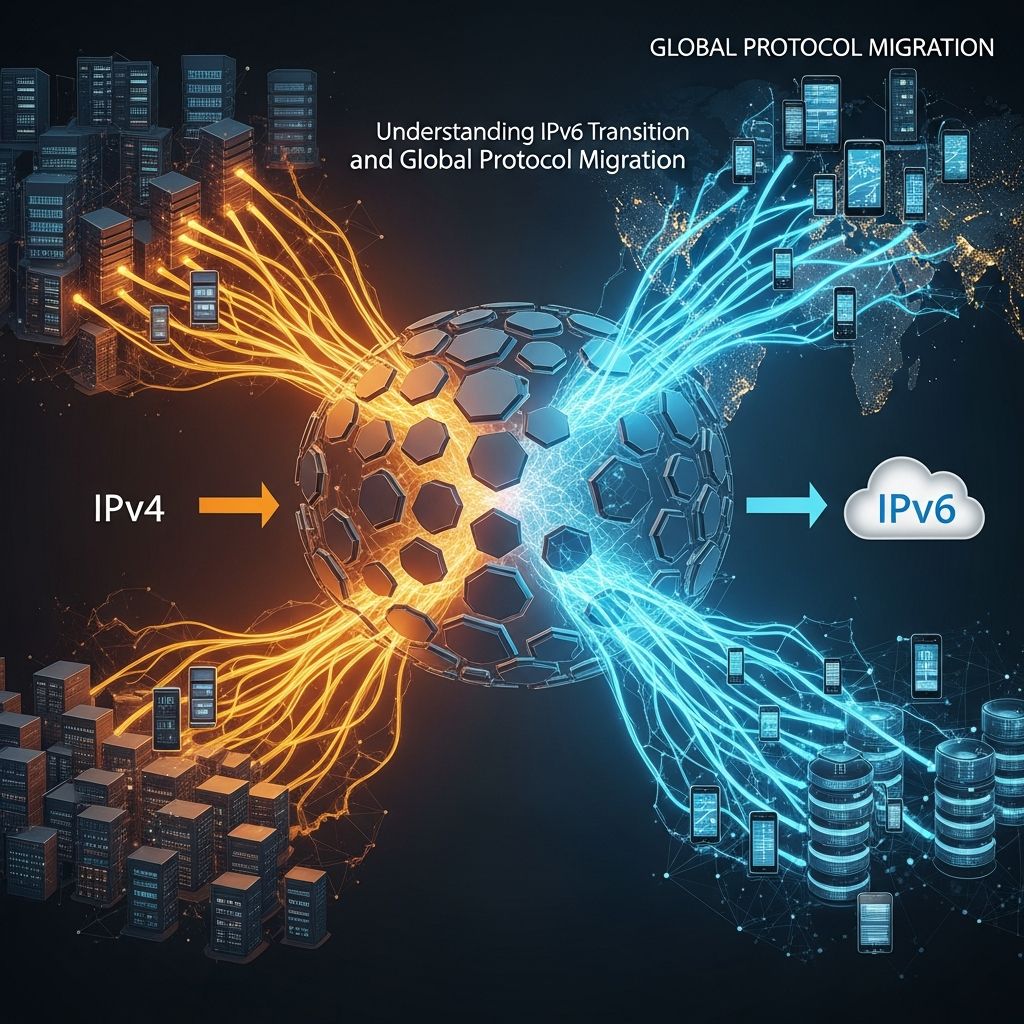
The modern internet faces continuous challenges in supporting exponential growth and innovation. One of the most fundamental infrastructural shifts in recent history involved transitioning from Internet Protocol version 4 (IPv4) to Internet Protocol version 6 (IPv6). This migration represented more than a technical upgrade; it symbolized a coordinated global effort by technology companies, internet service providers, equipment manufacturers, and regulatory bodies to ensure the internet’s continued expansion and functionality. Understanding this transition provides insight into how the digital world adapts to overcome scalability limitations.
The Foundation of Internet Protocol Evolution
The internet’s backbone relies on a system of addressing protocols that allow devices to communicate across global networks. IPv4, developed in the early 1980s, uses 32-bit addresses, theoretically supporting approximately 4.3 billion unique devices. While revolutionary at its inception, the explosive growth of internet-connected devices—smartphones, IoT sensors, smart home systems, and enterprise infrastructure—created an urgent demand for expanded addressing capacity. IPv6, utilizing 128-bit addresses, provides an astronomically larger address space, supporting approximately 340 undecillion possible addresses. This fundamental difference addresses not merely a technical limitation but ensures the internet’s viability for future generations of connected devices and services.
The transition from one internet protocol to another required unprecedented coordination across multiple industry sectors. Unlike software upgrades that users can implement individually, protocol migration demands synchronization across global infrastructure. Internet service providers must update their backbone systems, content delivery networks must support dual protocols, website operators must ensure accessibility through both systems, and hardware manufacturers must enable new capabilities in routers and networking equipment. This complexity necessitated a carefully orchestrated initiative to align these diverse stakeholders around common objectives.
The Sequential Approach to Protocol Transition
Rather than implementing an abrupt switch that would disrupt internet services worldwide, the industry adopted a phased approach. The first significant milestone occurred in 2011 with a temporary testing initiative that allowed organizations to assess their readiness for IPv6 support. This preliminary exercise demonstrated that many organizations had prepared adequately, while others required additional time to address compatibility issues and technical challenges. The insights gained from this testing phase informed subsequent planning and implementation strategies.
Building upon the lessons learned from the preliminary testing, major industry participants committed to permanent IPv6 enablement on June 6, 2012. Unlike the temporary test, this marked a definitive shift where organizations permanently maintained IPv6 alongside IPv4, establishing what industry experts termed “dual-stack” infrastructure. This approach allowed both protocols to coexist, enabling older systems still dependent on IPv4 to continue functioning while permitting IPv6-capable devices and networks to access services through the newer protocol.
Stakeholder Categories and Their Contributions
Internet Service Providers and Network Infrastructure
Internet service providers served as crucial infrastructure anchors in this transition. These organizations committed to enabling IPv6 for a significant portion of their subscriber base, ensuring that residential and commercial customers could access IPv6-enabled services without requiring manual configuration. The commitment involved updating core network infrastructure, implementing IPv6 routing protocols, and training technical staff to support customers navigating the transition. Major ISPs worldwide coordinated deployment timelines, established technical standards, and created support mechanisms to address customer concerns and technical issues arising from the protocol shift.
ISPs recognized that achieving meaningful IPv6 penetration required not merely technical deployment but also active encouragement of customer adoption. By enabling IPv6 as the default protocol for new service activations and existing customers, providers ensured organic growth of IPv6 utilization without creating barriers for less technically sophisticated users. This approach demonstrated how infrastructure modernization could occur with minimal disruption to end users.
Equipment Manufacturers and Hardware Enablement
Home networking equipment manufacturers played an equally vital role in ensuring end-user accessibility to IPv6 services. Routers and networking devices manufactured after the transition date incorporated IPv6 support enabled by default, allowing home networks to receive and distribute IPv6 addresses automatically. This shift in manufacturing standards represented a deliberate policy decision to prioritize protocol modernization across consumer-grade networking equipment.
Equipment manufacturers recognized that default enablement of IPv6 reduced technical barriers for average consumers. Users purchasing new routers would automatically gain IPv6 capabilities without requiring technical knowledge or manual configuration. This approach democratized access to advanced internet infrastructure features and accelerated adoption across residential networks globally.
Content Providers and Digital Services
Website operators and digital service providers committed to permanent IPv6 enablement on their platforms, making their services accessible through both IPv4 and IPv6 networks. Prominent technology companies including Google, Facebook, Microsoft Bing, and Yahoo established IPv6 access to their core services, signaling to users and the broader industry that IPv6 represented the modern standard for internet accessibility. These companies understood that their participation would influence smaller organizations, encouraging broader industry adoption.
Beyond standalone websites, content delivery networks updated their infrastructure to support IPv6routing and optimization. These networks, which cache and distribute digital content across geographic regions to improve performance and reliability, extended their dual-protocol support across their entire customer base. This action multiplied the impact of protocol transition initiatives, as thousands of organizations relying on content delivery networks automatically gained IPv6 capabilities through their service providers.
Technical Implementation Considerations
Dual-Stack Architecture
The concurrent operation of IPv4 and IPv6 networks, known as dual-stack architecture, enabled gradual transition without service interruption. Rather than deactivating IPv4 entirely, organizations maintained both protocols, allowing legacy systems and newly upgraded systems to coexist harmoniously. This technical approach acknowledged the reality that not all devices and networks could upgrade simultaneously, requiring a bridge period where both protocols operated in parallel.
Dual-stack implementation required careful planning of network addressing, routing protocols, and quality-of-service parameters. Network engineers needed to ensure that traffic routing decisions appropriately directed communications through the most efficient available protocol while maintaining equivalent performance levels across both systems.
Address Assignment and Management
IPv6 deployment introduced different addressing paradigms compared to IPv4 systems. Stateless address autoconfiguration allowed devices to generate their own IPv6 addresses based on network prefix information, reducing the complexity of centralized address assignment. Alternatively, dynamic host configuration protocol for IPv6 (DHCPv6) provided centralized management capabilities similar to IPv4 administration, offering organizations flexibility in selecting address management approaches suited to their specific requirements.
Challenges and Technical Hurdles
Despite coordinated efforts, IPv6 transition encountered numerous technical and organizational challenges. Some organizations discovered incompatibilities between their existing systems and IPv6 support, requiring software updates or hardware replacement. Network monitoring and security tools designed for IPv4 environments sometimes struggled with IPv6 traffic patterns, necessitating reconfiguration or modernization of these systems.
Consumer awareness represented another significant challenge. Many end users remained unaware of IPv6 or its implications for their internet services. Without understanding the modernization efforts underway, users could encounter confusion when encountering IPv6-related technical issues or configuration options within their network settings. Addressing this educational gap required coordinated communication efforts across industry participants.
Global Participation and Timeline Coordination
The geographic scope of IPv6 transition efforts encompassed virtually every inhabited continent, with organizations in North America, Europe, Asia-Pacific, and other regions committing to simultaneous deployment. This worldwide coordination represented an extraordinary achievement in internet governance, as organizations operating across different regulatory frameworks, technical standards, and business models aligned around common objectives.
Regional internet registries, which manage address allocation for their respective geographic areas, coordinated address distribution strategies to ensure efficient IPv6 resource allocation. Their involvement demonstrated how governance structures adapted to facilitate protocol modernization across national boundaries and regulatory jurisdictions.
Industry Impact and Market Implications
Organizations participating in IPv6 deployment gained competitive advantages in positioning themselves as forward-thinking, modern technology providers. Companies that successfully implemented IPv6 early demonstrated technical sophistication and readiness to embrace internet evolution, enhancing their market reputation among technically sophisticated customers.
The transition also created business opportunities for consulting firms, infrastructure providers, and software developers offering IPv6 migration services. Organizations lacking internal expertise could engage specialized providers to assess their current infrastructure, plan transition strategies, and implement necessary modifications.
Measuring Success and Ongoing Assessment
| Metric Category | Description | Significance |
|---|---|---|
| IPv6 Network Penetration | Percentage of internet users with IPv6-capable networks | Indicates overall infrastructure modernization progress |
| Content Provider Adoption | Number of major websites accessible through IPv6 | Measures user-facing service availability |
| ISP Deployment Rates | Percentage of ISPs enabling IPv6 for subscribers | Reflects infrastructure provider commitment |
| Device IPv6 Capability | Market share of IPv6-compatible devices | Shows consumer hardware modernization |
Measuring the success of global IPv6 deployment involved tracking multiple metrics across different stakeholder categories. Network penetration statistics indicated the percentage of internet traffic utilizing IPv6, providing quantitative evidence of adoption progress. Content provider availability metrics assessed how many significant websites supported IPv6 access, influencing user-facing service quality.
Long-Term Strategic Implications
Beyond addressing immediate addressing capacity limitations, IPv6 deployment represented a strategic commitment to internet modernization. The protocol incorporates advanced features including integrated quality-of-service capabilities, enhanced security provisions, and optimized routing efficiency compared to IPv4. Full adoption of these advanced features requires not merely protocol enablement but also application-level modifications to utilize newer capabilities comprehensively.
Organizations recognized that IPv6 transition extended beyond technical protocol changes; it represented an opportunity to reassess and optimize broader internet infrastructure. Companies could concurrently implement security improvements, modernize network management approaches, and adopt current best practices in network design and operation.
Future Directions and Continued Evolution
The successful transition to IPv6 established precedent for managing future internet infrastructure evolutions. As technology continues advancing and new requirements emerge, the frameworks and coordination mechanisms developed for IPv6 deployment provide templates for addressing subsequent challenges requiring synchronized global action. The experience demonstrated that industry participants, despite competitive relationships, could collaborate effectively when addressing shared infrastructure requirements.
Ongoing monitoring of IPv6 adoption rates, identification of remaining adoption barriers, and continued encouragement of holdout organizations ensure that modernization efforts maintain momentum beyond initial deployment phases. The commitment to protocol modernization became embedded within organizational culture, creating sustained focus on technological advancement and infrastructure optimization.
Frequently Asked Questions
Why was IPv6 transition necessary?
IPv4’s 32-bit addressing scheme supported approximately 4.3 billion devices. Exponential growth in connected devices and services exhausted available addresses, making IPv6’s vastly larger address space essential for continued internet expansion.
How does dual-stack architecture function?
Dual-stack systems operate both IPv4 and IPv6 protocols simultaneously, allowing communication with both legacy IPv4 networks and modern IPv6 infrastructure. This approach enabled gradual transition without service disruption.
What were the financial implications for organizations?
Implementation costs varied significantly based on organizational infrastructure maturity. Some organizations required minimal investment, while others upgrading legacy systems incurred substantial expenses for equipment, software, and professional services.
How did consumers benefit from IPv6 deployment?
Consumers gained access to more robust internet infrastructure supporting future device proliferation, improved security features integrated into IPv6 protocols, and enhanced performance optimization capabilities.
References
- World IPv6 Launch Solidifies Global Support for New Internet Protocol — Cisco Newsroom. 2012-01-17. https://newsroom.cisco.com/c/r/newsroom/en/us/a/y2012/m01/world-ipv6-launch-solidifies-global-support-for-new-internet-protocol.html
- World IPv6 Launch — World IPv6 Launch Official. https://www.worldipv6launch.org
- World IPv6 Launch: Keeping the Internet growing — Google Official Blog. 2012-06-06. https://blog.google/company-news/inside-google/company-announcements/world-ipv6-launch-keeping-internet/
- World IPv6 Launch Day: What Was It All About? — ARIN (American Registry for Internet Numbers). 2012-06-11. https://www.arin.net/vault/blog/2012/06/11/world-ipv6-launch-day-what-was-it-all-about/
- World IPv6 Launch Four Years Later: Taking Stock and Looking Forward — Comcast Corporate. 2016-06-06. https://corporate.comcast.com/comcast-voices/world-ipv6-launch-four-years-later-taking-stock-and-looking-forward
- RFC 4291: IP Version 6 Addressing Architecture — Internet Engineering Task Force (IETF). 2006-02. https://tools.ietf.org/html/rfc4291
Similar Articles








Read full bio of medha deb