IPv6 Support Myth Exposed
Uncover the truth behind vendor claims of IPv6 support and learn how to ensure real security and functionality in your network deployments.
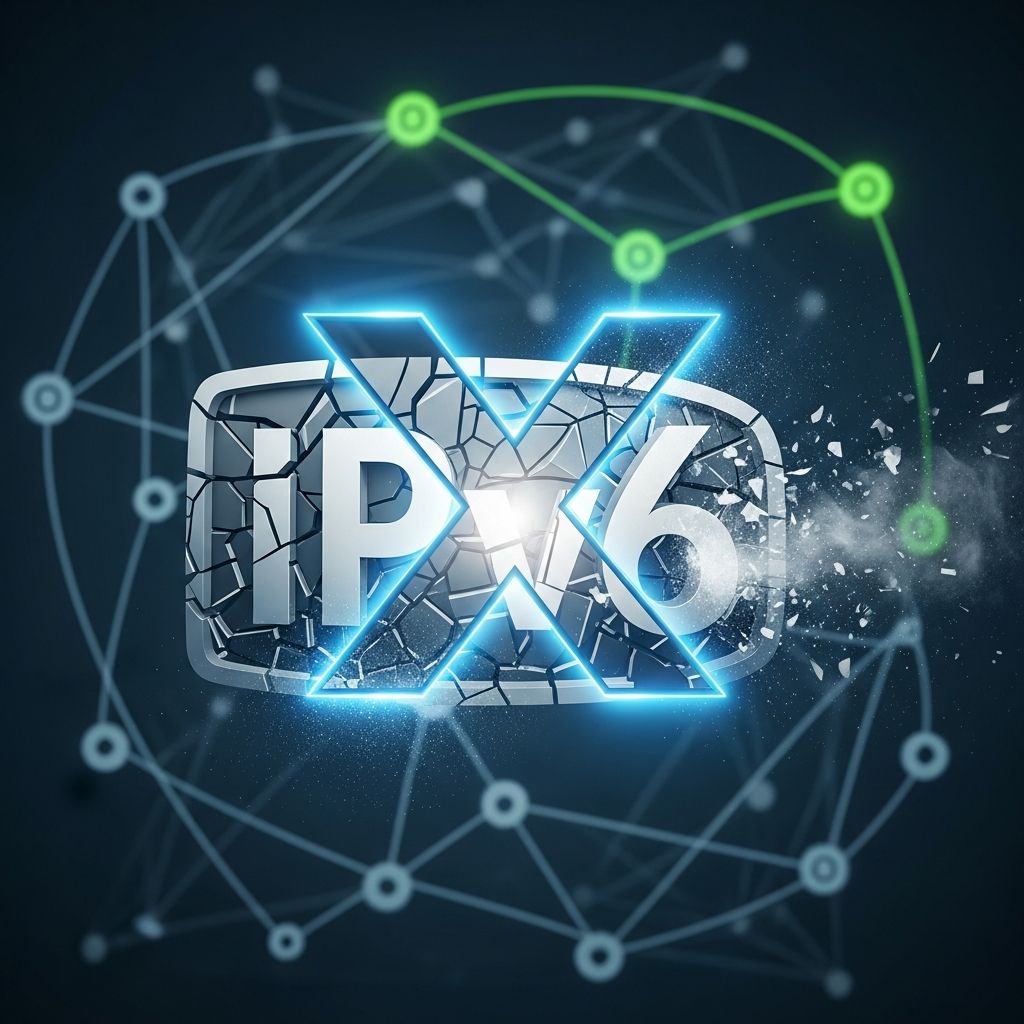
In the evolving landscape of internet protocols, IPv6 adoption continues to accelerate due to the exhaustion of IPv4 addresses. However, a persistent misconception among IT professionals, vendors, and service providers revolves around what constitutes genuine “IPv6 support.” This article delves into the nuances of this myth, providing actionable strategies to verify claims and safeguard network security during transitions.
Understanding the Core Misconception
At its heart, the issue stems from ambiguous marketing language. Vendors often tout products as “IPv6-ready” or “supporting IPv6,” but these terms can mean vastly different things. For some, it simply indicates the ability to assign an IPv6 address to an interface. For others, it might involve basic packet forwarding without advanced features. True support, however, demands complete equivalence to IPv4 capabilities, including routing, firewalling, QoS, and security protocols.
This ambiguity poses risks, particularly in security contexts. Incomplete implementations can leave networks vulnerable to exploits targeting IPv6-specific mechanisms like Neighbor Discovery Protocol (NDP) or extension headers, which differ significantly from IPv4’s ARP and options fields.
Common Interpretations of ‘IPv6 Support’
- Basic Addressing: Devices can generate or accept IPv6 addresses via Stateless Address Autoconfiguration (SLAAC) or DHCPv6.
- Packet Handling: Routers or switches forward IPv6 traffic without inspection or manipulation.
- Application Tolerance: Software runs in dual-stack environments without crashing, but lacks native IPv6 communication.
- Partial Feature Set: Some management interfaces or logging support IPv6, but core functions like VPNs or intrusion detection do not.
These levels fall short of enterprise needs, where dual-stack operations require seamless interoperability. Without full parity, organizations face hidden costs in troubleshooting, performance degradation, and exposure to threats.
Risks of Incomplete IPv6 Implementations
Security is paramount in protocol transitions. IPv6 introduces mandatory IPsec support in its specification (RFC 8200), yet implementations vary. Unlike IPv4, where IPsec is optional, IPv6 stacks must include it, but activation remains application-dependent. Misconfigurations can enable attacks such as Router Advertisement (RA) flooding or Duplicate Address Detection (DAD) spoofing.
Moreover, legacy security tools often overlook IPv6 traffic. Firewalls might filter IPv4 exhaustively but allow IPv6 unchecked, creating blind spots. Tunneling mechanisms like 6to4 or Teredo, enabled by default in many OSes, can bypass NAT protections, exposing internal hosts globally.
| Feature | IPv4 Behavior | IPv6 Challenge | Security Implication |
|---|---|---|---|
| Address Resolution | ARP (broadcast-based) | NDP (multicast, extensible) | RA spoofing, DoS via floods |
| Security Headers | Optional IPsec | Mandatory support, optional use | Incomplete crypto = weak auth |
| Fragmentation | Router fragmentation | Host-only, extension headers | Amplification attacks |
| Default Enablement | Often disabled | Enabled in modern OSes | Unexpected dual-stack exposure |
Verification Strategies for Genuine Support
To counter vague claims, adopt a rigorous evaluation framework. Begin with procurement documents specifying exact requirements.
- Define Functional Needs: List must-have features like IPv6 routing protocols (OSPFv3, BGP4+), ACLs, and NAT64 for transition.
- Request Evidence: Demand test reports, compliance certifications, or lab demos. Avoid yes/no answers.
- Leverage Standards: Reference RIPE-554 for ICT equipment and RFC 8504 for security considerations.
- Conduct Proof-of-Concept Testing: Simulate production traffic, including high loads and attack vectors.
- Audit Configurations: Verify dual-stack operation, IPv6 firewall rules, and logging parity.
For service providers, insist on SLAs covering IPv6 uptime, prefix delegation, and DNS64 support.
Best Practices for Secure IPv6 Deployment
Transitioning effectively requires proactive measures:
- Enable IPv6 filtering on all border devices from day one.
- Deploy RA Guard and DHCPv6 Snooping to mitigate NDP threats.
- Monitor for tunnel traffic and disable unnecessary ones.
- Train staff on IPv6-specific tools like tcpdump with :: notation or Wireshark filters.
- Integrate IPv6 into penetration testing routines.
Organizations ignoring these steps risk “IPv6 surprise,” where default-enabled stacks create unintended connectivity.
Case Studies: Lessons from the Field
Consider a mid-sized enterprise that purchased “IPv6-capable” firewalls. Post-deployment, they discovered no support for IPv6 stateful inspection, allowing inbound connections via happy eyeballs. Remediation cost weeks and exposed data. Contrast this with a provider using RIPE guidelines, achieving 99.9% dual-stack reliability.
Statistics underscore urgency: As of 2023, World IPv6 Launch reports over 40% global adoption, with mobile networks leading at 70%. Yet, surveys by ARIN reveal 30% of enterprises unaware of internal IPv6 traffic.
Future-Proofing Your Network
As IPv6 becomes dominant, partial support becomes a liability. Plan for end-to-end native IPv6, phasing out IPv4 dependencies. Invest in tools supporting IPv6 QoS (via Flow Label) and multicast enhancements.
Collaboration with standards bodies like IETF ensures alignment with evolving specs, such as RFC 8981 for Segment Routing over IPv6 (SRv6).
Frequently Asked Questions
Is IPv6 inherently more secure than IPv4?
No. Both protocols offer similar security postures when properly configured. IPv6 mandates IPsec support, but usage is optional, mirroring IPv4 options.
Should I disable IPv6 if not ready?
Generally no, as it breaks some applications. Instead, secure it comprehensively.
How do I test vendor IPv6 claims?
Use public test suites like IPv6 Ready Logo program or run targeted packet captures.
What about IPv6 in cloud environments?
Major providers (AWS, Azure) offer robust dual-stack, but verify instance-level support.
Are there IPv6-specific attacks?
Yes, including NDP exhaustion and extension header evasion. Mitigate with SAVI and header filtering.
References
- Requirements for IPv6 in ICT Equipment — RIPE NCC. 2013-06-01. https://www.ripe.net/publications/docs/ripe-554
- IPv6 Node Requirements — IETF (RFC 8504). 2018-12-21. https://datatracker.ietf.org/doc/html/rfc8504
- IPv6 Security Considerations — IETF (RFC 9098). 2021-07-26. https://datatracker.ietf.org/doc/html/rfc9098
- World IPv6 Launch Measurement — Internet Society. 2023-06-06. https://www.internetsociety.org/deploy360/world-ipv6/
- IPv6 Address Allocation Survey — ARIN. 2022-11-15. https://www.arin.net/resources/guide/ipv6/survey/
Similar Articles








Read full bio of Sneha Tete