IPv6 Momentum in Belgium
From early council meetings to over 60% adoption, explore Belgium's remarkable journey in embracing IPv6 and its global impact.
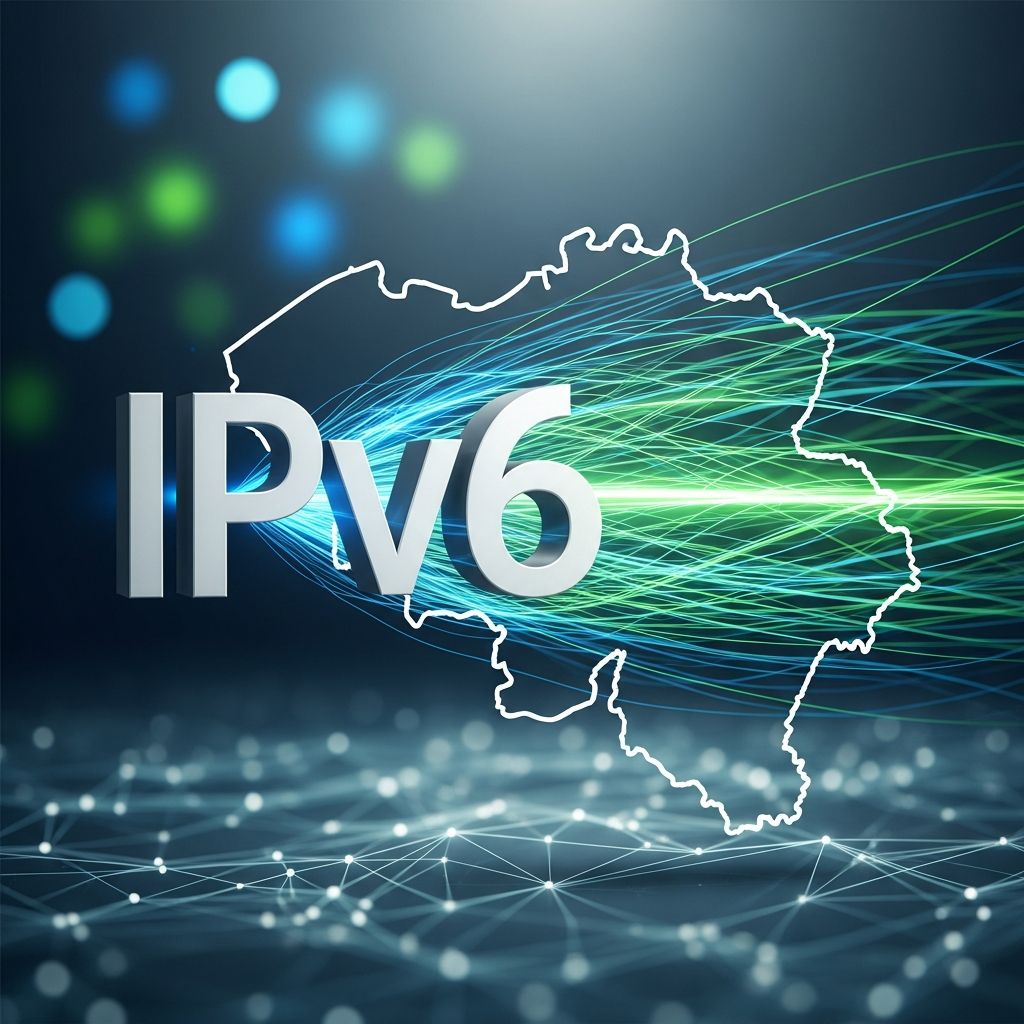
IPv6 Momentum in Belgium: A Decade of Digital Leadership
Belgium stands as a beacon in the global shift toward IPv6, the next-generation Internet Protocol designed to replace the exhausted IPv4 addressing system. What began as focused discussions among industry leaders has evolved into one of Europe’s highest adoption rates, surpassing 60% in recent measurements. This transformation underscores the importance of collaborative efforts, ISP innovation, and strategic policy-making in modernizing network infrastructure.
The Dawn of IPv6 Advocacy in Europe
In the mid-2010s, as IPv4 addresses dwindled, forward-thinking nations began prioritizing IPv6. Belgium emerged early, hosting pivotal gatherings that brought together telecom experts, government officials, and Internet Society representatives. These events highlighted the urgency of transitioning to IPv6’s vastly expanded address space—offering 340 undecillion unique addresses compared to IPv4’s 4.3 billion.
Early momentum was fueled by recognition of IPv4’s limitations: NAT workarounds increased complexity and hindered innovations like IoT and seamless mobile connectivity. Belgium’s proactive stance positioned it ahead of many peers, setting the stage for rapid deployment.
Key Players Driving Belgium’s IPv6 Success
Belgium’s cable and mobile giants played starring roles. VOO, a major residential provider, launched IPv6 in 2013, achieving explosive growth through native dual-stack implementations. Telenet followed in 2014, catapulting the national average toward 30% by mid-year and ranking among the world’s top ISPs for user IPv6 traffic.
- VOO: Pioneered cable IPv6, focusing on residential broadband for high penetration.
- Telenet: Accelerated adoption via widespread rollout, emphasizing user-friendly activation.
- Belnet: As the research and government backbone, offered native IPv6 since 2013, supporting academic and public sectors.
These efforts created a ripple effect, encouraging smaller providers and enterprises to follow suit.
Measuring Progress: From 30% to Global Leader
By late 2014, Belgium’s IPv6 usage hovered near 30%, per Google’s metrics—a remarkable feat. Fast-forward to 2026: adoption exceeds 69% according to APNIC Labs, with Google’s data showing 60%+ availability. This places Belgium in elite company alongside France (75%) and Germany (73%).
| Country | IPv6 Capability (2026) | Global Rank |
|---|---|---|
| Belgium | 69.71% | Top 20 |
| France | 75.26% | Top 10 |
| Germany | 73.22% | Top 15 |
| India | 70.88% | Top 5 |
Global trends show IPv6 crossing 45-50%, but Belgium’s consistent leadership stems from sustained ISP investments and minimal transition friction.
Technical Foundations of Belgium’s Deployment
Success hinged on dual-stack strategies, where IPv6 runs alongside IPv4 without disruption. Native IPv6 over cable and fiber minimized latency, vital for gaming, streaming, and 5G. Transition mechanisms like 6rd and DS-Lite bridged gaps for legacy systems.
Public sector involvement amplified reach: Government sites went IPv6-native, and Belnet’s backbone ensured research institutions like universities operated at the forefront. This ecosystem approach—combining residential, enterprise, and public networks—yielded comprehensive coverage.
Challenges Overcome and Lessons Learned
Initial hurdles included device compatibility and router firmware updates. Belgian ISPs tackled these via customer education campaigns and free upgrades. Cost concerns were mitigated by IPv6’s long-term savings on address management and NAT hardware.
Compared to neighbors, Belgium avoided France’s opt-in delays or the Netherlands’ patchy rollout. Key lesson: Early, unified ISP action trumps fragmented efforts.
Global Context: Belgium’s Influence Worldwide
Belgium’s model inspired regions like Luxembourg (36% in 2020, growing) and Estonia (32% by 2023). As one of few nations sustaining 50%+ capability post-2022 surges, it exemplifies scalable deployment. Globally, IPv6 eases IoT proliferation—billions of devices now connect directly, sans IPv4 constraints.
Emerging tech like SRv6 (Segment Routing over IPv6) builds on this base, enabling SDN and 5G slicing. Belgium’s readiness positions it for these advancements.
Future Horizons for Belgian Networks
With IPv6 dominant, focus shifts to “IPv6 Enhanced” features: network slicing for low-latency apps, automation for OAM, and security via larger headers. Public initiatives aim for full modernization, fostering IoT ecosystems and smart cities.
Projections: Belgium could hit 80% by 2028, aligning with EU digital goals. IPv4 phase-out accelerates as prices soar amid shortages.
Benefits Unlocked by IPv6 Adoption
- End-to-End Connectivity: Direct peer-to-peer links boost P2P apps and VoIP.
- Scalability: Supports hyper-connected futures without address rationing.
- Performance Gains: Reduced NAT overhead lowers latency by up to 20%.
- Innovation Catalyst: Enables 5G, edge computing, and massive IoT.
- Cost Efficiency: ISPs save on infrastructure as adoption scales.
IPv6 Frequently Asked Questions
What is IPv6 and why does Belgium lead its adoption?
IPv6 provides a massive address pool for the Internet’s growth. Belgium leads via aggressive ISP rollouts since 2013, hitting 69% capability.
How does IPv6 improve over IPv4?
It eliminates NAT, simplifies routing, and natively supports auto-configuration and security features like IPsec.
Is IPv6 safe for everyday users?
Yes—built-in security and firewall standards ensure robust protection, with no widespread vulnerabilities reported.
When will IPv4 be fully replaced?
Not soon; dual-stack persists, but IPv6-dominant networks like Belgium’s preview the future.
How can I check my IPv6 status?
Use test-ipv6.com or Google’s IPv6 page for instant diagnostics.
Belgium’s IPv6 journey—from council advocacy to deployment powerhouse—offers a blueprint for nations lagging behind. As global adoption nears 50%, its story highlights collaboration’s power in shaping resilient digital infrastructure.
References
- IPv6 Measurement Maps — APNIC Labs. 2026-05. https://labs.apnic.net/ipv6-measurement/
- IPv6 Adoption — Google. 2026-05 (continuously updated). https://www.google.com/intl/en/ipv6/
- Global IPv6 Development Report 2024 — Roland Berger. 2024-06. https://www.rolandberger.com/publications/publication_pdf/Global-IPv6-Development-Report-2024_EN.pdf
- IPv6 Adoption: Where Are We? 2024 Updated — IPXO. 2024-05. https://www.ipxo.com/blog/ipv6-adoption/
- Which Country Will be the Next to Reach 50% IPv6 Capability? — Internet Society Pulse. 2024-06. https://pulse.internetsociety.org/en/blog/2024/06/which-country-will-be-the-next-to-reach-50-ipv6-capability/
Similar Articles






Read full bio of medha deb